
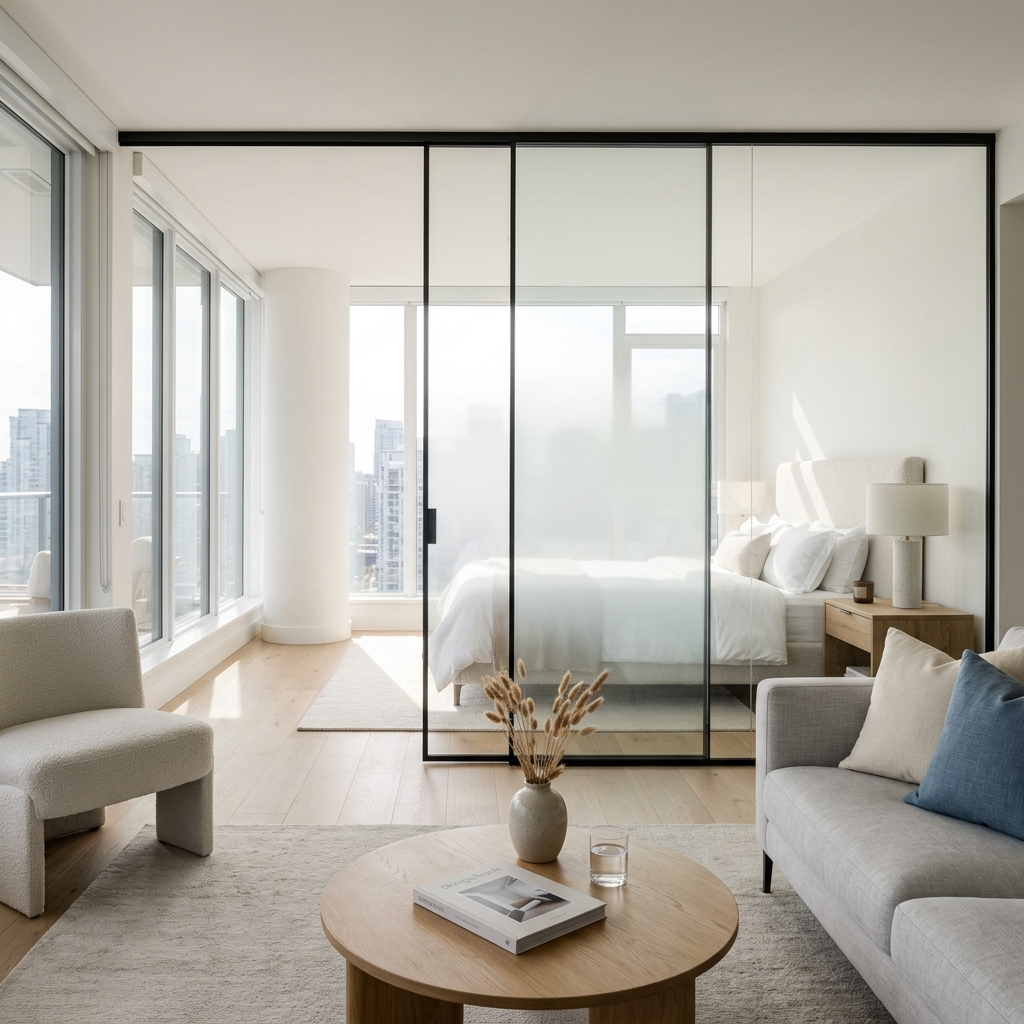
The day we move into a new condo, the very first thing that strikes us is often the profound sense of openness. The open-plan layout, connecting the living room and bedroom through expansive clear glass, makes the compact space feel incredibly vast. Morning sunlight pours right onto our favorite sofa, creating a beautifully relaxing atmosphere.
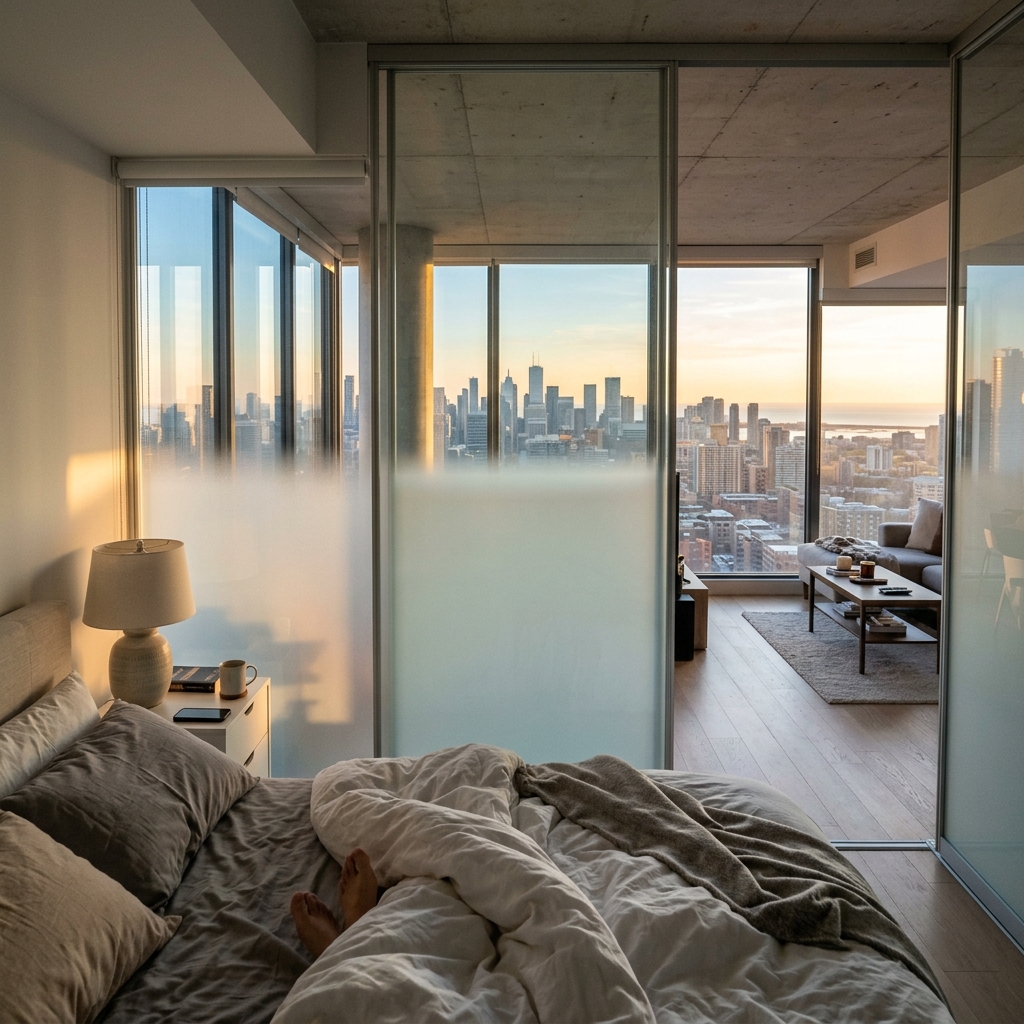
But as we settle in, reality sets in. The expansive space we admired essentially becomes a room without secrets. Whether we have guests over or just want quiet downtime, the bedroom and the unmade bed are fully visible from the living room. That initial feeling of airy comfort is slowly replaced by a noticeable lack of privacy.
THE DILEMMAThe Partition Trap
Many might first think to install blackout curtains or build a solid partition wall. But doing so would completely destroy the charm of the room. The sunlight would be blocked, the room would be sliced in half, and that cramped, claustrophobic feeling would return. We often fall into the trap of believing we have to choose between “spaciousness” and “privacy.”
Until we discover a solution highly recommended by interior designers. It acts as a soft visual shield: Gradient Decorative Film. This single material completely rewrites the equation of condo living.
3 Ways Gradient Film Transforms a Room
Gradient film isn’t limited to bedroom glass; it can seamlessly integrate into various spaces within a condo.
1. The Bedroom and Living Room Divider
Instead of blocking everything out, choosing a gradient film that is most opaque from the mid-section down to the floor is a perfect technique. The result? The film conceals the bed entirely from the living room’s view. Meanwhile, the clear upper portion of the glass invites morning sunlight to travel freely, warming the shared spaces. The room retains its depth, feels expansive, and achieves complete privacy.
Architectural Insights:
- The Highlight: Creates a “Borrowed Light” phenomenon, channeling natural sunlight from the bedroom into the living room. Keeping the upper glass clear visually connects the ceiling planes, significantly expanding the perceived volume of the space.
- The Consideration: Requires precise height calibration. Misjudging the gradient placement can intersect awkwardly with furniture lines and visually slice the room in half. The gradient transition should always be mapped against the height of your sofa and bed before installation.
2. Wet and Dry Zones in the Bathroom
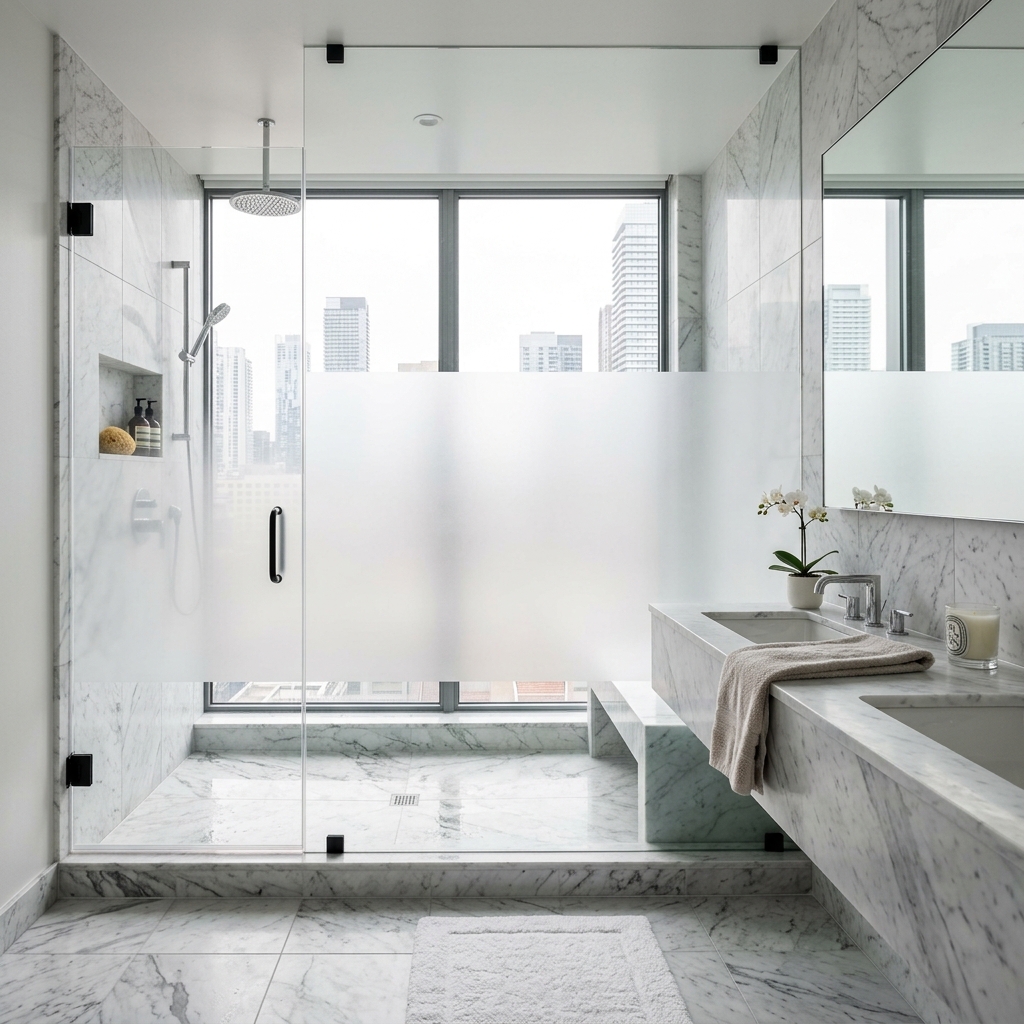
Condo bathrooms are notoriously compact. Using a fully frosted film to separate the shower area often makes it feel like being trapped in a small box. Switching to a gradient film that provides opacity at eye level while remaining transparent at the top and bottom edges confidently conceals the silhouette. At the same time, it preserves the luxurious feel of the marble tiles reflecting light throughout the bathroom.
Architectural Insights:
- The Highlight: The clear bottom edge reveals the continuous floor tile, deceiving the eye into perceiving a much larger floor area. This spatial relief technique is widely utilized in 5-star hotel bathroom designs to eliminate claustrophobia.
- The Consideration: The transparent lower section will naturally expose water spots and soap residue more readily than frosted areas. Maintaining that pristine, luxurious look requires a quick squeegee wipedown after daily showers.
3. A Focused Yet Connected Home Office
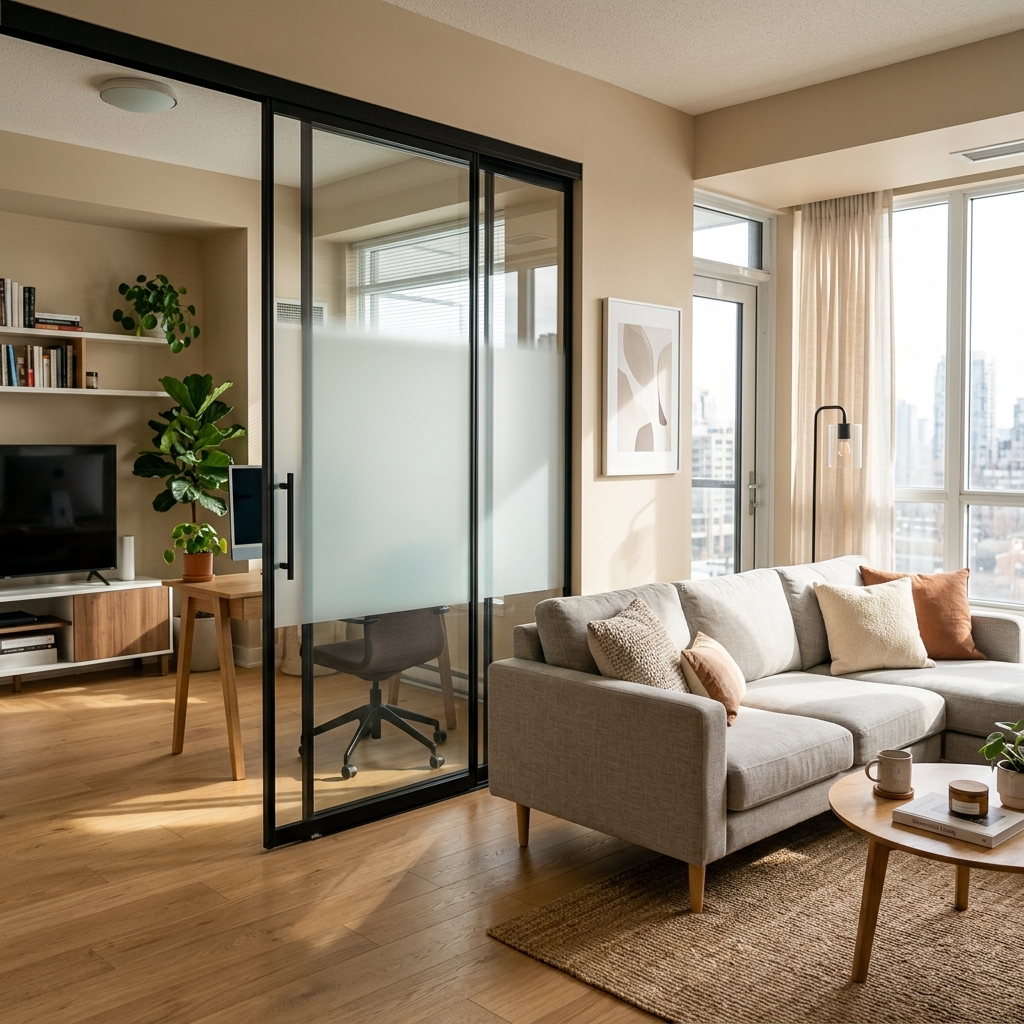
Focus is essential for any condo workspace. Applying gradient film to the sliding glass doors establishes the boundaries of a home office. It effectively hides your monitors and confidential documents from the outside. Yet, you can still vaguely see movement in the living room, significantly reducing the feeling of isolation during long working hours.
Architectural Insights:
- The Highlight: Establishes a soft psychological boundary. It organizes your focus for “Deep Work” by obscuring visual clutter, without making the room feel like an isolated box. It strikes the perfect balance between absolute privacy and ambient connection.
- The Consideration: The film functions solely as a visual shield, not an acoustic barrier. If the living room is noisy, your concentration might still be disrupted by sound, even though visual distractions have been effectively blocked.
Partition Material Comparison
Before making a decision, it helps to carefully compare various materials to find the most cost-effective long-term solution.
- Light Trans.
- Very High
- Privacy
- Adjustable
- Cleaning
- Very easy
- Removal
- Easy, no residue
- Light Trans.
- Medium to Low
- Privacy
- Fully opaque
- Cleaning
- Difficult, stains easily
- Removal
- Replace whole glass
- Light Trans.
- Very Low
- Privacy
- Fully opaque
- Cleaning
- Requires washing
- Removal
- Replace blind fabric
Decorative Film Video Guide
Frequently Asked Questions
1Can I install gradient film by myself?
MAXXMA’s high-quality decorative films come with an adhesive layer designed for easy application. However, for large glass panels in condos, utilizing professional installation services guarantees a flawless finish and significantly extends the film’s lifespan.
2Will removing the film leave an adhesive residue?
Our polyester films utilize advanced adhesive technology that holds firmly during use but can be peeled off cleanly without leaving stubborn residue, perfectly protecting your condo’s glass assets.
3How long does the decorative film last?
When installed indoors without direct exposure to rain or harsh weather, MAXXMA decorative film boasts a lifespan of 5 to 10 years without discoloration or cracking.
Conclusion & Contact Channels
Decorating a condo with gradient film is a decision that can completely transform the living experience. It is a worthwhile investment that restores privacy to rest areas without sacrificing the natural light and spaciousness we all fall in love with in the first place.
If you are struggling with clear glass compromising your privacy, click to Find MAXXMA Dealers Nationwide for installation services near you, or explore more Architectural Decorative Films.
💬 Free Consultation and Assessment with MAXXMA Experts Speak with our team to evaluate your space and view our decorative film catalog instantly via LINE Official: @maxxma
Ready to protect your home or vehicle?
Consult with MAXXMA experts to select the perfect film for your needs, or find an authorized dealer near you.