
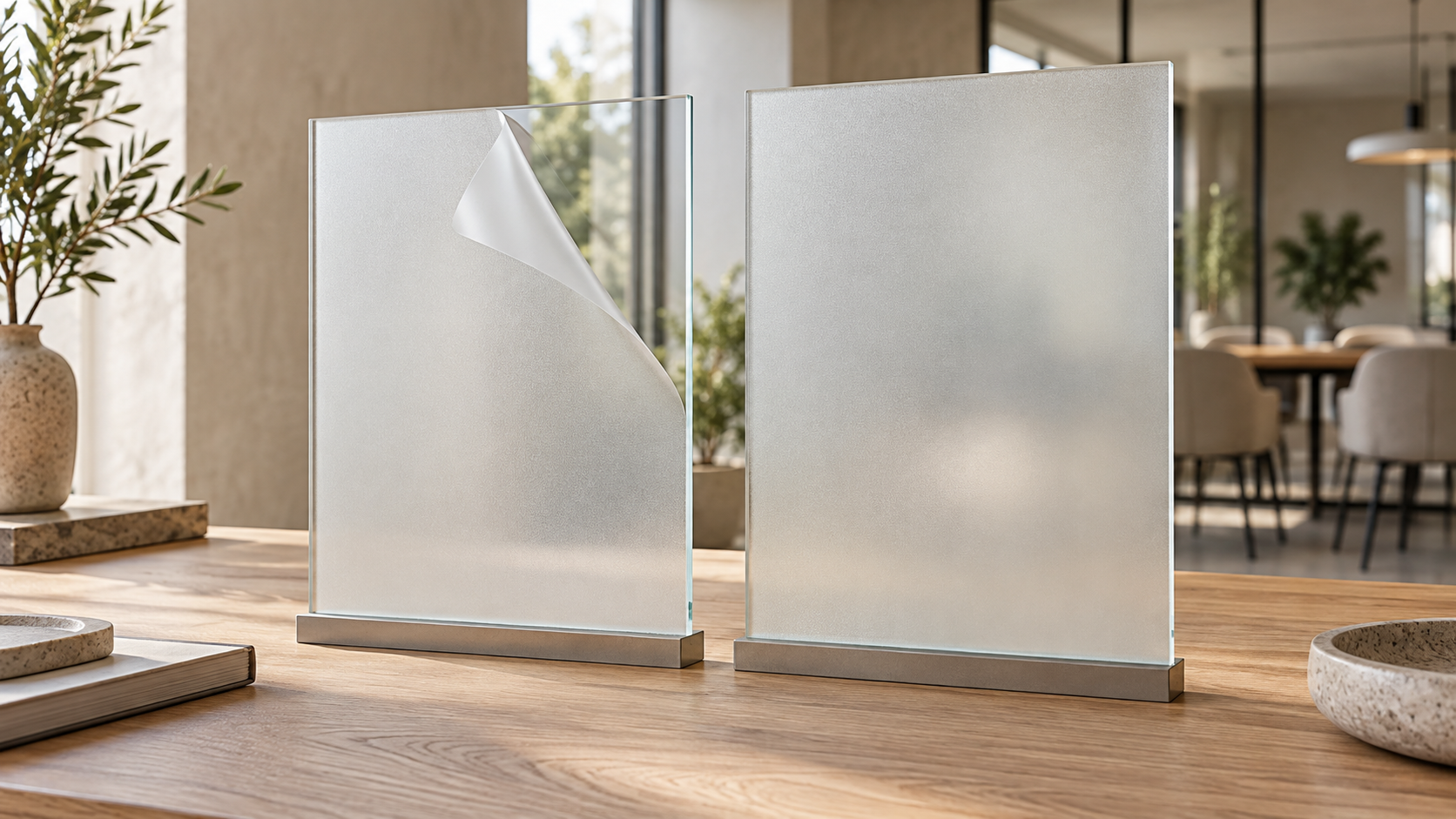
A meeting room that opens onto a corridor can feel bright and generous on day one. Once the room is in use, passing silhouettes, presentation screens, and sightlines from outside become part of the brief. Homes face a similar question: how can a glass wall keep its light and openness without revealing every corner of the room?
When existing glass is still in good condition and the space may need a new pattern or a return to clear glass later, decorative film is a sensible option to assess first. When a frosted surface is intended as part of the glass itself from the beginning, sandblasted glass deserves equal consideration. This is a decision guide for different project conditions, not a claim that every film costs less or is easier to maintain than every type of glass.
Know the materialSimilar frost, different material construction
Decorative film is an additional layer applied to glass. Sandblasting uses an abrasive process on the glass surface to create a matte area. The practical distinction is important: one is a decorative layer on top of the glass, while the other changes the surface of the glass itself.
Sandblasted glass can also combine matte and clear areas to create a pattern. That is why the choice should be made with physical samples under the light of the actual space, rather than from the assumption that one option offers patterns while the other does not.
Compare by projectCompare the existing glass, future changes, and care plan
| Decision point | Decorative film on glass | Sandblasted frosted glass |
|---|---|---|
| What creates the finish | A film layer applied to the glass | A process that makes the glass surface matte |
| When the glass already exists | Ask the installer to assess the glass condition and finish for compatibility with the selected film | Ask the contractor whether the existing pane will be retained or replaced, including removal work |
| When the pattern may change | Confirm the removal method, adhesive residue, and preparation needed before a new installation | Plan for a glass alteration or replacement because the finish is not a removable film layer |
| Cleaning | Follow the care guidance for the selected film and its approved tools and cleaners | Follow the care guidance for the glass surface and any specified coating |
| Comparing quotations | Request one scope including material, surface preparation, installation, and removal of existing film if relevant | Request one scope including glass, finish, delivery, removal, and installation |
| Evidence before approval | A sample installed on glass and care instructions for the proposed material | A physical finish sample and care instructions for the proposed glass work |
Value is more than the price per square metre
Start by defining the area, the level of visibility the room should allow, and the date the space must be ready to use. Give the same brief to both options. State whether the project uses existing glass or new glass, because those situations should not be mixed in a single price comparison.
Separate the cost into three moments
Before handover: Ask for material, surface preparation, pattern work, delivery, installation, and any necessary removal or replacement as separate line items. A film-only material price should not be compared with a glass quotation that already includes labour.
During use: Request the care instructions and the response process if a decorative area is damaged. Can a local area be assessed for repair or replacement? Will the room need to close or furniture need to move? These answers help a facilities team plan more effectively than a general promise that something is easy to maintain.
When the space changes: Request the scope for film removal and replacement, glass replacement, and reinstatement separately. If an exact future price cannot be given now, the team should at least identify which parts of the work will need a new assessment.
Plan installationRenovation and new construction require different questions
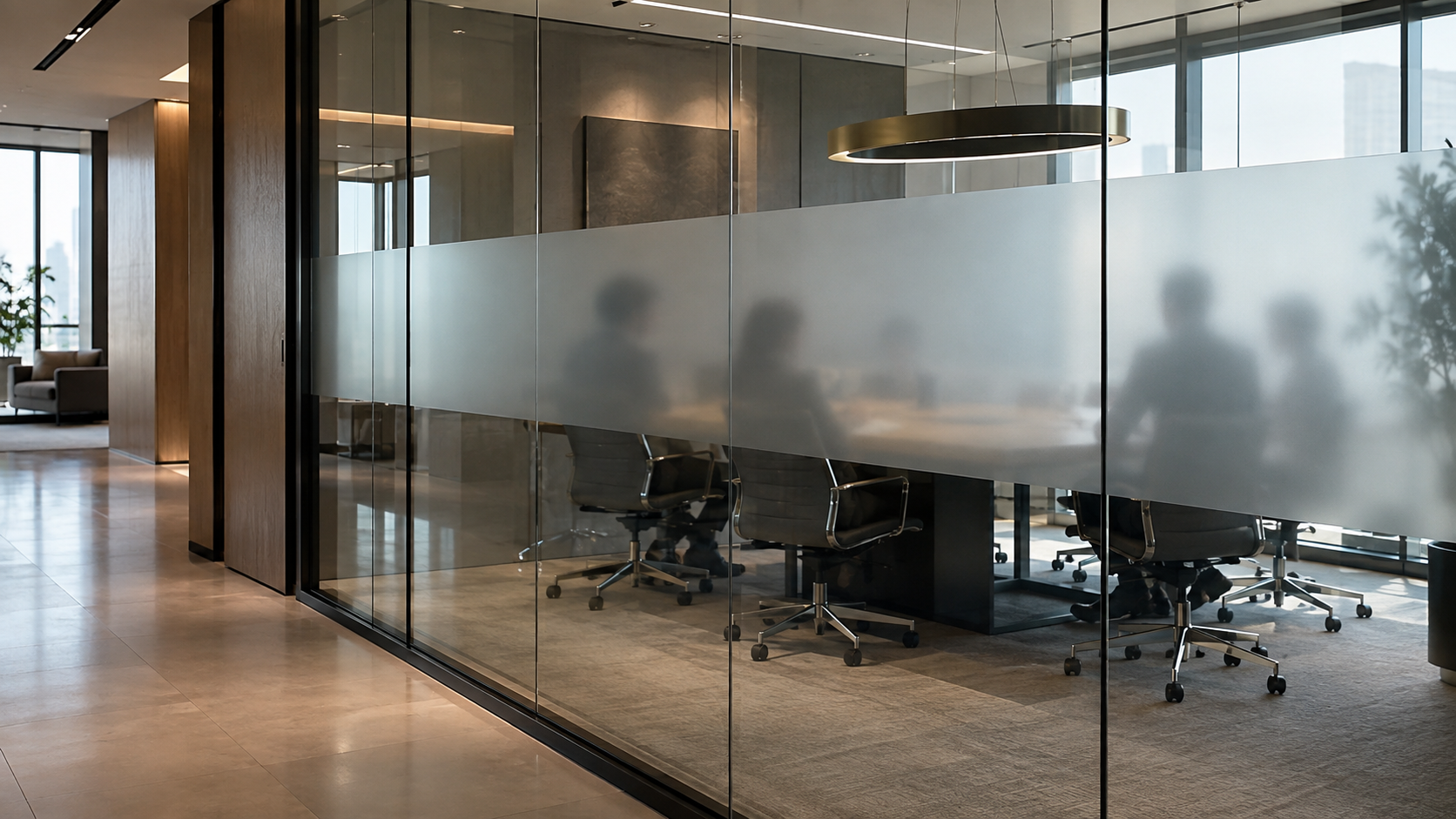
For a room that is already occupied, begin with photographs of the whole pane, its edges and handles, approximate dimensions, and any known existing film or coating. Ask an installer to inspect the condition before confirming a method, rather than deciding from one front-facing photo of the room.
When assessing film, ask about placement, joins, edges, existing adhesive, surface preparation, access time, and the point at which the room can return to normal use. When assessing sandblasted glass, ask whether the existing pane will remain or be replaced, then include surface work, delivery, removal, and installation in the same scope.
Care the surfaceEasier cleaning depends on the actual surface and care guide
Neither material should be called easier to clean without knowing the specified surface, coating, cleaning products, and tools. The practical approach is to request the care guide for the exact material proposed and make it part of the handover record.
Test cleaning on a sample before ordering the whole room
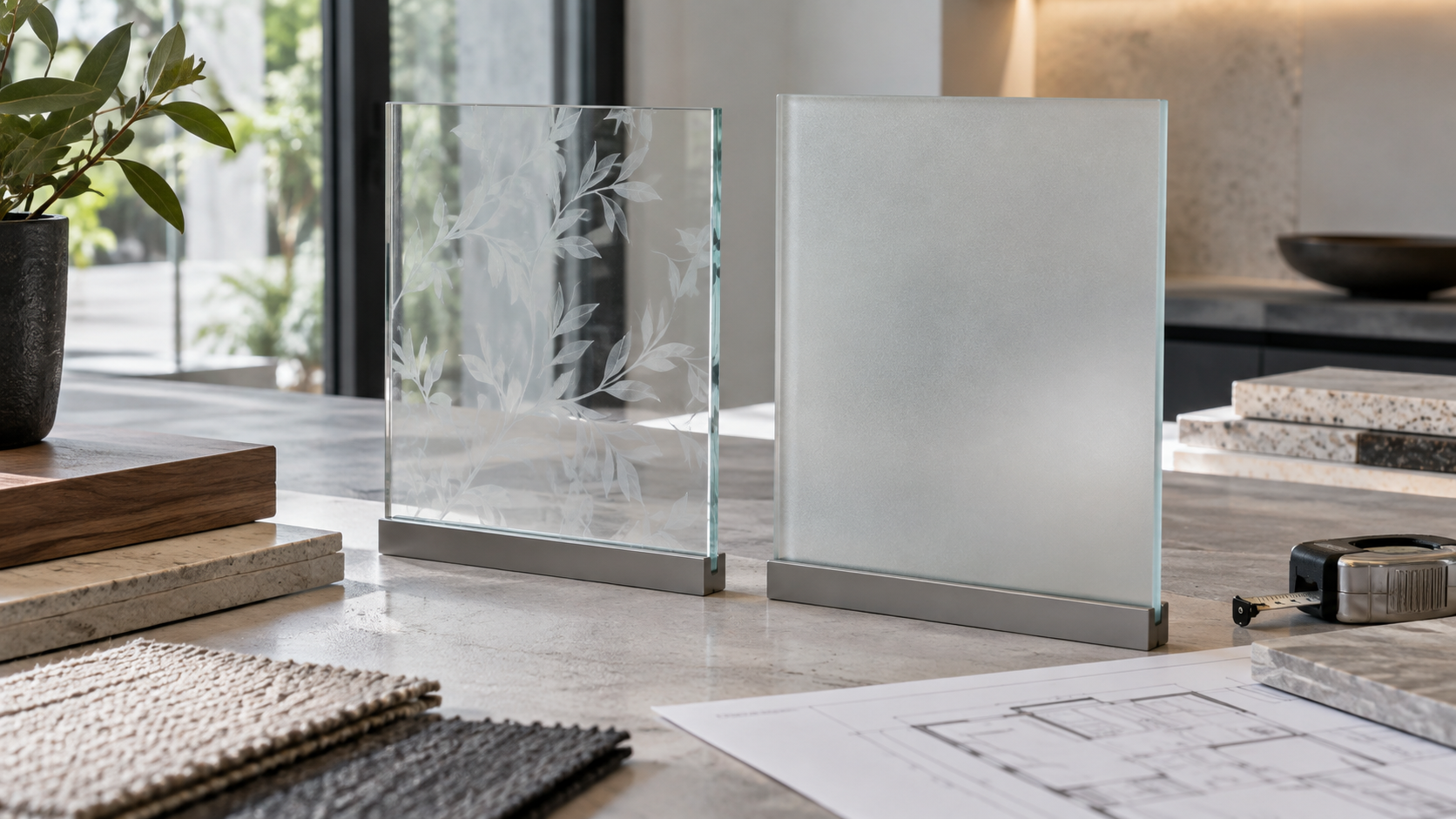
Ask the supplier for samples and let the person responsible for cleaning test them according to the included instructions. Agree the test method with the supplier first. Look at fingerprints, water marks after wiping, and the result under the room’s actual light.
Think aheadDurability and changing the pattern are different questions
For film, confirm the wiping method, the suitable cleaner, and the time needed for the material to set before normal cleaning begins. For sandblasted glass, ask about the finish that will be handed over and how a future design change would be handled, because this is a change to the glass surface rather than removal of a film layer.
This distinction matters when a meeting room needs a new logo, a revised privacy band, or a different interior plan. The right choice is the one whose future work fits the way the room is likely to change.
Choose with samplesHow to review MAXXMA Growth beyond colour alone
The two Growth items used to support this article are listed as PVC materials: a clear frosted decorative film and an interior decorative film with a white-to-clear gradient. This information identifies the material and finish style. It does not establish a service life, heat-rejection performance, or a numerical privacy level.
When requesting samples, begin with what the room needs to conceal: people seated in a meeting, documents on a table, storage, or simply an overly exposed feeling. Then choose the placement and pattern that answer that need.
Agree before workSix items to settle before installation
- Purpose: Identify the area that needs privacy and the area that should remain transparent.
- Sample: Confirm the pattern, tone, placement, and the view from both sides of the glass.
- Scope: State whether existing glass stays or will be replaced, including preparation, removal, delivery, and installation.
- Timing: Confirm site access, handover timing, and any care restrictions before the room returns to use.
- Care: Request the guide for the selected material, including cleaners and tools to use or avoid.
- Future changes: Request the scope and cost basis for removing film, changing a pattern, or altering the glass work.
Questions before choosing film or sandblasted glass
Is decorative film always less expensive than sandblasted glass?
No. Compare quotations for the same area, pattern, and labour scope. Keep work with existing glass separate from work that includes replacing glass, and include preparation or removal work where relevant.
What should I assess if I may want a different pattern later?
Start by asking about film options with clear removal and replacement conditions, then ask about adhesive residue and surface preparation. For sandblasted glass, request a plan for changing the glass work when the design changes.
Is sandblasted glass impossible to clean?
No. It needs a cleaning method suited to its surface and any coating. Request the relevant care guide and test the proposed method on a sample before committing to the full installation.
Does frosted film also reduce heat?
Do not treat a frosted appearance or a decorative-film name as evidence of heat control. If the project needs both privacy and solar performance, request evidence for the exact film selected and evaluate that requirement separately.
Should every room use a fully frosted glass wall?
Not necessarily. Define the sightline that needs screening first, then compare a full panel, a horizontal band, or a gradient against the room layout and physical samples. What suits a meeting room may not suit a corridor or a relaxation area.
Send room photographs and glass dimensions for a practical choice
If you are still deciding between decorative film and sandblasted glass, there is no need to choose from a material name alone. Prepare photographs of the full glass pane, approximate dimensions, the sightline you want to screen, and how the room may be used later. These details make a sample review and scope assessment more useful.
Contact MAXXMA with site photographs to discuss decorative-film samples that suit your space. Use the MAXXMA contact page and mention whether you are considering frosted or gradient film for a home or workplace.
Scope of informationInformation used for this decision guide
The Growth information in this article is limited to the MAXXMA product records linked to it: PVC, a clear frosted finish, and interior decorative films in white and clear tones. This article does not use pricing, service-life claims, warranty terms, or test results from other brands. Confirm the final selection from MAXXMA samples and a project-specific quotation.
Ready to protect your home or vehicle?
Consult with MAXXMA experts to select the perfect film for your needs, or find an authorized dealer near you.