

The desk beside the window looked right at first. Daylight came in, the room felt open, and the view gave the workday a little breathing room. Then a meeting began. Someone crossed the hallway outside. A visitor came through the living area. The same clear glass suddenly made it hard to settle into the chair.
That does not automatically mean the window needs to be covered from edge to edge. A workspace beside glass asks for daylight, a connection to the room around it, and a modest boundary that lets someone think or speak without feeling on display. The design question is less about a pattern on glass than the height at which a line of sight should stop.
This guide helps you observe that line before choosing a frosted or decorative interior film. The aim is not maximum privacy. It is privacy in the place where it is needed, while daylight keeps doing its quieter work.
01 · DAILY USEOne pane of glass contains several working heights
On a plan, a window is one rectangle. From a chair, it has at least three different zones.
- The seated zone is where the eyes of someone at the desk meet a hall, living room, or neighbouring space. This zone has the greatest effect on feeling watched.
- The standing zone matters when you greet someone, move around, or take a call while standing. A band planned only from the chair can end too low.
- The daylight and view zone often sits above and below the working sight line. Covering the full pane to solve a single sight line can remove parts of the room that were never causing the problem.
For women who wear skirts while working, test the view from the circulation side at lap and hem level as well as face height. A well placed band can interrupt that passing sight line while keeping the upper glass open to daylight.
This changes the question from “how many centimetres high should the film be?” to “who can see whom, at what time, and where does that interrupt work?” A condominium corridor, a family home, and an office with constant circulation will produce different answers.
02 · DAYLIGHTKeep daylight in the discussion
Daylighting considers windows, shading, and interior layout together so natural light and temperature can be managed as part of one space. The U.S. Department of Energy explains this relationship. It is useful background for planning, not a prediction of energy performance for a Thai home, office, product, or building.
For a desk by glass, separate light from sight lines first. If the interruption comes from a hallway at chest height, examine that band before changing the entire window. The remaining clear glass may still bring in daylight and maintain the view that made the room appealing in the first place.
Try this simple test before discussing materials.
- Sit at the desk in your usual working posture while another person stands where people commonly pass.
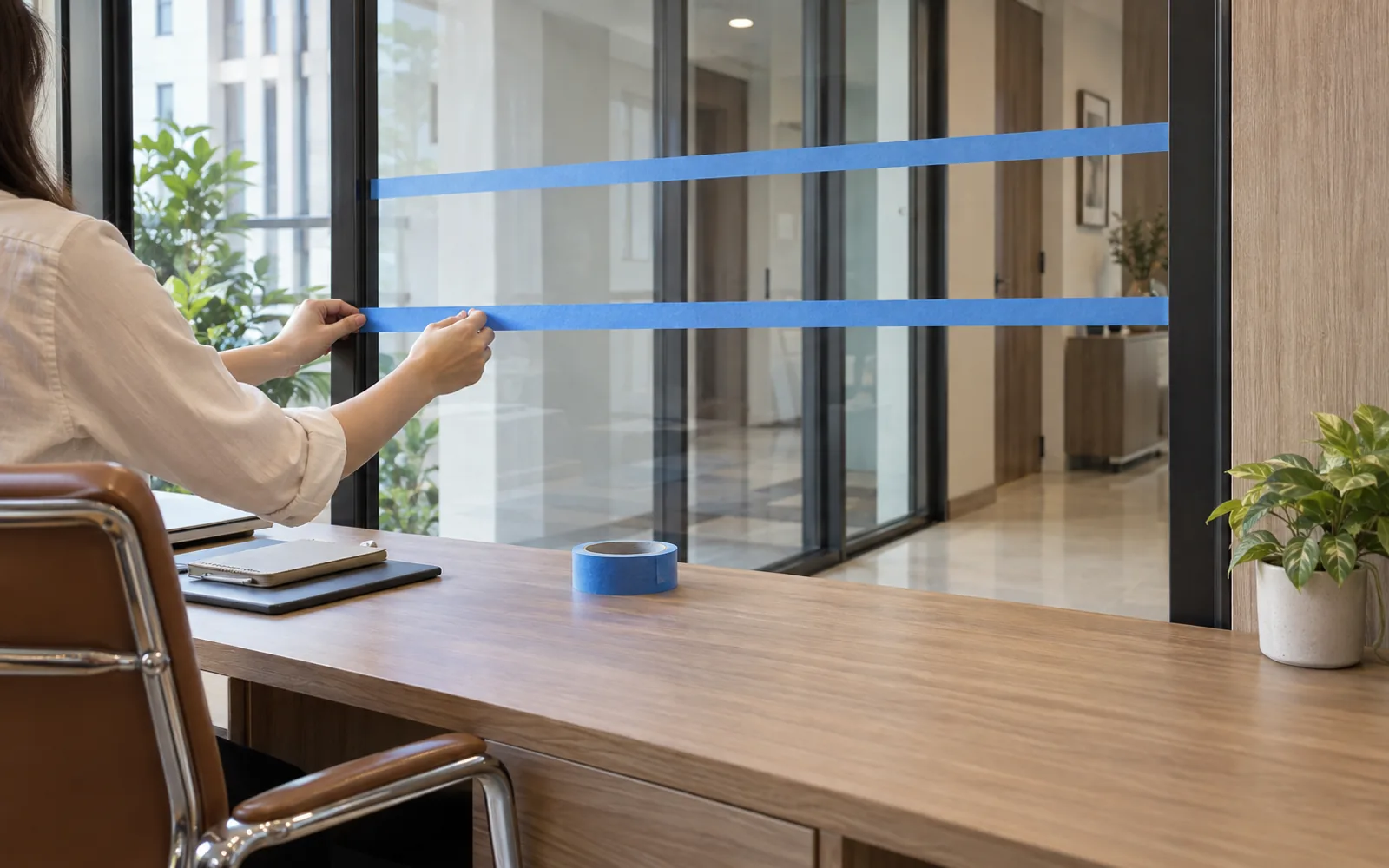
- Apply a narrow strip of painter’s tape across the glass at eye height, then look from the other side.
- Move the strip up and down in small steps. Repeat while standing and while opening doors or moving the chair.
- Photograph each option in the morning, afternoon, and with interior lights on.
The exercise does not replace a site measurement. It gives everyone a shared visual reference, instead of asking an installer to interpret a sample photograph made for a different room and camera angle.
Plan for the interruption that actually repeats
A desk facing a passageway
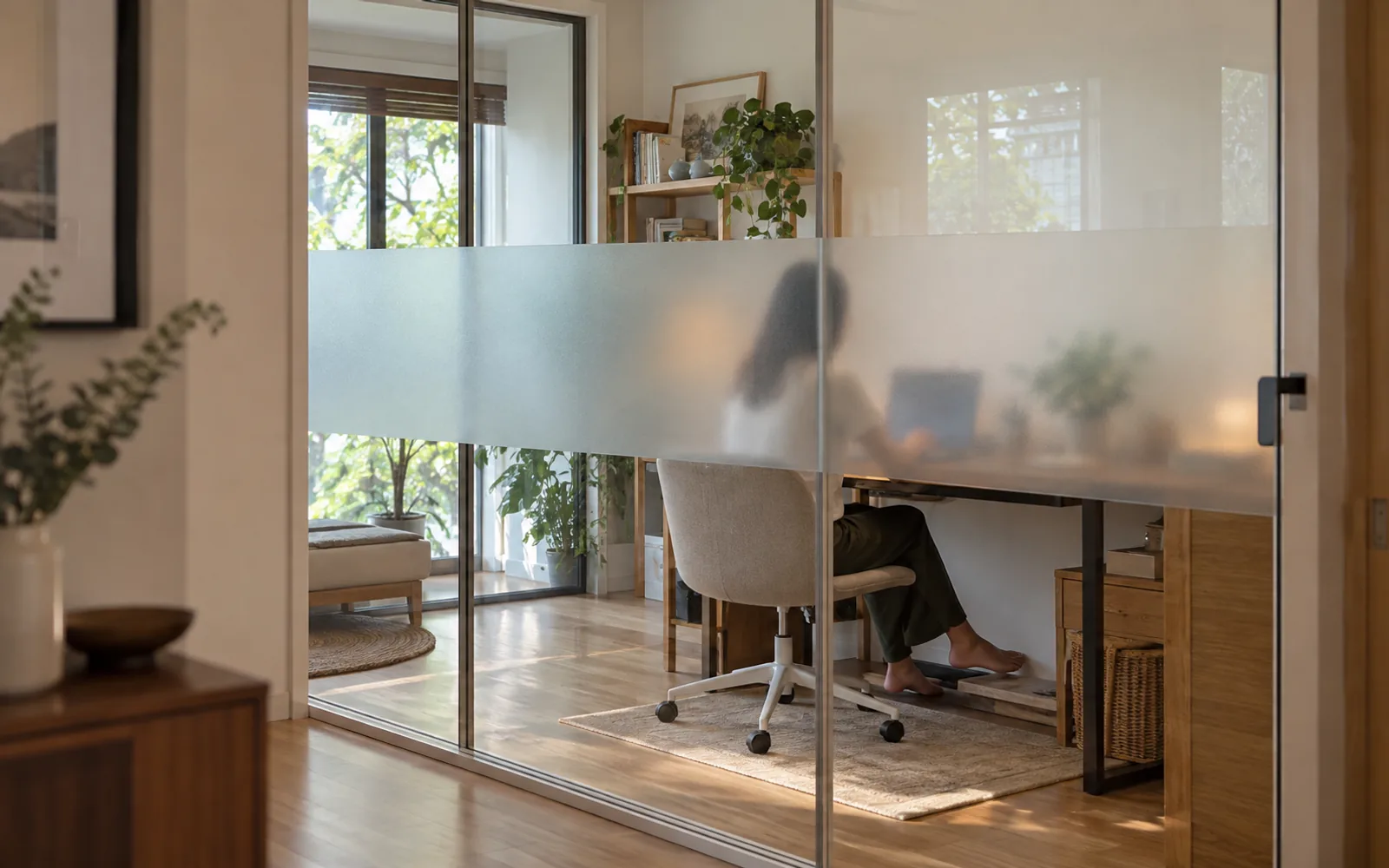
When people walk on the other side of the glass, their eyes often cross the same zone as the screen and the seated person’s face. Begin with that line. Then decide whether the upper pane should remain open for daylight, trees, or sky. A focused band can leave the passage visually legible without making the person at the desk feel like part of the display.
A desk facing the view
Here the unwanted view may come from people moving behind the worker, rather than outdoors. A high-backed chair, a different desk position, or a band that begins above the floor may each address a different condition. Stand where people pass before deciding. A view from the chair alone can be misleading.
A workspace that also hosts meetings
When the glass becomes a background for video calls, observe both the camera view and the view from outside the room. A band at camera height may calm the backdrop. It still needs to serve the room outside meeting hours, because the person who works there will live with that edge every day.
04 · DECISIONThree questions that prevent a decision from becoming a guess
Whose view are you managing? Name the people clearly: family members, visitors, colleagues, passers-by, or people in a neighbouring building. Each requires a test from a different position.
When does the room need quiet? It may be during meetings, focused work, or evenings with the interior lights on. The most useful boundary serves the important moments without taking more from the room than necessary.
What do you want to preserve? A skyline, a nearby tree, the ability for family to see that you are working, or simply an open feeling. Naming what you do not want to lose prevents one solved problem from becoming another daily regret.
At this stage, browse decorative interior film options or read the related office glass partition guide for wider planning context. Treat those examples as prompts for observation, not a one-size-fits-all specification.
05 · CLARITYScience vs. myth: what a frosted band can solve
Myth: Privacy means covering the entire pane.
Not always. If the interruption is limited to one line of sight, a carefully positioned band may answer that condition while leaving other parts of the window available for daylight and view.
Myth: A frosted film answers glare and heat at the same time.
These are separate questions. Decorative film addresses visibility and the character of a space. Glare, heat, glass orientation, and building requirements need their own assessment. Tell the advisor every problem you are trying to solve.
Myth: Choose the pattern first, then decide the height.
Pattern sets a mood, but its edge will sit in the user’s view every day. Establish the usable height first, then choose the level of translucency, pattern, and edge treatment that suit the room.
Bring five minutes of evidence to a site visit
Before a measurement visit, prepare a few practical references.
- A full view of the glass from the desk and from the circulation side
- A seated photograph that shows the desk and chair height
- A photograph of the tape lines you tested, with a note on what felt too high or low
- The time of day when light or passers-by are most disruptive
- Relevant building constraints, such as condominium rules, sliding panels, and frames that should remain clear
This makes the conversation about actual use rather than “the one in the photo.” Once the brief is clear, the height and material discussion can begin with the existing glass and site conditions in view.
07 · FAQQuestions before setting a frosted-film height
Measure from the floor or the eyes?
Start with eye height in the posture used for work, then record the floor dimension for installation. A floor dimension alone does not account for the desk, chair, or user.
Will frosted film make everything invisible?
Visibility varies with material, light on each side, distance, and angle. Review a sample on real glass in conditions close to your space before deciding.
Does privacy require a full-pane installation?
Not if the problem occurs along a specific sight line. A tape test can show which part needs a boundary and which part can remain open for light or view.
Should video calls affect the planning height?
Yes. Open the camera in the usual working position, then assess both the visible background and the sight line from the other side of the glass.
Start with one line that fits the way you work
Good privacy does not make a room feel closed. It lets you stop guarding yourself in the middle of work. Begin with two strips of tape, two photographs, and a clear answer about the time of day when you need calm the most.
Then use the decorative interior film guide to begin a material and site-measurement conversation from the right place. The best decision may start with a single line placed at the height of your real life.
09 · REFERENCESReferences
- U.S. Department of Energy: Energy 101 Daylighting, background on coordinating windows, shading, and interior layout. It does not validate a specific product or outcome in Thailand.
- Frosted-film installation technique / 4Care, an embedded MAXXMA source video.
- MAXXMA owned-channel source: “ข้อดีและข้อเสียของฟิล์มฝ้าแม็กซ์ม่า,” used only as a contextual source for this topic. This article does not make an offer, warranty, price, or performance claim from that video.
Ready to protect your home or vehicle?
Consult with MAXXMA experts to select the perfect film for your needs, or find an authorized dealer near you.