
The Hidden Cost of Aesthetic Architecture: When a Glasshouse Cafe Becomes an Afternoon Oven
In modern dining and hospitality, aesthetics and spatial atmosphere are essential drivers of foot traffic and social media visibility. The “Glasshouse Cafe” architectural concept has emerged as a premier magnet for guests. Floor-to-ceiling panoramic glass walls, abundant natural daylight, and visual integration with lush greenery create an unforgettable, relaxing ambiance that customers love.
However, in tropical and high-sunlight climates, large expanses of standard architectural glass quickly transform into “massive solar heat traps” during peak afternoon hours (11:00 to 15:00), precisely when commercial venues should generate maximum revenue:
- Window Tables Become Deserted: Direct infrared (IR) solar radiation can push surface temperatures around perimeter tables to 36–40°C, even when air conditioning is running at full power. Guests cannot comfortably stay longer than 15 minutes or outright refuse window seating, causing table turnover rates and seating capacity to drop by 30% to 50%.
- Harsh Glare Ruins the Experience: Intense daylight reflecting off tabletops and mobile screens strains eyes, causes headaches, and makes smartphone photography look washed out and backlit.
- Skyrocketing Energy Bills and Compressor Strain: Cafe operators often respond by cranking down thermostats and installing extra portable fans. This leads to heavy monthly electric utility bills while air conditioning compressors struggle under relentless thermal overload, creating an uncomfortable imbalance of freezing dining centers and sweltering perimeter zones.
- The Blackout Curtain Trap: In frustration, some operators install heavy blackout curtains or blinds. This instantly destroys the primary commercial selling point of a glasshouse cafe, turning a luminous destination into a dark, uninviting enclosure.
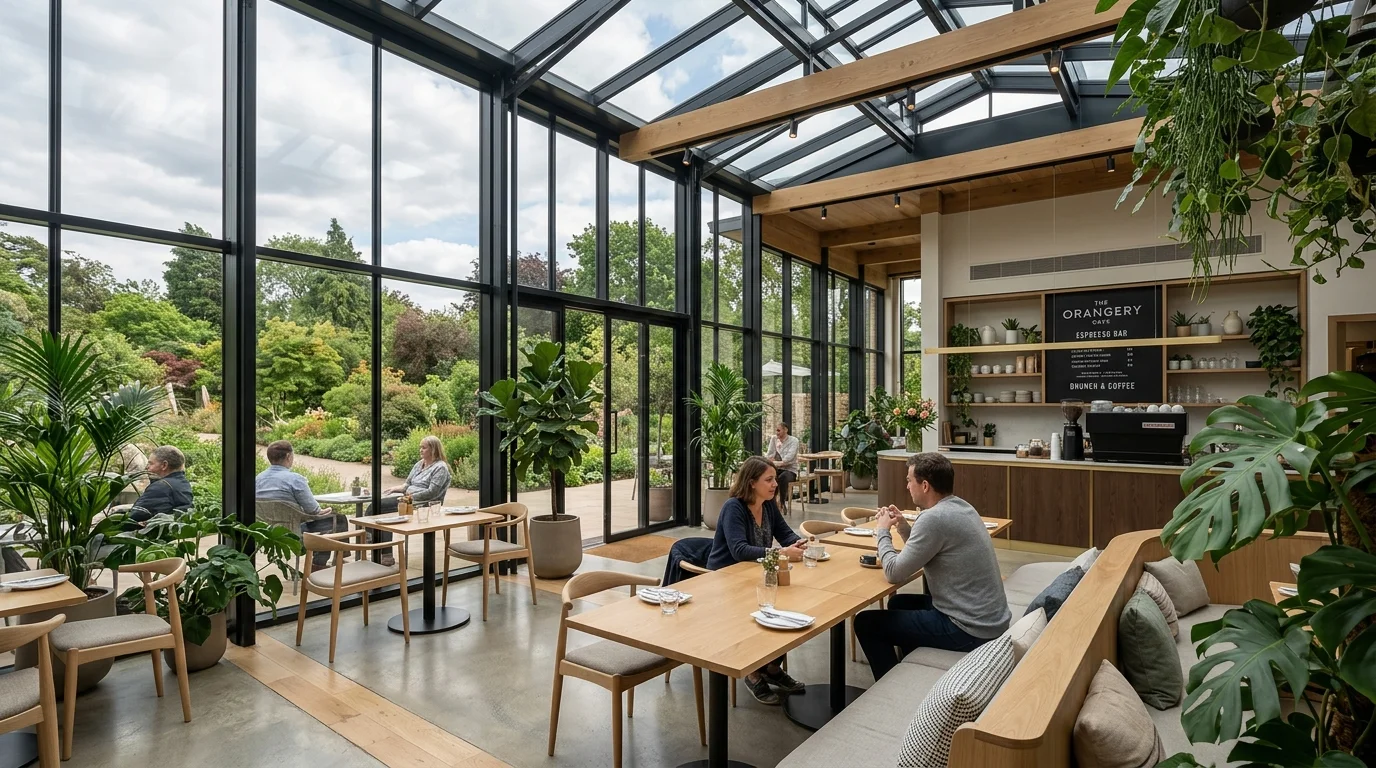
This guide is developed for cafe entrepreneurs, restaurant owners, and architects designing or retrofitting glasshouse hospitality spaces. It outlines proven spatial zoning, visual comfort management, and commercial window film strategies to keep every table full and comfortable throughout the day.
Spatial Zoning & Solar Orientation1. Micro-Zoning Seating Layouts Around Solar Paths
A common architectural mistake in commercial glass cafes is laying out symmetrical seating without considering the dynamic solar arc across different times of day. Strategic micro-zoning minimizes heat exposure while optimizing seating utilization.
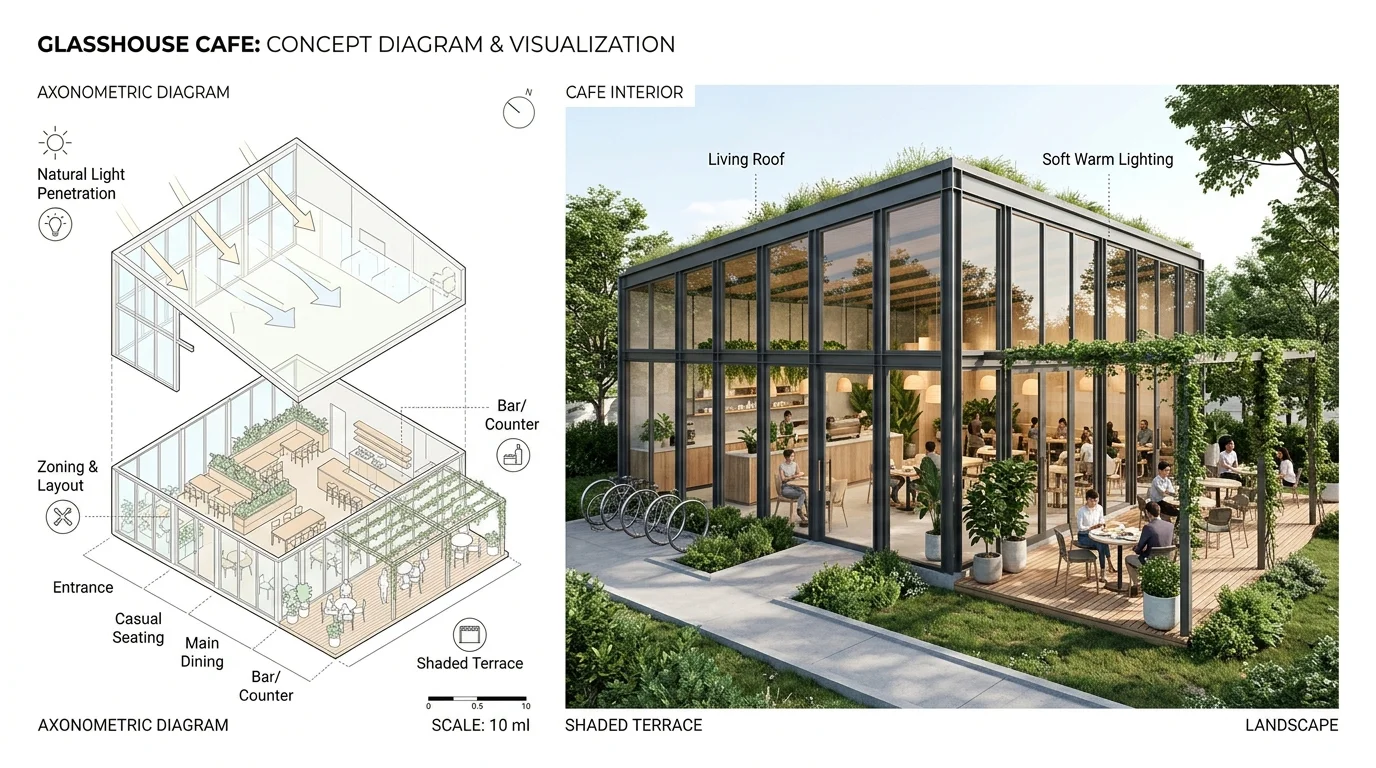
Directional Layout Guidelines:
- North-Facing Facades (Soft Ambient Zone): Receives indirect, diffused daylight throughout the year without harsh direct sun. Ideal for communal work tables, quiet reading corners, and primary social photo spots.
- East-Facing Facades (Morning Glow Zone): Receives gentle morning sunlight at low angles. Excellent for breakfast seating and bakery display counters. As solar intensity builds after 10:30 AM, exterior shading or high-performance solar control film prevents thermal buildup.
- South and West Facades (High-Heat Active Zone): Faces the strongest radiant solar energy from 12:00 to 17:00. Avoid placing espresso machines, pastry chillers, or delicate food displays in these zones. Use these perimeters for casual transit corridors, lush indoor planters, or secondary lounge seating equipped with high-rejection solar control films.
2. Managing Glare on Dining Tables and Digital Screens
True customer comfort depends on both ambient air temperature and “Visual Ergonomics.” Unfiltered sunlight penetrating clear architectural glass often exceeds 50,000 to 100,000 lux, whereas human eyes require only 300 to 500 lux for reading, working, and social dining.
The Glare Challenge:
- Reflective Surface Distractions: Polished marble, stainless steel, or glass tabletops reflect direct sun directly into diners’ eyes, causing rapid visual fatigue.
- Photography Dynamic Range: Excessive contrast between bright exterior backdrops and indoor subjects makes portraits dark and silhouettes underexposed, diminishing social sharing opportunities.
Design Solutions:
- Matte Table Finishes: Choose textured natural oak, matte composite stone, or micro-cement finishes to diffuse reflected light.
- Glare Reduction Window Films: Install high-clarity ceramic window films with 35% to 50% Visible Light Transmission (VLT). These films cut up to 70% of blinding glare while keeping the interior luminous, natural, and camera-ready.
3. HVAC Synchronization and Airflow Optimization
Relying solely on oversized HVAC capacity is expensive and inefficient. Sunlight passing through clear glass delivers “Radiant Heat” directly onto guests and furniture. Even when ambient air is chilled, customers feel radiant warmth radiating from sunlit glass panes.
Commercial Heat Load Breakdown in Glasshouse Cafes
HVAC engineers assess four primary thermal load contributors in glass-enclosed retail spaces:
Practical Climate Optimization:
- Entryway Air Curtains: Install unobtrusive air curtains above main entrance doors to form an invisible thermal barrier, retaining chilled indoor air.
- Ceiling Air Destratification: In high-ceiling glass spaces, warm air naturally stratifies near the upper rafters. Low-speed destratification fans gently redistribute air for uniform floor-level comfort.
- Upfront Solar Heat Interception: Applying commercial nano-ceramic film at the glass envelope reduces incoming solar heat gain at the source, decreasing cooling loads by up to 30% and extending HVAC operational lifespan.
4. Selecting Commercial Solar Control Films for Cafes
The key selection criterion for glasshouse cafes is “Optical Clarity Combined with High Heat Rejection.” Heavy dark tints or highly reflective mirror films degrade the welcoming aesthetic of a cafe, making the storefront look dark or shuttered from the street.
MAXXMA Commercial Architectural Film Series Comparison
| Film Series | Technology | Visible Light (VLT) | Infrared Rejection (IRR) | Total Solar Energy (TSER) | Best Suited Space |
|---|---|---|---|---|---|
| MAXXMA Polarized | Pure Nano Ceramic | 5% to 60% | 99% (All models) | 73% to 97% | Expansive south/west glass walls requiring maximum heat block with crystal-clear optics. |
| MAXXMA Independent Plus | Nano Ceramic UV400 | 10% to 60% | 90% to 95% | 65% to 85% | Areas near genuine wood furnishings and art; delivers 100% UV400 radiation protection. |
| MAXXMA Refined | Ceramic Metallized | 5% to 35% | 70% to 80% | 70% to 88% | Cost-effective moderate glare reduction for large-format commercial venues. |
| MAXXMA Signature | Safety Ceramic 5.5 mil | 5% to 70% | 86% to 90% | 57% to 93% | Entry doors, sliding storefronts, and high-traffic areas needing shatter retention. |
MAXXMA Polarized
Nano CeramicBest for large south and west-facing facades. Delivers unmatched optical clarity and maximum heat rejection.
MAXXMA Independent Plus
UV400 Shield100% UV400 protection. Safeguards fine solid wood tables, leather seating, and artwork from fading.
MAXXMA Refined
Ceramic MetallizedCost-effective glare and heat control designed for extensive commercial window surfaces.
5. Post-Installation Verification & ROI Measurement
Following solar control film installation, commercial operators should track verifiable metrics to validate their investment return:
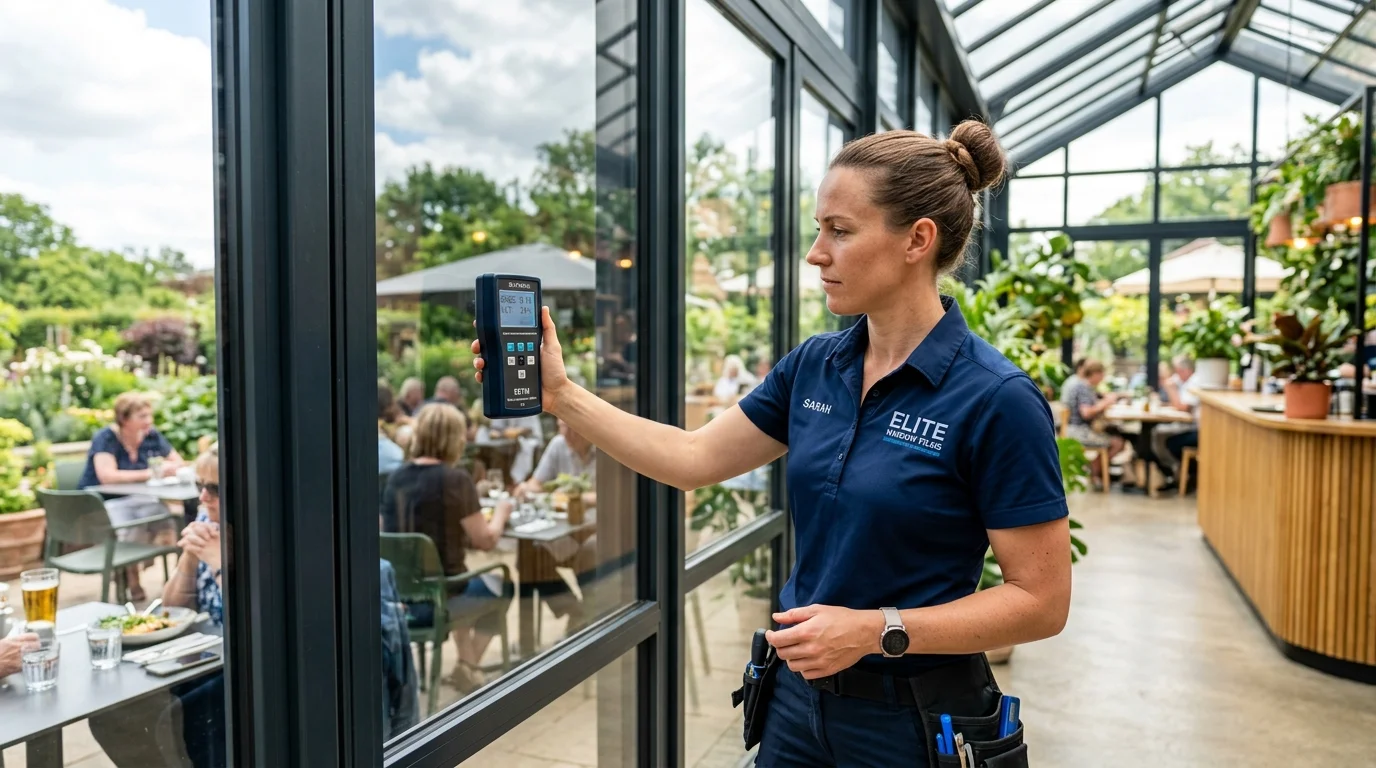
- Glass Surface Temperature Readings: Use an infrared laser thermometer to measure interior glass surface temperatures before and after installation at 13:00. High-performance ceramic films noticeably reduce radiant temperature.
- Compressor Duty Cycle Audits: Monitor HVAC compressor run times. Consistent cycling indicates that cooling loads have normalized to manageable parameters.
- Perimeter Table Turnover Rate: Track seating metrics during peak afternoon hours. When guests comfortably stay through full dining cycles without requesting table changes, thermal comfort goals are met.
- Energy Cost Reductions: Use the MAXXMA Commercial Energy Savings Calculator to estimate energy savings and payback periods.
Frequently Asked Questions
1
Do we need to install the exact same film model across all cafe windows?
▼
No. We recommend a customized directional approach: intense south and west-facing glass should utilize ultra-high rejection ceramic films like MAXXMA Polarized, while north-facing or shaded perimeters can use higher VLT films (50-60%) to welcome bright, clear natural daylight while maintaining 99% UV protection.
2
Will installing window film make the cafe interior too dark for photography?
▼
MAXXMA premium ceramic films use advanced Nano-Sputtering technology that specifically targets infrared and UV rays while transmitting balanced visible light (such as 40% to 60% VLT). This creates soft, diffused natural illumination that softens harsh glare and balances dynamic range, making mobile photos look vibrant without harsh shadows.
3
What is the best time for technicians to conduct a site survey?
▼
The most effective evaluation window is between 11:30 and 14:30, when solar altitude and thermal intensity are at their peak. Technicians can measure real-time solar transmission and infrared levels to pinpoint high-heat zones and recommend the optimal film specification.
Transform Your Glasshouse Cafe into an Inviting, Cool Oasis
Schedule a consultation with the MAXXMA commercial team for on-site solar assessment, sample demonstrations, and tailored architectural recommendations.
Ready to protect your home or vehicle?
Consult with MAXXMA experts to select the perfect film for your needs, or find an authorized dealer near you.