
Explore commercial window film applications designed for retail venues, cafes, and business spaces.
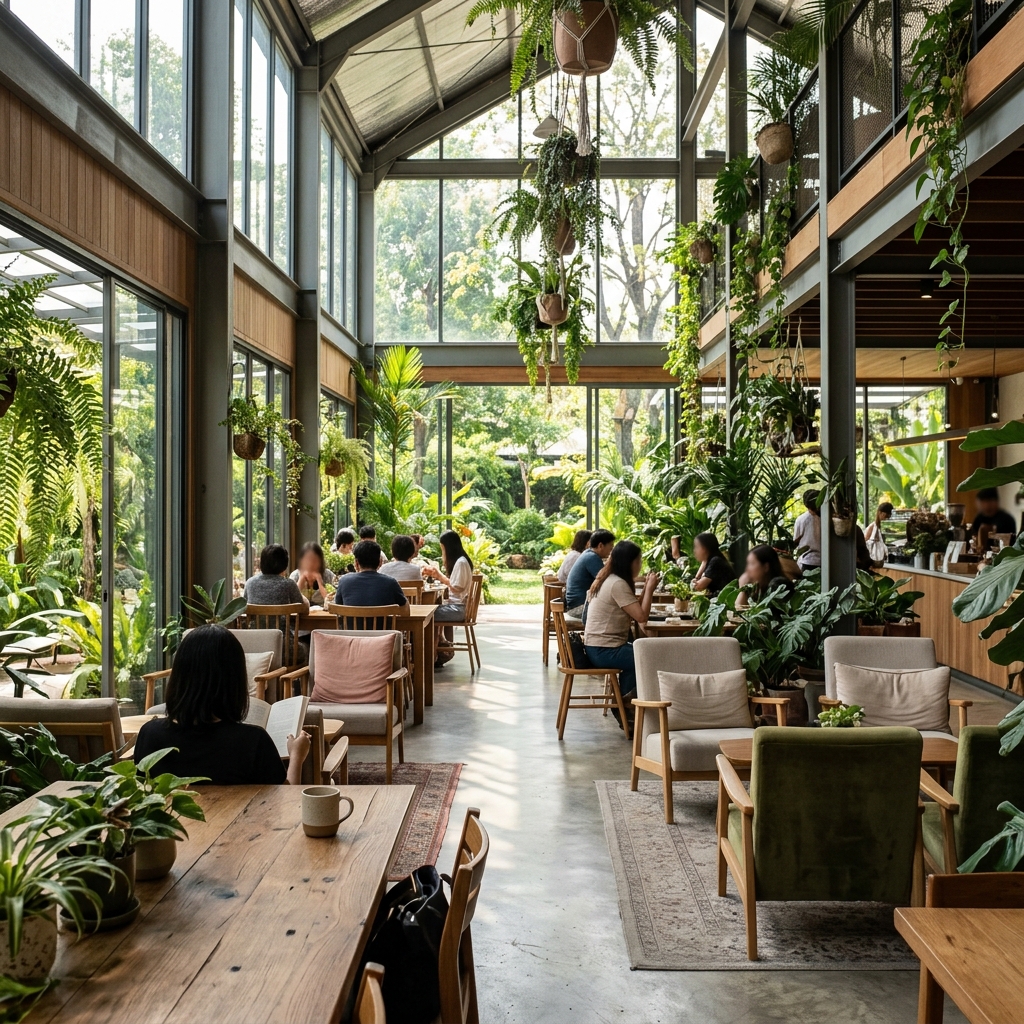
The irresistible allure of a glass house cafe lies in its open, airy transparency that invites natural daylight into every corner. Expansive glazing dissolves physical boundaries, connecting patrons with lush outdoor garden views and urban streetscapes. Yet in tropical and sunny climates, building a glass-enclosed coffee shop often brings an unforeseen challenge: intense thermal heat buildup that turns an idyllic retreat into a greenhouse oven, leaving guests uncomfortable and sending monthly air conditioning bills soaring.
Finding the sweet spot between striking architectural aesthetics and enduring patron comfort is the fundamental key to operating a thriving glass house cafe.
THE EXPERIENCEThe Psychology of Relaxation in Glass House Cafes
A contemporary coffee shop is far more than a place to purchase beverages: it is a vessel for personal taste, inspiring conversations, and lasting memories. Customers visit to immerse themselves in visual serenity. Gentle daylight pouring through floor-to-ceiling glass fosters relaxation and ignites creative focus. However, that magical ambiance evaporates the moment indoor temperatures rise past the threshold of comfort.
Harsh afternoon sunlight not only radiates intense heat, but also produces blinding glare that interferes with reading, laptop work, and photography: a critical consideration in an era where social media visual appeal directly influences customer discovery and foot traffic. Designing an interior where natural light works in harmony with soothing coolness is a strategic priority for every cafe founder.
THE GLASS PARADOXHeat Traps and Glare: The Atmosphere Destroyer in Glass Cafes
The classic dilemma of glass architecture is the tension between wanting abundant daylight and avoiding oppressive heat. Many hospitality entrepreneurs fall into common traps when trying to resolve this friction.
Breaking the False Dilemma
Cafe owners often assume they are forced into an unavoidable compromise:
- Leaving Glazing Bare: Enduring punishing indoor temperatures and blinding sun glare just to showcase architectural beauty, only to find customers avoiding sunlit tables.
- Drawing Heavy Blackout Drapes: Blocking the solar heat, but destroying the glass house identity, outdoor garden views, and welcoming atmosphere.
This trade-off is a false dilemma. Modern material science offers an invisible shield: spectrally selective nano-ceramic architectural window films that eliminate up to 80% to 90% of infrared solar heat while allowing crisp, natural daylight to illuminate the room.
SPACE ALLOCATIONStrategic Seating Layout by Solar Path
Smart spatial planning is the primary line of defense against solar heat gain. Before relying solely on mechanical HVAC cooling, design the seating layout around the sun’s trajectory throughout the day.
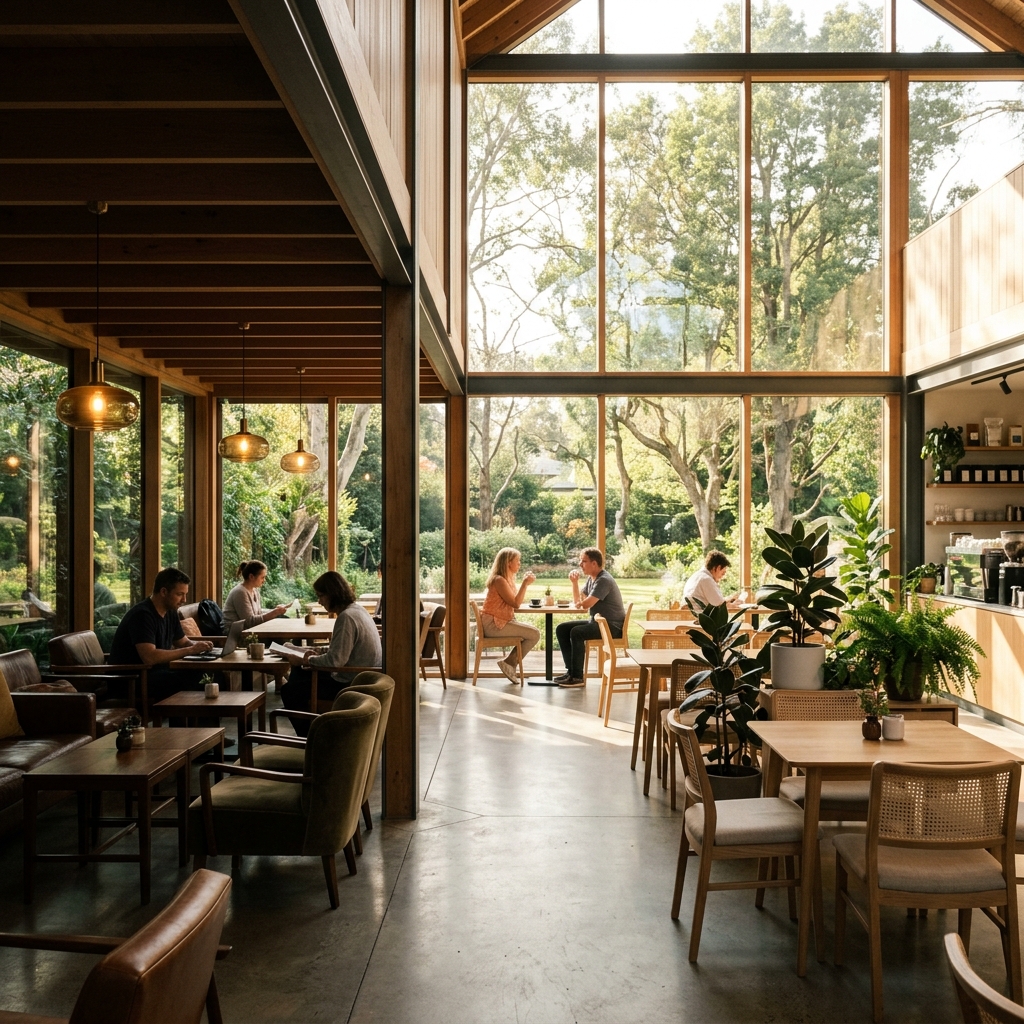
Dynamic Light Zoning
- East-Facing Facade: Ideal for morning coffee seating with soft sunrise rays, creating a warm, energizing start to the day.
- South and West-Facing Facades: Areas exposed to intense afternoon sun. Dedicate these zones to circulation walkways, ordering counters, or buffer them with exterior shading trees to soften direct solar exposure.
- Deep Interior Core: Tailored for remote workers, long-stay patrons, or guests sensitive to screen glare on digital devices.
Selecting Commercial Window Film to Cut Energy Bills and Ensure Comfort
Architectural solar control film intercepts radiant thermal energy before it penetrates the building envelope. Infrared rays (the primary wavelength responsible for the physical sensation of heat) are selectively blocked, while visible light is preserved. High-grade nano-ceramic films reject over 90% of infrared heat without dark tints or mirrored reflections.
Applying architectural window film is both a guest-comfort upgrade and a high-yield financial decision. It substantially reduces the thermal load on commercial air conditioning units, extends compressor lifespan, and lowers monthly utility expenses by 20% to 30%.
TECHNICAL MATRIXTechnical Specification Matrix for Cafe Glazing
For glass cafes that prioritize natural transparency and optical clarity, nano-ceramic architectural films offer an optimal balance between visible light transmission and total solar energy rejection.
- Visible Light (VLT)
- 50%
- Solar Rejection (TSER)
- 65%
- UV Rejection
- 99%
Best For: Garden views and maximum daylight clarity
- Visible Light (VLT)
- 35%
- Solar Rejection (TSER)
- 70%
- UV Rejection
- 99%
Best For: Main seating areas needing balanced glare and heat control
Pre-Installation Checklist: Space and HVAC Assessment
Investing in commercial window film yields the best return when paired with a holistic assessment of your venue:
Complimentary On-Site Survey & Film Sampling
The Pavilla Bangbon 3 Project
Setthasiri Project by MAXXMA
Bright Sukhumvit 24 Project
Professional glazing consultants always evaluate these key parameters:
- Audit Internal Heat Sources: Factor in thermal output from espresso machines, baking ovens, lighting fixtures, and peak guest occupancy.
- Inspect Airflow Distribution: Ensure air conditioning vents effectively distribute cool airflow across sun-facing perimeters without creating uncomfortable cold drafts.
- Identify Glass Composition: Clear float, tempered, and laminated glass require specific film absorptance tolerances to avoid thermal stress risks.
- Manage Glare on POS and Screens: Calibrate film opacity so cashier displays and guest laptops remain completely glare-free.
Frequently Asked Questions (FAQ)
1Should every glass panel in the cafe use the exact same film specification?
Not necessarily. We recommend tailoring film selections by facade orientation. South and west windows often benefit from higher heat-rejection films, whereas north-facing panes can utilize ultra-clear 50% to 70% VLT films to draw in soft daylight while optimizing total installation budget.
2How does architectural film eliminate harsh reflections on table surfaces?
Window film selectively softens intense light wavelengths passing through the glass. By reducing harsh direct sun glare, it creates a gentle ambient illumination across marble, wood, and metal tabletops, eliminating visual fatigue and improving photo quality for guests.
3What is the best time of day to conduct an on-site solar survey?
The most informative window for site surveys is between 1:00 PM and 4:30 PM. During this period, the afternoon sun strikes facades at lower diagonal angles with peak thermal intensity, enabling specialists to identify real heat traps and specify the ideal solution.
Conclusion and On-Site Survey Appointment
Building a glass house cafe is a commitment to creating memorable experiences for your patrons. Do not let thermal discomfort undermine the inviting space you have carefully envisioned. Uniting transparent architecture with advanced material science ensures your cafe remains a vibrant, cool sanctuary year-round.
Whether you are launching a new cafe concept or upgrading an existing venue, the MAXXMA engineering team provides complimentary on-site surveys, glass thermal diagnostics, and customized commercial proposals.
Explore our full commercial range at Commercial Window Films, browse completed works in our Architectural Gallery, or calculate preliminary energy savings with the MAXXMA Energy Calculator.
Talk to the MAXXMA team
and choose the right film for your project
Ready to protect your home or vehicle?
Consult with MAXXMA experts to select the perfect film for your needs, or find an authorized dealer near you.