

01 IWFA Global Standards: Scientific Foundation of the Window Film Industry
In the global window film industry, the International Window Film Association (IWFA) stands as the most authoritative, non-profit organization dedicated to establishing objective technical benchmarks and educational standards. Founded by leading global manufacturers, materials scientists, distributors, and certified installation specialists, the IWFA creates standardized test methodologies and peer-reviewed educational literature free from commercial marketing bias.
Automotive Window Film Education Guide (2026) by the IWFA
📘 Official International Reference Guide
Automotive Window Film Education Guide
Published by: International Window Film Association (IWFA) • Martinsville, Virginia, USA
This comprehensive manual is designed to educate consumers, engineers, and professional installers on solar radiation physics, automotive glass thermal transfer, advanced film deposition technologies, and the critical distinction between verified TSER and misleading single-band IRR claims.
02 Solar Energy: Electromagnetic Spectrum and Heat Radiation
To understand how window films reject thermal energy, one must first examine solar radiation. Energy emitted by the sun travels toward Earth in the form of electromagnetic radiation, spanning an immense range of wavelengths: from high-energy gamma rays and X-rays to low-energy radio waves.
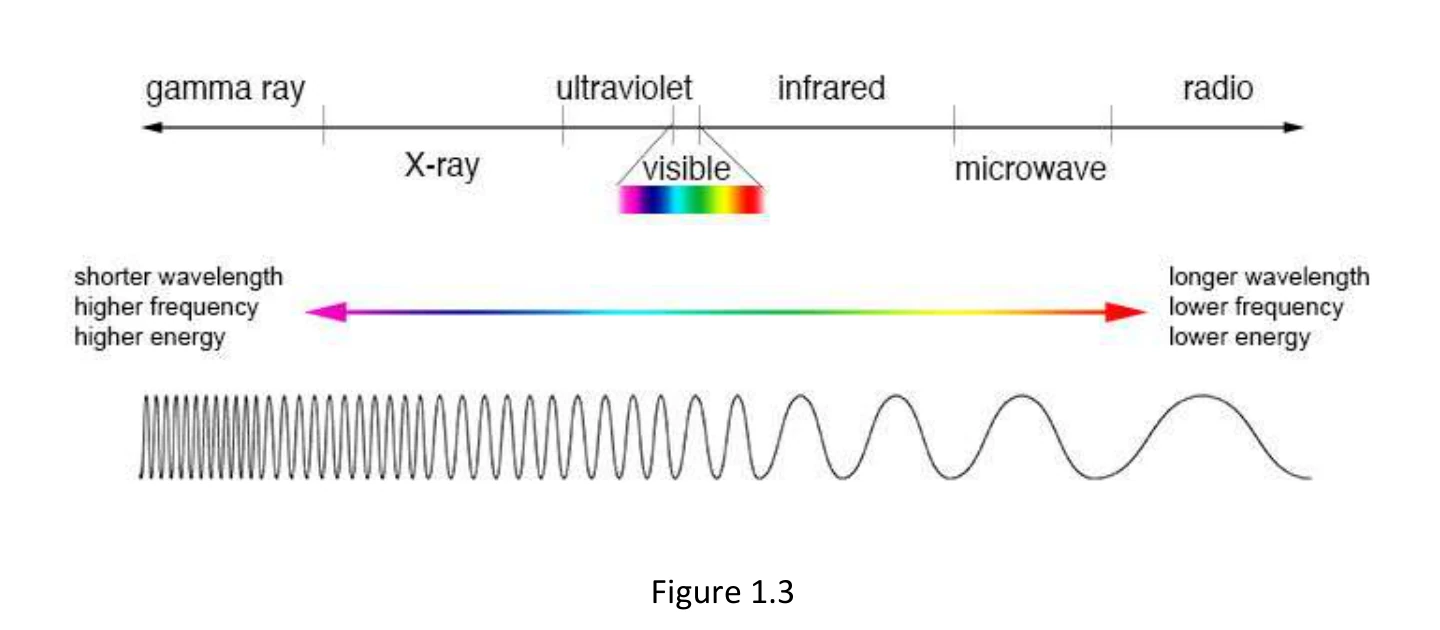
Figure 1.3: The Electromagnetic Spectrum diagram showing radiant energy bands from Gamma Rays and X-Rays through Ultraviolet, Visible Light, Infrared, to Microwaves and Radio Waves.
Out of this vast spectrum, only three distinct wavebands reach the Earth’s surface in quantities that significantly impact biological tissue and vehicle cabin heat accumulation, as established by the IWFA:
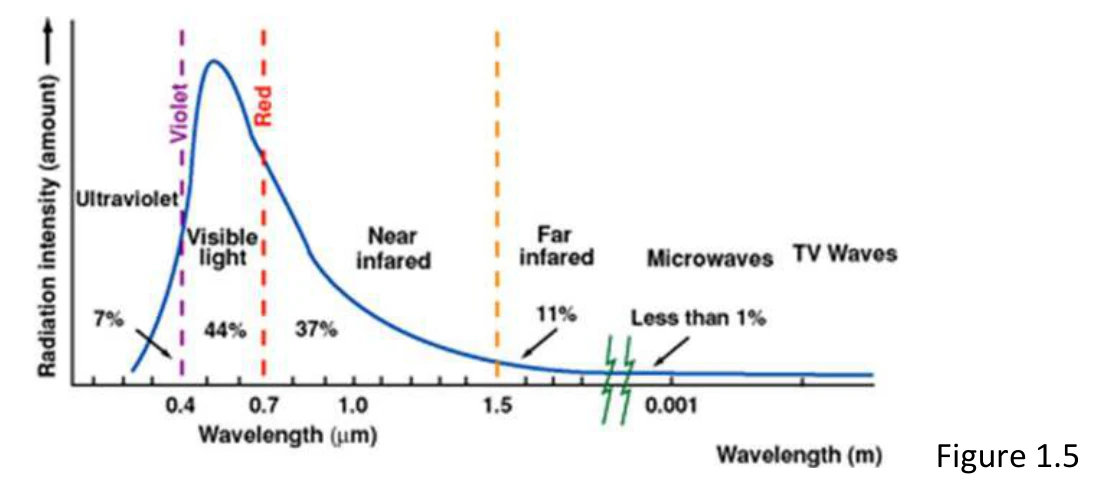
Figure 1.5: Breakdown of solar radiant energy at terrestrial level: Ultraviolet (UV) accounts for approximately 3%, Visible Light (VL) represents 44%, and Infrared (IR) constitutes 53% of total solar thermal power.
1. Ultraviolet Radiation (UV: 100 to 400 nm): Accounts for approximately 3% of Solar Energy
Although UV radiation contributes only a small fraction of total thermal power, it carries the highest photon energy in the terrestrial spectrum. This high energy breaks molecular bonds in polymers and biological cells, driving premature skin aging, skin cancers, and over 40% of interior upholstery fading and cracking.
- UV-C (100 to 280 nm): Completely absorbed by the atmospheric ozone layer; does not reach the ground.
- UV-B (280 to 315 nm): The primary cause of acute epidermal sunburn and superficial skin cancers.
- UV-A (315 to 400 nm): Highly penetrating radiation that passes through standard automotive glass deep into the dermis layer, causing long-term DNA damage, deep wrinkles, and melanoma.
2. Visible Light (380 to 780 nm): Accounts for 44% of Total Solar Thermal Energy
This is a critical fact often overlooked by motorists. Sunlight reaching our eyes does not merely supply daylight: it carries nearly half of all solar heat entering the cabin. Highly transparent window films with very high light transmission inherently allow a substantial portion of this 44% thermal component to pass directly inside.
3. Infrared Radiation (780 to 2,500+ nm): Accounts for 53% of Total Solar Thermal Energy
Solar infrared energy is categorized primarily as Near-Infrared (NIR: 780 to 2,500 nm), which is perceived instantaneously as radiant warmth upon the skin. Wavelengths beyond 2,500 nm are termed Far-Infrared (FIR), representing ambient thermal radiation emitted by heated surfaces such as vehicle hoods, roof panels, or solar-warmed glass.
03 Physics of Glass: The Law of Energy Conservation and the RAT Equation
When solar radiant energy (100%) strikes an automotive window treated with solar control film, the First Law of Thermodynamics (the Law of Conservation of Energy) governs its distribution. Every unit of incoming radiation is strictly divided into three components, known as the RAT Equation:
Reflectance (R) + Absorptance (A) + Transmittance (T) = 100%
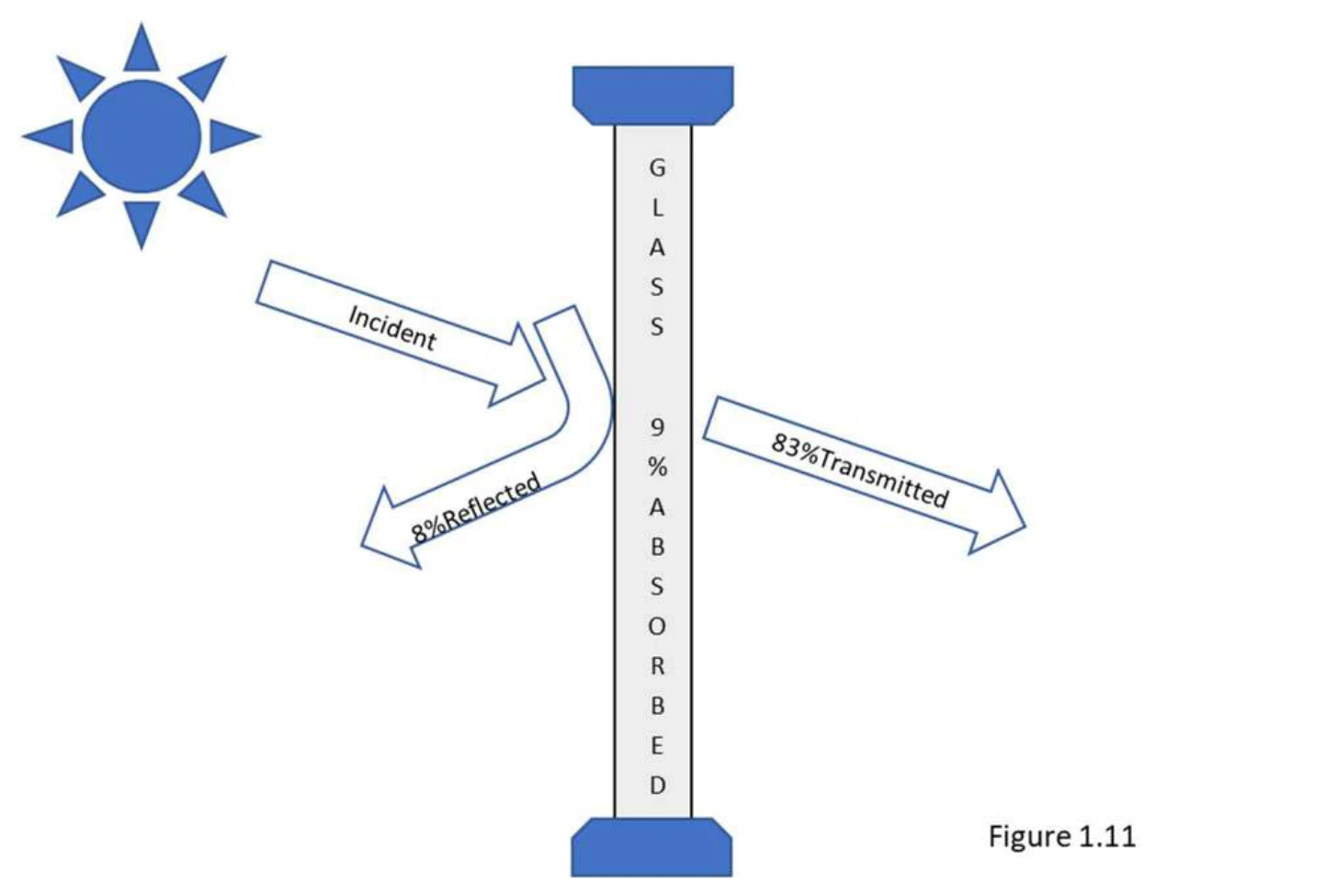
Figure 1.11: Radiant energy balance on glazed surfaces. The total incident solar radiation is divided into direct Reflected energy (R), Absorbed energy within the glass and film structure (A), and directly Transmitted energy into the cabin (T).
- Reflectance (R): Radiant energy bounced away from the outer surface of the glass into the atmosphere. This energy never enters the vehicle, making reflection an ideal cooling mechanism, provided visible exterior reflectance remains compliant with road safety standards.
- Transmittance (T): Radiation that passes directly through both the glass pane and the film into the cabin. When this radiation strikes seats, steering wheels, or dashboards, those materials absorb the photons and convert them into trapped interior heat.
- Absorptance (A): Radiant energy captured and retained within the glass and film matrix, raising the temperature of the pane itself. This absorbed thermal energy does not disappear; it dissipates through three classic heat transfer mechanisms.
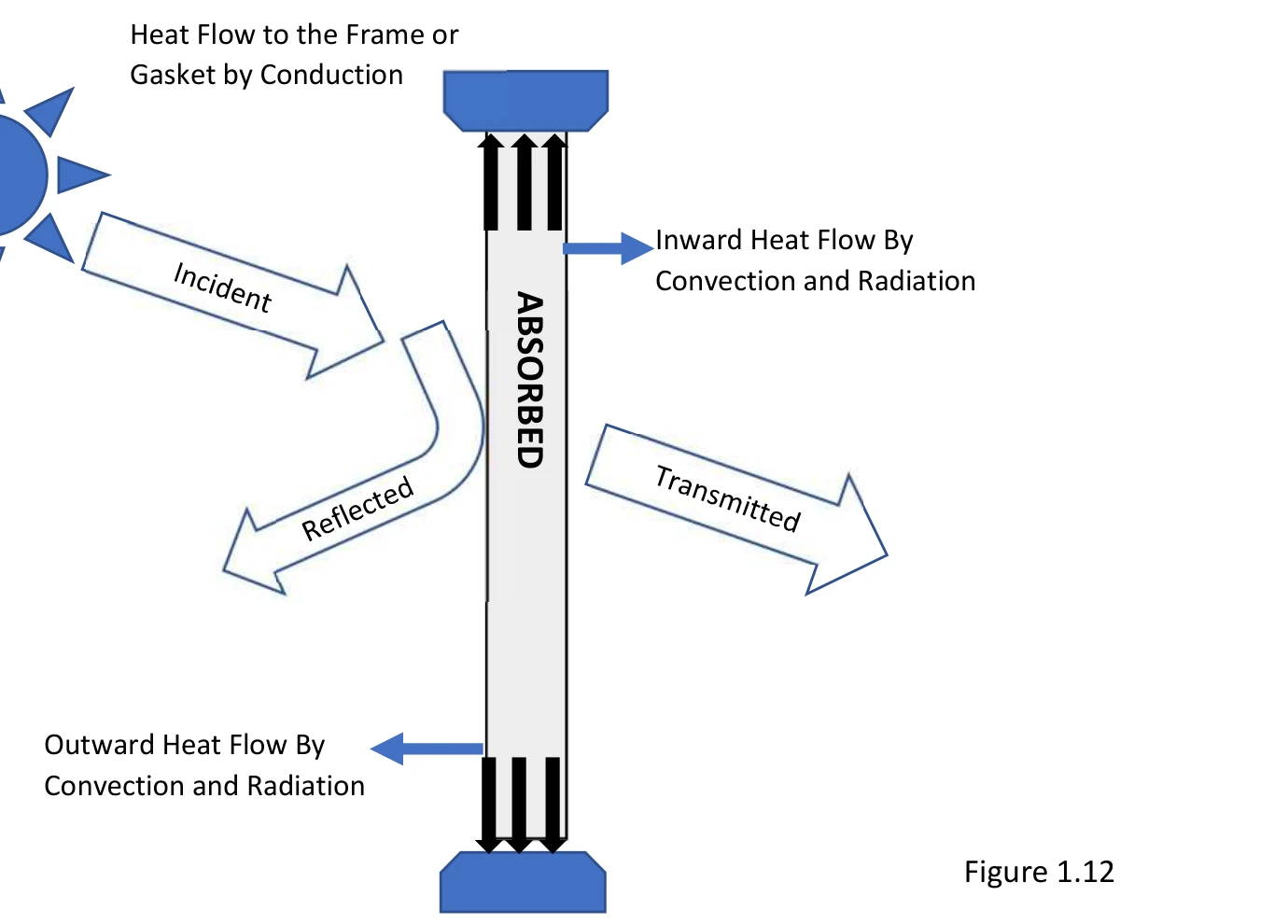
Figure 1.12: Dissipation routes of absorbed solar heat from glazed surfaces, including Conduction to adjacent frames, Convection into surrounding air layers, and Far-IR Re-radiation from both inward and outward glass surfaces.
The IWFA defines these three primary paths for absorbed thermal dissipation:
- Conduction: Heat flows through direct contact from the warm glass into the window frames, rubber weatherstripping, and vehicle body metal.
- Convection: Air molecules circulating along the inner and outer glass surfaces absorb heat and carry it away.
- Far-IR Re-radiation: The warmed glass pane acts as a thermal radiator, emitting secondary long-wave infrared energy (wavelengths > 2,500 nm) toward both the outdoor environment and the interior passenger compartment.
04 Vehicle Thermal Dynamics: Parked Vehicles vs. Moving Vehicles
A key contribution of the IWFA 2026 Guide is its clear distinction between a vehicle stationary in stagnant air and a vehicle operating at speed on the road:
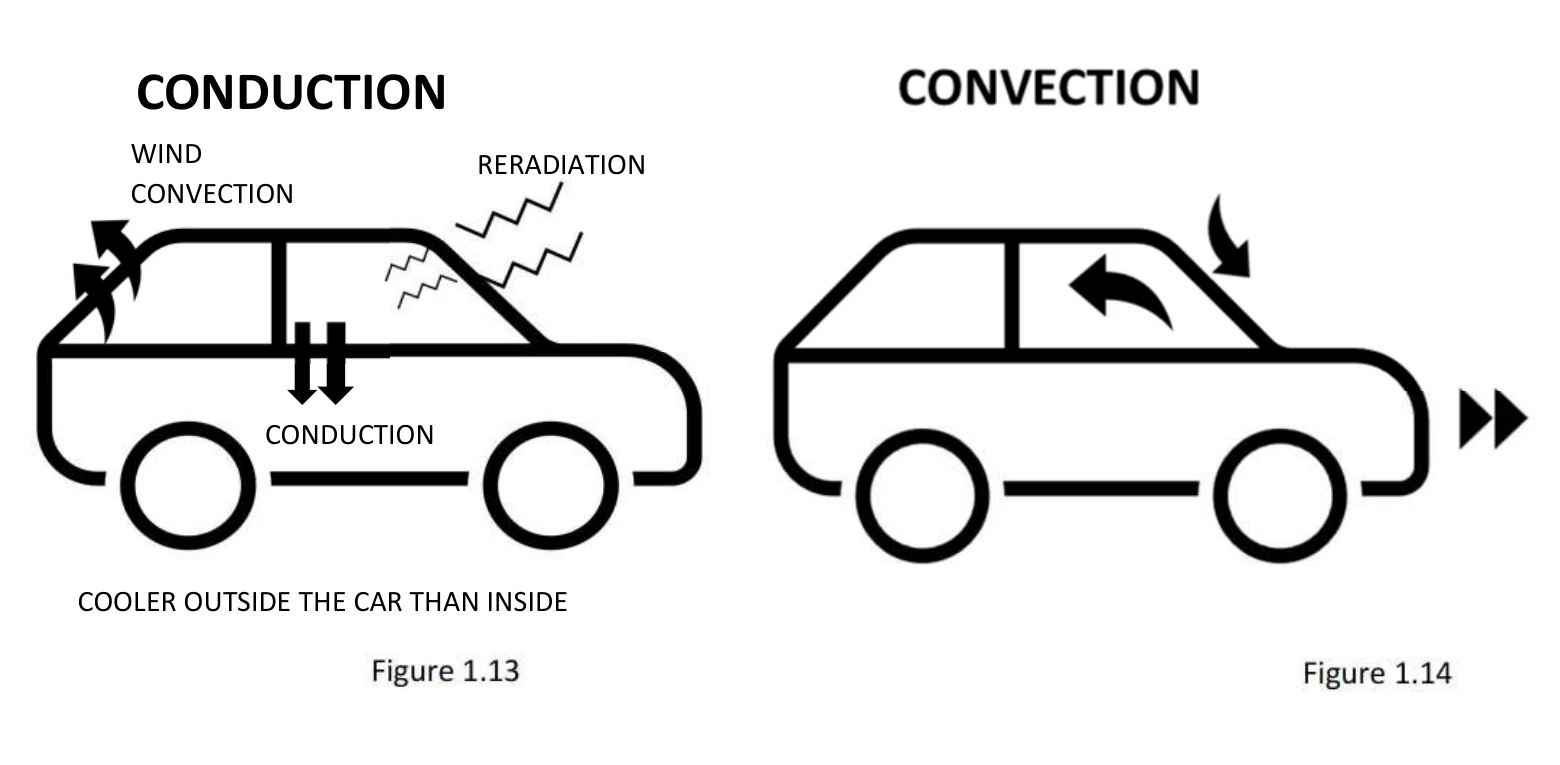
Figures 1.13 & 1.14: Heat transfer dynamics in automotive applications. In a parked car under still air, absorbed heat radiates heavily inward. Conversely, during travel, exterior airflow creates forced convection that strips away absorbed glass heat into the slipstream.
- Stationary Parked Vehicle (Still Air)
When a car sits stationary under intense sunlight with zero exterior wind velocity, convective cooling on the outer glass surface is minimal. As a result, heat absorbed by the film and glass radiates inward in large quantities, accelerating the greenhouse effect and rapidly superheating cabin surfaces.
*This thermal buildup explains why unattended parked cars reach extreme cabin temperatures within 30 to 60 minutes.
- Moving Vehicle (Forced Convection)
As soon as the car travels at roadway speeds, high-velocity airflow across the outer glass surface acts as powerful forced convection. This airflow continually strips absorbed thermal energy away from the glass pane and expels it into the surrounding atmosphere before it can transfer inward.
*Consequently, high-absorption nanoceramic films operate with maximum cooling efficiency while driving, keeping passengers comfortable.
05 Automotive Glazing: Tempered, Laminated, and the Privacy Glass Fallacy
Modern vehicles use specialized safety glass configurations engineered to meet international safety criteria:
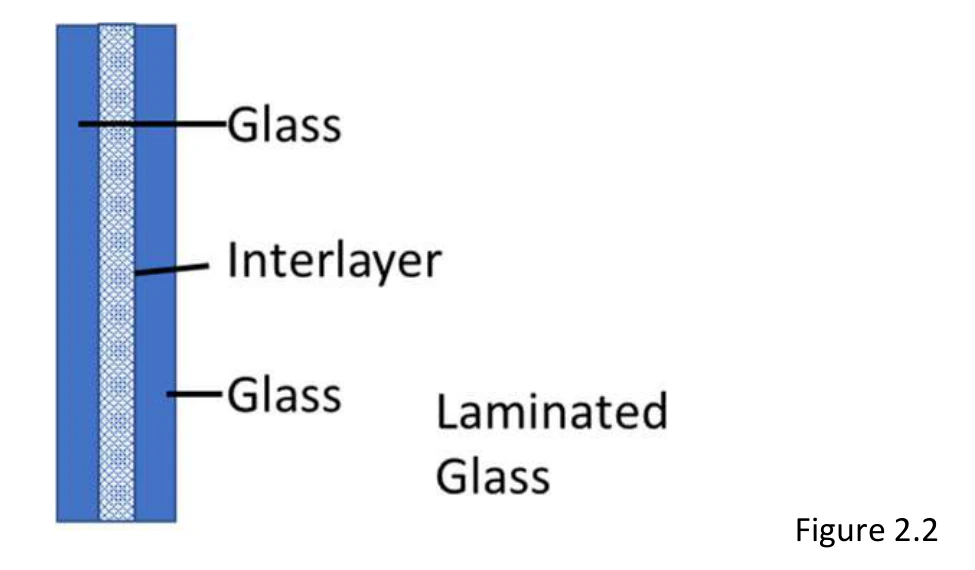
Figure 2.2: Cross section of Laminated Safety Glass showing two curved glass plies bonded together with an internal Polyvinyl Butyral (PVB) plastic interlayer.
1. Laminated Safety Glass
Laminated glass consists of two panes of annealed or heat-strengthened glass permanently bonded under heat and pressure with a tough Polyvinyl Butyral (PVB) interlayer, typically 0.76 mm thick. Upon high-energy impact, the glass fractures into a spiderweb pattern while remaining bonded to the interlayer, preventing flying shards from injuring passengers.
- Mandatory Placement: Global motor vehicle safety regulations require all front windshields to be constructed from laminated safety glass.
- Modern Applications: Premium passenger cars and modern electric vehicles increasingly adopt acoustic laminated glass on side windows to minimize road noise and provide enhanced resistance against break-ins.
2. Tempered Safety Glass
Tempered glass consists of a single glass sheet subjected to intense thermal treatment at approximately 600°C followed by rapid forced-air quenching. This induces permanent compressive stresses on the surface and tensile stresses in the core, providing 4 to 5 times greater mechanical strength than ordinary glass. When broken, it dices into small, blunt granules with minimal cutting hazard. It is widely used for side and rear automotive windows.
Scientific Facts Behind Factory Tinted “Privacy Glass”
SUVs, crossovers, and minivans frequently feature dark tinted rear side and tailgate windows installed at the factory. Many vehicle owners assume this dark glass provides robust thermal insulation, but the IWFA highlights crucial scientific distinctions:
- Pigment in Glass Matrix: Privacy glass is produced by introducing coloring oxides during the molten float glass manufacturing stage. It serves primarily to reduce visible light glare and obscure view into the cargo space (low VLT).
- Minimal Infrared Heat Rejection: Standard privacy glass rarely contains spectrally selective IR-reflective or IR-absorbing coatings. Consequently, substantial infrared thermal radiation penetrates directly into the vehicle.
- Incomplete UV-A Shielding: Although dark in appearance, unfilmed tempered privacy glass allows significant levels of long-wave UV-A radiation to penetrate, posing risks to skin and interior leather finishes.
IWFA Professional Recommendation: Applying high-performance window film over factory privacy glass (such as clear or light-density ceramic film) is essential to block 99% of harmful UV radiation and provide true infrared thermal rejection.
06 Film Manufacturing: Atomic Sputtering, Nanoceramics, and Hybrids
High-performance automotive films are manufactured inside strictly controlled ISO Class 5 to 7 cleanrooms to eliminate airborne particulate contamination. The substrate foundation is high-clarity Optical-Grade PET (Polyethylene Terephthalate) polyester film, prized for its dimensional stability, mechanical tensile strength, and optical neutrality.
The IWFA classifies major thin-film coating and solar rejection technologies into several primary categories:
1. Atomic Sputtering and PVD Deposition Technology
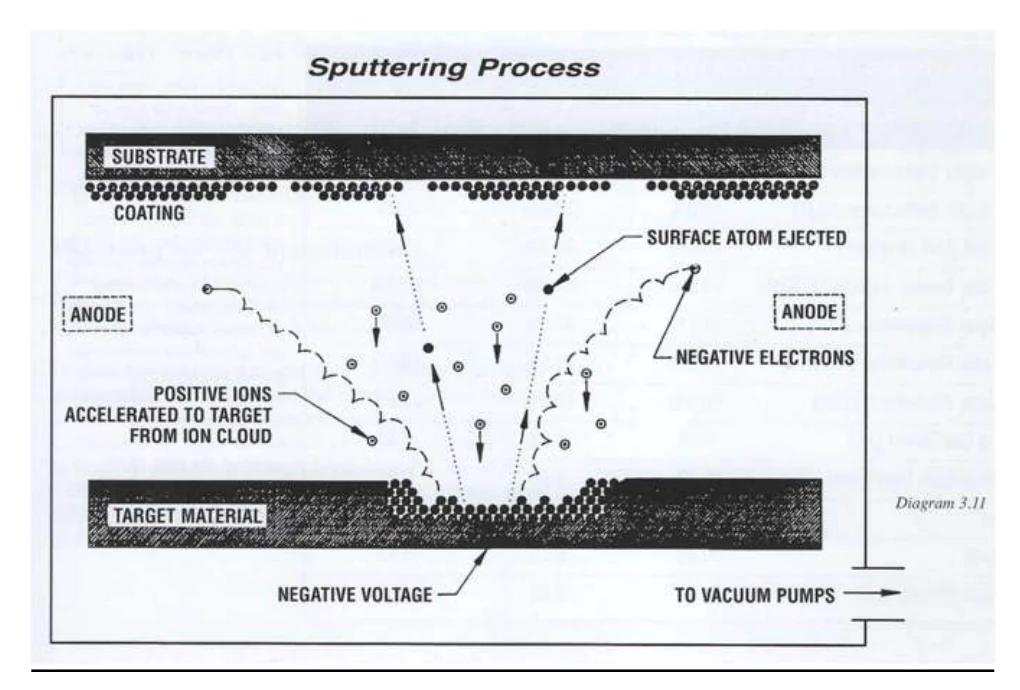
Diagram 3.11: The high-vacuum magnetron sputtering process. Argon gas is ionized into a plasma, accelerating ions into a target metal cathode to dislodge atomic particles that deposit evenly across moving PET web film.
Unlike traditional thermal evaporation, which produces heavy, mirror-like aluminum layers prone to corrosion, Magnetron Sputtering operates in a high-vacuum chamber where energized argon plasma dislodges individual atoms from specialized metal targets (such as stainless steel, nickel-chromium, titanium, or pure silver). These atoms condense onto the PET substrate in uniform layers just a few atoms thick, delivering exceptional oxidation resistance, non-fading natural color, and subtle, low-reflectance aesthetics.
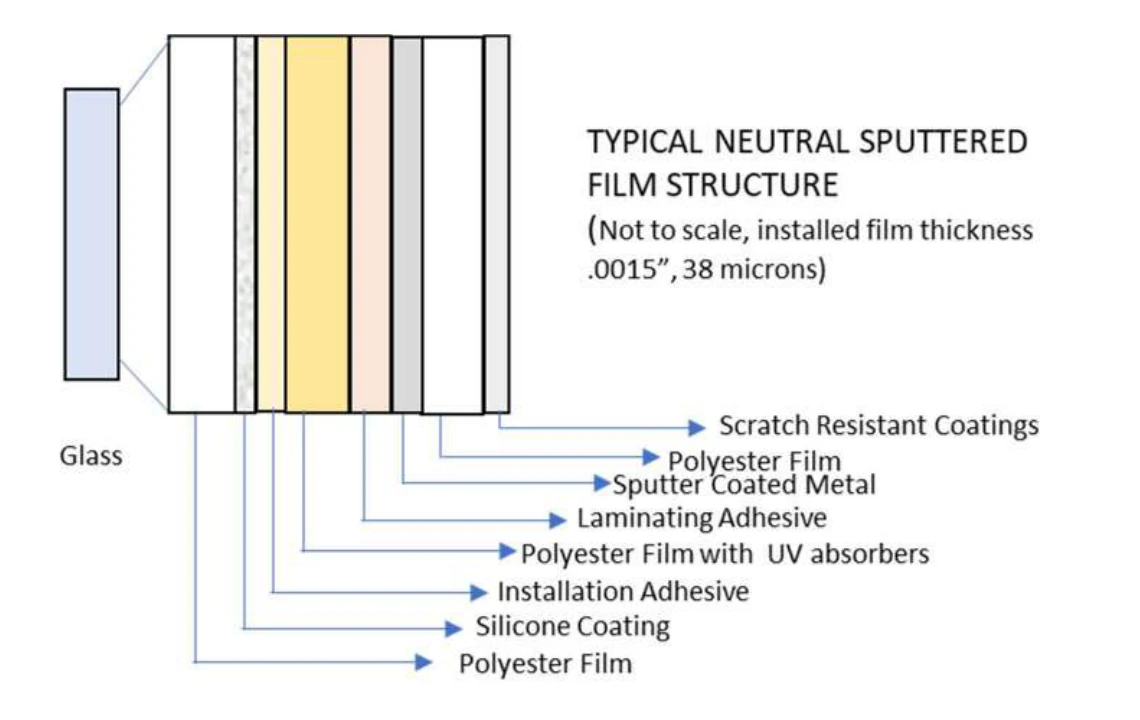
Cross-sectional structure of Neutral Sputtered Film, illustrating the multi-ply assembly: scratch-resistant coating, optical PET base, sputtered metal barrier layer, and mounting adhesive.
2. Nanoceramic Technology
Nanoceramic films represent the gold standard in contemporary automotive solar protection. Microscopically engineered ceramic nanoparticles (such as Antimony Tin Oxide - ATO, Indium Tin Oxide - ITO, or Titanium Nitride - TiN), each significantly smaller than the wavelength of visible light, are dispersed evenly within the laminating adhesive or polyester substrate.
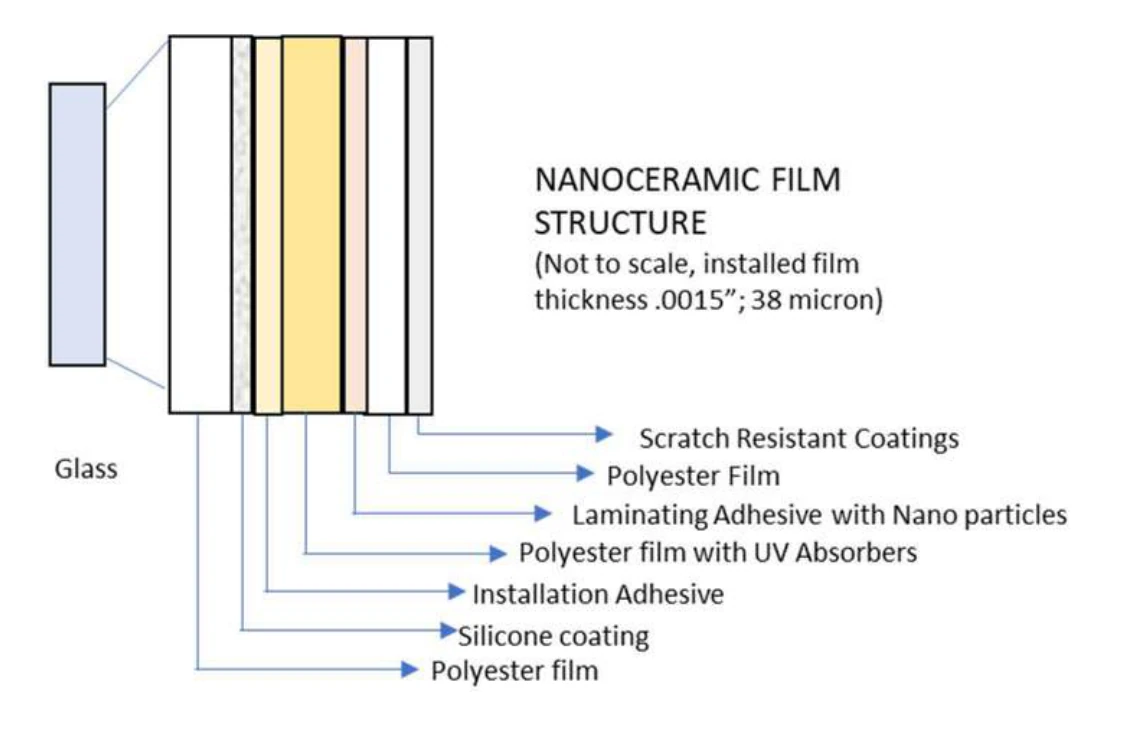
Cross-sectional structure of Nanoceramic Film, featuring an infrared-absorbing nanoceramic particle layer that delivers high optical clarity (up to 70% VLT) without reflective metal plies.
Key characteristics of nanoceramic films according to IWFA criteria:
- High Optical Clarity: Allows manufacturers to formulate films with high visible light transmission (up to 70% VLT) that still reject 85% to 95% of incoming infrared heat.
- Zero Digital Signal Interference (Non-Metallized): Because ceramic compounds are non-conductive, they never disrupt electronic toll collection (Easy Pass / M-Pass), GPS satellite navigation, 5G cellular communication, or Advanced Driver Assistance Systems (ADAS) radar frequencies.
- Low Visible Reflectance: Internal and external reflection rates remain virtually identical to bare glass, preventing disorienting night glare.
3. Metallized Hybrid Films
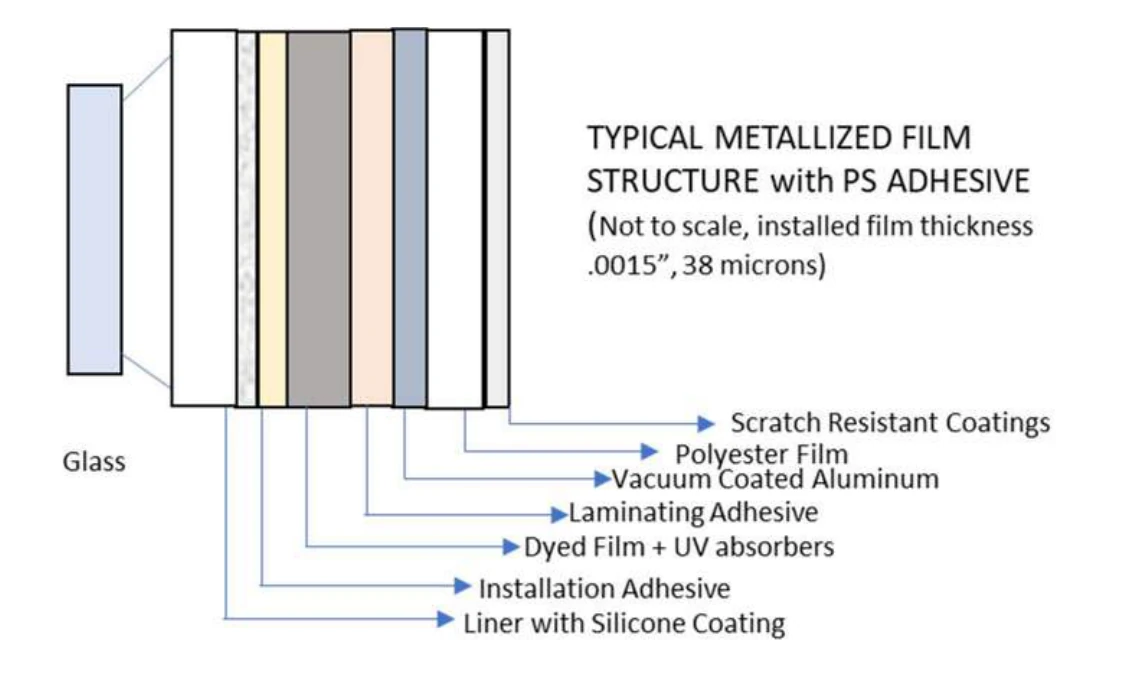
Cross-sectional structure of Metallized Hybrid Film combining a glare-reducing dyed polyester ply with a heat-reflective vapor-deposited aluminum layer.
Hybrid films combine a glare-absorbing dyed polyester layer with a thin metallized heat-reflective layer. This construction provides economical privacy and solar performance, though its visible interior reflectance is higher than that of premium nanoceramics.
07 Industry Reality: The Critical Difference Between TSER and IRR
One of the most essential sections in the IWFA Automotive Guide 2026 (Section 4) addresses “The Fallacy of Infrared Rejection (IRR)”, exposing widespread marketing tactics that confuse car owners:
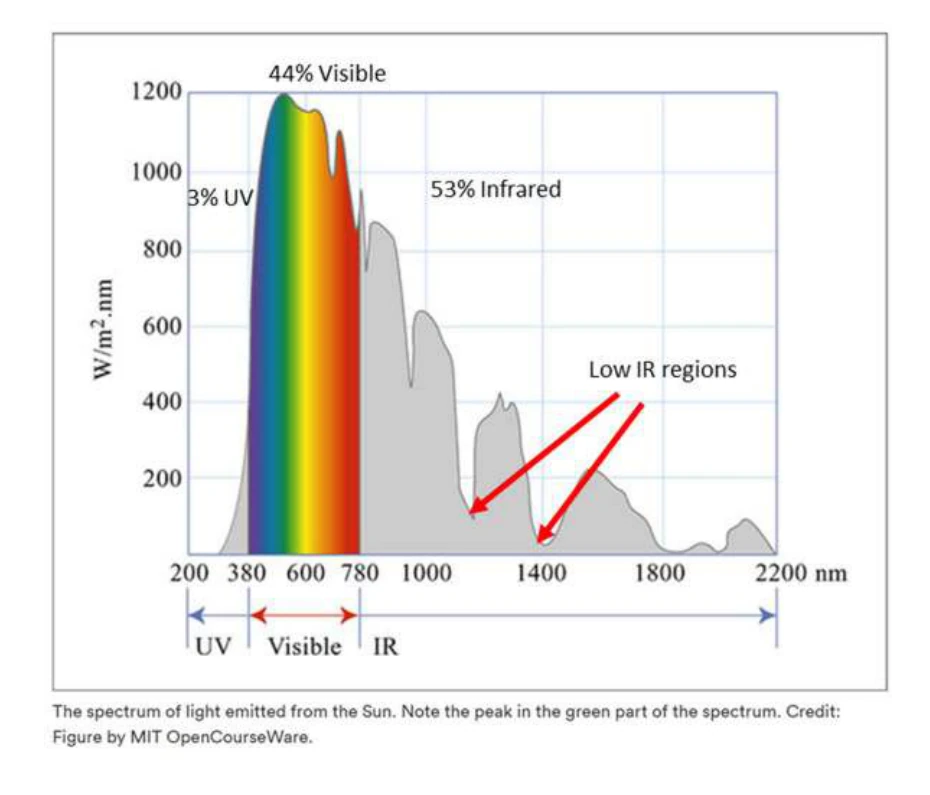
Graph from IWFA Guide page 35: The terrestrial solar energy spectrum showing that the infrared band spans broadly from 780 to 2,500 nm. Testing IRR at an isolated narrow band (e.g., 900 to 1,000 nm) fails to represent overall heat rejection capability.
⚠️ Why a “99% Infrared Rejection” Claim Does Not Guarantee a Cool Car
Certain brands and retailers measure infrared rejection (IRR) across a narrow wavelength segment, such as 900 nm to 1,000 nm (Single Wavelength or Narrow-Band Spot Check), and advertise the product as “99% Heat Rejection.”
In reality, infrared radiation extends broadly from 1,000 nm to 2,500 nm, and most importantly, Visible Light accounts for 44% of total solar heat.
If a film blocks 99% of IR at one narrow spot but transmits 70% of visible light alongside unmeasured IR bands, massive thermal energy will continue to stream into the passenger cabin.
Total Solar Energy Rejected (TSER): The Single True Scientific Standard
To eliminate consumer deception, the IWFA and international rating councils such as the National Fenestration Rating Council (NFRC) establish TSER (Total Solar Energy Rejected) as the authoritative metric for film evaluation:
- Accounts for the entire solar spectrum (UV 3% + Visible Light 44% + Infrared 53%) across 300 to 2,500 nm.
- Incorporates directly reflected solar power.
- Quantifies the precise inward-flowing fraction of absorbed heat re-radiated into the vehicle interior.
| Evaluation Metric | Typical IRR (Infrared Rejection) | Standard TSER (Total Solar Energy Rejected) |
|---|---|---|
| Measurement Range | Frequently spot-tested at 900-1,000 nm only | Full solar spectrum from 300 to 2,500 nm |
| Visible Light Heat (44%) | ❌ Excluded (considers only IR portion) | ✅ Fully integrated into calculations |
| Inward Re-radiation | ❌ Not calculated | ✅ Calculates inward heat flow of absorbed energy |
| International Standards | Often promotional; lacks strict enforcement | Certified under NFRC, ISO 9050, and ASTM protocols |
| Real-World Cooling Accuracy | Low to moderate (easily misleading) | Authoritative industry benchmark worldwide |
08 Health and Interior Protection: Guidance from The Skin Cancer Foundation
The IWFA Guide emphasizes serious health and ergonomic considerations for drivers, citing medical research from The Skin Cancer Foundation:
🩺 Dermatological and Ocular Health Hazards
- Asymmetric Skin Cancer in Drivers: Clinical oncology studies in the United States demonstrate that skin cancers (both non-melanoma and melanoma) occur with significantly higher frequency on the left side of the body, which faces the window in left-hand drive vehicles. For motorists in Thailand and right-hand drive markets, this heightened risk applies directly to the right arm, neck, and cheek.
- Standard Side Glass Leaves Gaps in UV-A Defense: Uncoated automotive tempered side glass allows 30% to 60% of deep-penetrating UV-A to enter. High-performance window films upgrade total UV shielding to 99%+.
- Ocular Protection: Extended driving without UV-attenuating window film accelerates eye strain and elevates lifetime risks of pterygium, cataracts, and retinal macular degeneration.
🛋️ Preventing Interior Material Degradation
The degradation and fading of vehicle interior surfaces (fine leather, synthetic trim, digital touchscreens, dashboard plastics) result from four contributing factors:
- Ultraviolet Radiation (UV): Responsible for 40% of cumulative degradation
- Solar Heat Buildup (Thermal Energy): Responsible for 25% of material breakdown
- Visible Sunlight Glare: Responsible for 25% of fading and discoloration
- Secondary Factors (Humidity and Material Quality): Accounts for the remaining 10%
*Quality window films eliminate up to 75% of cumulative degradation drivers, substantially extending cabin life.
09 Safety Regulations: Calculating Net Visible Light Transmission (Net VLT)
Selecting window film requires balancing solar heat rejection with driving visibility and statutory road safety requirements. The IWFA Guide provides the official formula for calculating Net Visible Light Transmission (Net VLT):
Because original factory automotive glass (OEM Factory Glass) is slightly tinted with green oxide pigments to reduce glare, factory windows typically register between 70% and 80% VLT rather than 100% optical clear.
Net VLT = OEM Glass VLT × Aftermarket Film VLT
- Practical Example: If the factory windshield measures 75% VLT (0.75) and the driver selects an aftermarket film rated at 50% VLT (0.50):
Net VLT = 0.75 × 0.50 = 0.375 (37.5%)- The actual visible light reaching the driver through the completed assembly is only 37.5%.
In numerous international jurisdictions, including the United States (Federal Motor Vehicle Safety Standard: FMVSS-205), windshields and front side windows must maintain a minimum Net VLT of 70% to preserve nighttime vision. For drivers navigating tropical regions or unlit rural roadways, automotive safety experts strongly recommend choosing windshield films with at least 40% to 50% VLT to maintain optical clarity during heavy rainstorms and nighttime driving.
10 MAXXMA Innovations: Translating Global Standards into High-Performance Films
Rooted in the rigorous scientific principles and testing protocols established by the IWFA Automotive Guide 2026, MAXXMA engineers automotive window film series tailored specifically for extreme tropical climates:
MAXXMA Polarized Nano Ceramic
State-of-the-art polarized ceramic film combining high-density nanoceramics with optical anti-glare technology. Cuts harsh reflections off wet pavement, blocks 99% of UV rays, delivers up to 70%+ TSER, and ensures 100% digital signal transparency.
Explore Polarized Series →
MAXXMA Black Panther
Premium deep-black ceramic formulation offering exceptional exterior privacy paired with crystal-clear outward visibility. Rejects solar infrared radiation across the entire spectrum with low internal reflectance.
Explore Black Panther Series →
MAXXMA Refined
High-durability optical ceramic film engineered for everyday reliability. Formulated with premium optical PET to withstand intense tropical solar exposure while maintaining consistent thermal and UV stability throughout its warranty life.
Explore Refined Series →
Summary and Takeaways: Engineering Criteria for Choosing Automotive Film
- Evaluate Films by TSER, Not Single-Band IRR: Disregard isolated “99% IR rejection” marketing slogans. Insist on verified Total Solar Energy Rejected (TSER) ratings measured according to NFRC or ISO standards.
- Match Visible Light Transmission (VLT) to Driving Conditions: For drivers who frequently operate at night or in stormy weather, select higher-transmission windshield films (40% to 50%+ VLT) paired with high-performance nanoceramic technology to preserve both visibility and thermal protection.
- Verify Complete Digital Signal Transparency: Modern vehicles depend on electronic toll systems, GPS, forward cameras, and 5G cellular communication. Opt for non-metallized nanoceramic films that never impair wireless signals.
- Treat Factory Privacy Glass as Incomplete Thermal Shielding: Because factory dark glass provides little infrared or UV-A protection, installing high-efficiency solar control film over privacy glass is essential for complete cabin protection.
To review the full official publication, access the authoritative manual from the International Window Film Association at IWFA.com or contact the MAXXMA technical consulting team to find the ideal solar solution for your vehicle.
Ready to protect your home or vehicle?
Consult with MAXXMA experts to select the perfect film for your needs, or find an authorized dealer near you.