
A table can hold much of a home’s everyday history: the first meal after moving in, schoolwork spread beside a cup of coffee, or a quiet afternoon working with a view of the garden. We carefully choose its proportions and finish. The joint around its edge rarely receives the same attention, until a raised patch catches a fingertip.
That is why “MDF versus TPU” needs a little unpacking. MDF is a panel material used in furniture construction. TPU, in this article, is a protective film applied to a suitable finished surface. They perform different jobs in different layers. Film does not change the material inside the table, and choosing a panel does not replace caring for its finish.
For homeowners, designers and facilities teams, the useful question is where damage can begin and which part of the furniture a proposed measure addresses. The aim is a table you can enjoy using, with a realistic understanding of the protection and care it needs.
Material rolesMDF, the finish and TPU: three different layers
MDF stands for medium density fibreboard. It is a wood-based panel used in furniture and interior fittings. Its name alone does not identify its suitability for every environment: different grades are available for different applications, including moisture-resistant and exterior grades. The European Panel Federation’s MDF overview provides background on the material.
Before discussing film, separate the table into three parts. This makes the conversation with both the furniture maker and the installer more precise.
The underlying panel
Ask what the table is made from and request the material schedule if one exists. Is it MDF, another timber product, or a different construction? Do not treat a wood-like pattern on the top as sufficient identification of the whole panel. If you do not know, say so and arrange an inspection rather than guessing.
The finished surface and joints
Identify the finish separately: veneer, laminate, melamine, paint or another coating. Include the edges and any cable openings. Mention previous repairs, refinishing or peeling. These details help an installer assess the actual surface that will contact the adhesive, instead of making a recommendation from the furniture’s appearance alone.
The additional protective layer
TPU stands for thermoplastic polyurethane. MAXXMA’s furniture-film material describes its use in Clear Guard. However, the material name by itself does not specify every product’s installation method, care requirements or application limits. Ask for information about the actual film being proposed for your table.
Moisture and panelsWhy MDF can swell, and what a raised edge tells you
Wood-based materials exchange moisture with their surroundings and can change dimensions as their moisture content changes. The European Panel Federation explains that exposed edges and outer layers are affected first during storage. It also describes MDF as relatively dimensionally stable compared with solid wood. MDF should therefore not be portrayed as inherently unsuitable for all furniture. See its guidance on controlling MDF moisture content.
Standard MDF is not intended for prolonged exposure to extremely damp conditions. Excessive thickness swelling can leave permanent appearance defects and reduce strength; moisture-resistant boards normally swell less than standard grades under comparable test conditions. These distinctions are explained in the Federation’s assessment of MDF properties.
At home, a raised edge calls for inspection rather than an instant diagnosis. Look at the location of spills, open joints and the underside. Ask whether the defect affects the finish, the covering layer or the panel itself. Similar-looking marks may require different repairs, and a photograph alone may not establish the cause.
A practical inspection sequence
- Identify any spills, standing water or recurring dampness.
- Inspect edges, joints, openings and the underside for exposed areas.
- Ask whether the damage is limited to the finish or includes panel deformation.
- Have the furniture maker assess repair before considering film.
This is an inspection guide, not a test demonstrating that film waterproofs an MDF table.
Where TPU film helps, and what still needs attention
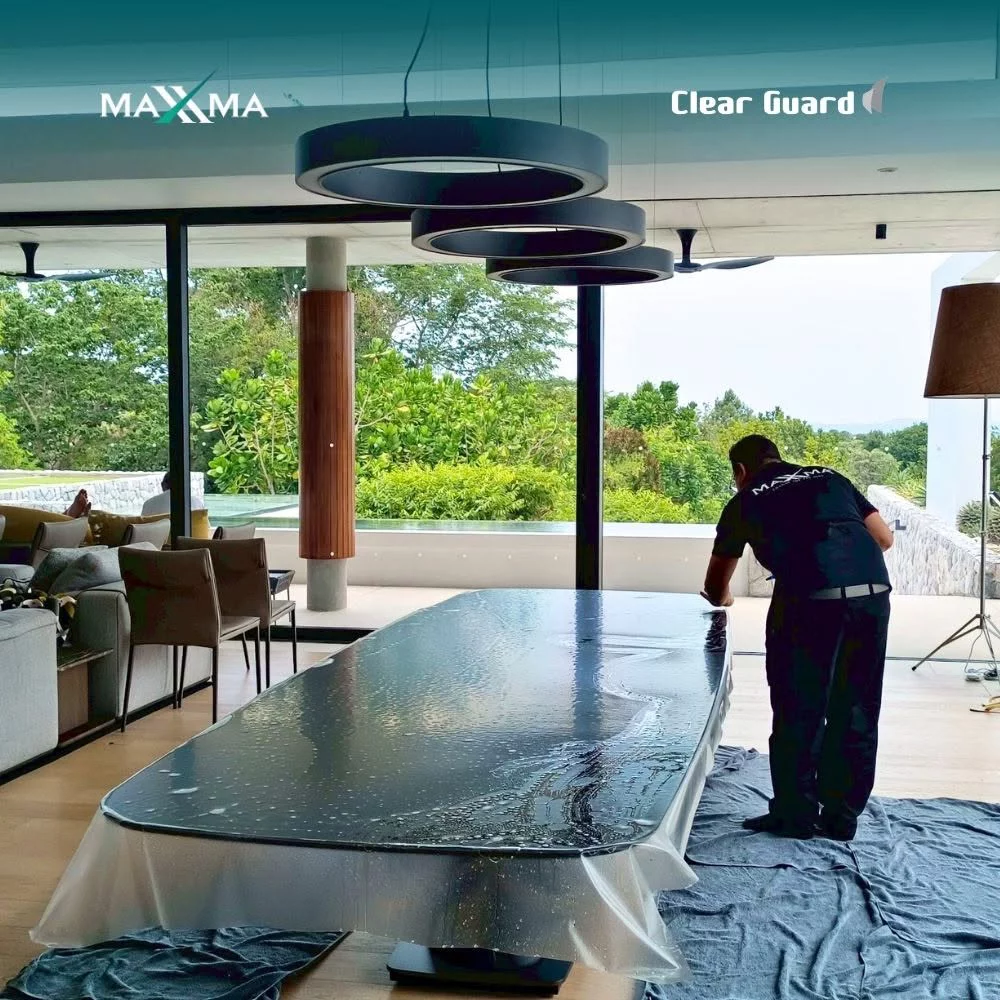
Consider film as an additional contact layer on a surface that has been assessed as suitable. MAXXMA provides furniture installation examples and describes surface-protection features in LIFE SARA EP.15. Use the video to start a discussion, then check the current product and the intended application.
A property of the film should not automatically become a promise about the whole table. Uncovered areas, openings, joints and the condition of the original finish remain relevant. Covering the top does not demonstrate that the core is sealed on every side. Film also does not restore the original shape or strength of a damaged panel.
If a product is described as self-healing, ask which marks it addresses, under what conditions, and with what care procedure. Do not test the claim yourself with a blade or a heat source. Discuss eventual removal before installation too, particularly for older coatings or furniture with sentimental value. Ask how the surface will be assessed and who should remove the film when the time comes.
Compare protection around the way you use the table
Start with the recurring problem: drinks, moving work equipment, or a wish to preserve the original feel. The comparison below is a discussion checklist, not a laboratory ranking. Several approaches can work together. Choosing film does not mean that coasters and appropriate heat mats become unnecessary.
| Approach | Purpose to consider | What to check |
|---|---|---|
| Local mats and coasters | Define places for drinks, dishes or work equipment | Choose for the intended task, clean underneath and care for uncovered areas |
| A glass overlay | Add a separate hard surface | Ask the furniture maker about support, edges and cleaning underneath |
| A loose clear cover | Allow the covered area to be lifted or changed | Check finish compatibility, trapped moisture and the cover maker’s instructions |
| Adhesive TPU film | Add a closely fitted layer on a suitable surface | Assess finish, adhesive, coverage, removal and product-specific care |
| Repair or panel replacement | Address swelling, peeling or deformation | Resolve moisture sources and obtain a repair assessment before adding protection |
Mats and coasters
Choose for drinks or work equipment, clean underneath, and care for the uncovered surface.
Glass overlay
A separate hard surface. Ask the furniture maker about support, edges and access for cleaning.
Loose clear cover
Check compatibility with the finish, moisture underneath and the manufacturer’s care instructions.
Adhesive TPU film
Assess the surface, adhesive, coverage, removal procedure and the exact film’s care requirements.
Repair or replacement
If the table is swollen, peeling or deformed, address the damage and moisture source before film.
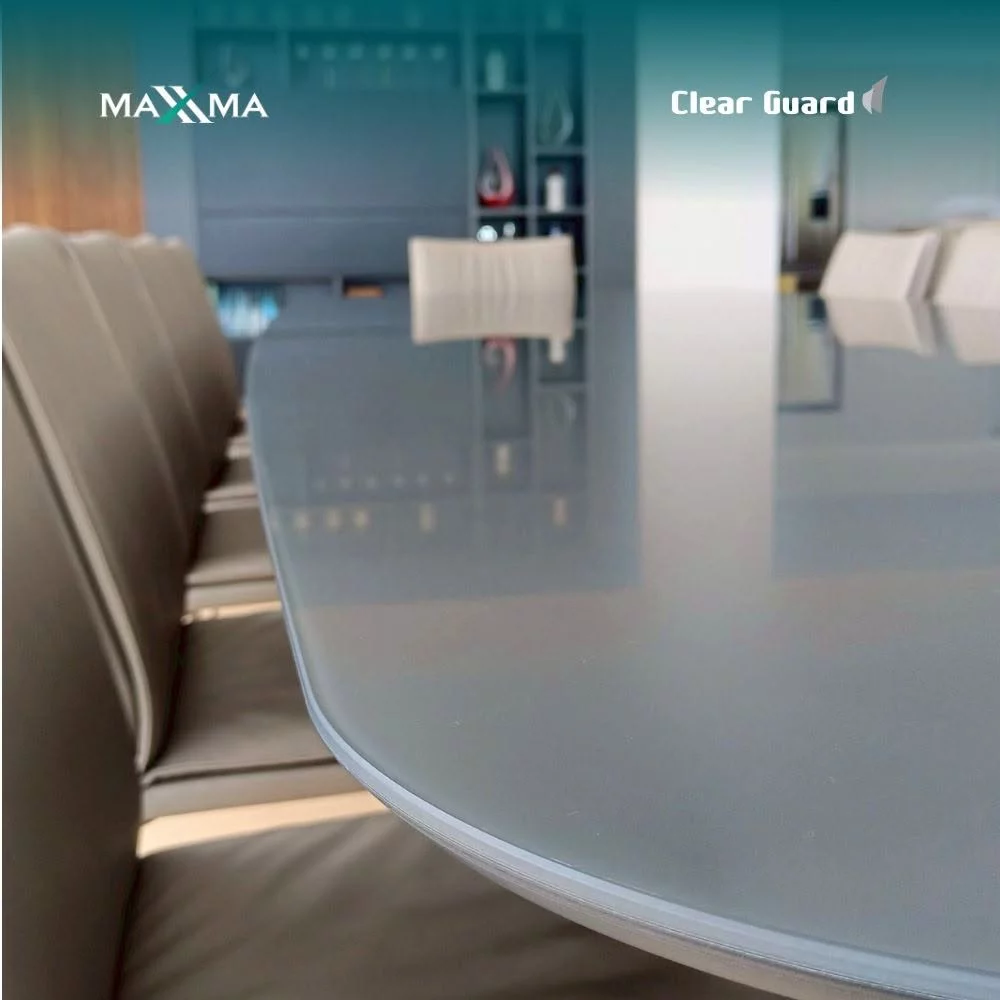
For a choice between a glossy and matte appearance, request a sample viewed under lighting similar to your room. Visit MAXXMA furniture protection film for the relevant product discussion. Automotive window-film comparisons do not answer whether a particular tabletop is suitable for adhesive film.
Common misconceptionsFour assumptions that can lead to the wrong decision
“Moisture-resistant MDF can be left in water”
Do not substitute a general label for a board’s grade and application instructions. Request information from both the panel supplier and furniture maker, especially near sinks or places repeatedly exposed to moisture. Grade selection, joint detailing and everyday care are separate parts of the decision.
“Film means I can stop wiping up spills”
Continue to deal with spills and inspect edges. Do not deliberately leave water on the table to find the film’s limit. A covered top does not make uncovered areas irrelevant. A leaking appliance or another recurring source of water still needs attention.
“Film will make a swollen table sound again”
Separate repair from protection. Ask which layer is damaged and whether refinishing, component replacement or moisture remediation is needed. Hiding an appearance defect is not evidence that the furniture has been restored to a suitable condition for use.
“Every TPU film accepts the same heat and cleaners”
Use suitable heat mats and follow the instructions for both the actual film and the furniture finish. If the product is unidentified, ask before applying alcohol, solvents or abrasive cleaning tools. A material acronym is not a care manual.
Before installationA checklist for a useful furniture assessment
A single photograph of the tabletop gives an impression of the room. A little more information makes the consultation much more specific. Prepare these details before arranging an assessment.
- Describe the main use. Is this a dining table, workstation, counter or meeting table? Identify where drinks and equipment are normally placed.
- Provide material information. Include the panel, finish and repair history where known. Record unknown details honestly so the installer can inspect them.
- Photograph several views. Show the whole piece, top, edges, corners, openings and underside, plus close-ups of existing marks.
- Measure the shape. Supply length, width and any curved or joined sections. Avoid estimating coverage from photographs alone.
- Agree on coverage. Ask what will be covered, how edges will be handled and which areas cannot be included.
- Review an appropriate sample. Discuss gloss or matte appearance, acceptable changes in feel, and how compatibility will be assessed before treating the whole piece.
- Request written aftercare. Ask when the table can return to use, how it should be cleaned, which products to avoid, how to report problems and how removal or replacement should be handled.
For a business, group furniture by its actual use instead of assuming that one treatment fits every room. A meeting table with cable openings presents different inspection questions from a reception table used for drinks. Nominate someone to retain product details and communicate the care instructions to the cleaning team.
Watch a MAXXMA furniture installation example
This official MAXXMA video provides installation context, with Thai-language audio. It does not establish that the same procedure is suitable for every MDF grade or coating. If your furniture differs from the example, request an assessment of your own piece.
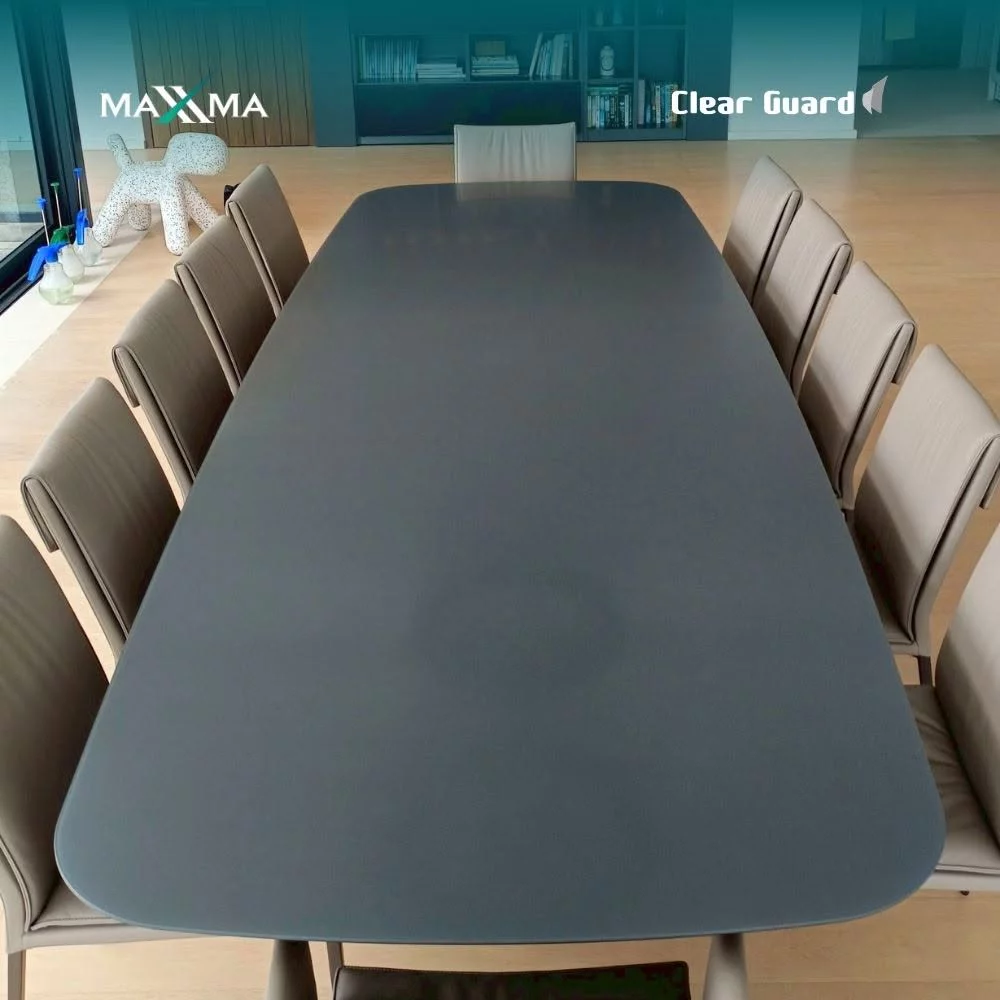
For an organisational setting, MAXXMA also provides a meeting-table installation example at Chulalongkorn University’s Faculty of Law. It can help frame a conversation about layout and project scale. Completed-work footage should still accompany, rather than replace, inspection of a new project.
Everyday careSet up a care routine after installation
Keep the product name, installation date and care instructions together. Tell everyone using or cleaning the table that the surface has film, and agree on one care procedure. If you already have a preferred tabletop cleaner, show the installer its label before applying it to the newly covered surface.
Use coasters and mats for their intended purposes. A writing mat should not be treated as a heat mat without relevant instructions. When a spill occurs, follow the care guidance promptly and check the edge area as well. A clearly designated place for drinks can make the routine easier for everyone to follow.
If a raised patch, lifting film or an unusual change appears, photograph it and contact the installer before polishing, heating or peeling anything. Describe what happened before the mark appeared and which cleaner was used. That information is more useful than trying several remedies and losing track of the original condition.
FAQ: MDF and TPU furniture film
Can film be applied directly to bare MDF?
Do not decide from the material name alone. Have the installer assess the panel, finished surface and adhesive compatibility. This article does not establish suitability for bare MDF or every finish.
Can I cover a table that is already swollen?
Have the furniture maker assess the damage and moisture source first. Surface film does not restore the shape or strength of a damaged panel. Suitability after repair requires a fresh surface assessment.
Can I place hot cookware on film or clean it with alcohol?
Follow the instructions for the exact film and table finish. Use suitable heat protection and confirm permitted cleaners. Do not infer heat or chemical limits from the name TPU.
Does film waterproof the whole table?
Covering the top should not be treated as sealing the whole piece. Edges, openings, joints, the underside and recurring water exposure still need attention. Film does not replace appropriate material selection or moisture control.
Should I choose a glossy or matte finish?
Start with the appearance and feel you want, then inspect an appropriate sample under similar lighting. Consider reflections and care requirements together rather than choosing from an online photograph alone.
Assess the furniture before choosing protection
A well-used table should not require constant worry. Good care begins with understanding its materials and the limits of each protective measure. For sound furniture, start with the finish and everyday use. For an already damaged piece, start with repair.
Visit MAXXMA furniture protection film and prepare the photographs, dimensions and finish information in the checklist before requesting advice through the LINE contact below. For further installation context, continue to the furniture protection film guide.
Supporting evidenceReferences and scope
- European Panel Federation: MDF: material types and grades.
- European Panel Federation: Controlling MDF moisture content: moisture and dimensional changes.
- European Panel Federation: Assessing properties: thickness swelling and standard-grade limitations.
- MAXXMA LIFE SARA EP.15: brand material about furniture film and installation.
- MAXXMA meeting-table installation: an organisational application example.
These sources explain material behaviour and help prepare questions. They are not a test report for your table. Always check the proposed film and installation method against the actual product and surface.
Ready to protect your home or vehicle?
Consult with MAXXMA experts to select the perfect film for your needs, or find an authorized dealer near you.