
Serenity and Responsibility: Executive Life Inside the Premium EV Cabin
Picture yourself as a senior executive seated in the rear lounge of a Zeekr 009 or Volvo EX90, gliding in near-silent serenity through Bangkok’s central business district. The expansive cabin, appointed like a first-class private lounge, is where you review confidential briefs before major negotiations or recharge after an intensive day.
In the sphere of premium electric vehicles, luxury is never just decorative display: it is functional engineering. Sweeping glass surfaces and panoramic sightlines cultivate spaciousness, yet simultaneously present the vehicle’s single greatest vulnerability regarding thermal comfort, passenger privacy, and physical security.
Many vehicle owners attempt to solve executive privacy by specifying the darkest available window tint. When driving themselves at night, however, overly dense dyed film turns into a visibility hazard. Impaired outward sightlines heighten collision risks in rain and darkness. Even worse, an unexpected gravel projectile on an elevated expressway can instantly shatter forward glass, jeopardizing vital driver assistance sensors and triggering sudden repair bills reaching six figures.
Forward-thinking owners do not evaluate window film on upfront sticker price alone. They adopt a Total Protection Strategy engineered to safeguard executive safety, personal discretion, and sustained vehicle equity over the multi-year ownership lifecycle.
TECHNOLOGY & VULNERABILITYThe Hidden Cost of Luxury: When Advanced Sensors Become Fragile Targets
1. The Sensor Hub and ADAS Crisis: When Windshields Are No Longer Ordinary Glass
In modern luxury EVs, the front windshield serves as the vehicle’s primary sensory hub. Beneath the glass of vehicles like the Volvo EX90 or Zeekr 009 resides aerospace-grade LiDAR (Light Detection and Ranging) technology, firing millions of laser pulses per second to construct a live 3D topographical map of surrounding traffic. This array operates alongside high-resolution ADAS (Advanced Driver Assistance Systems) optical cameras that monitor lane markers, highway signs, and pedestrian paths.

This technical sophistication introduces severe mechanical sensitivity. Both LiDAR lenses and forward optical cameras demand near-perfect glass clarity to execute microsecond safety calculations. If the windshield suffers a stone strike chip, micro-fracture, or wiper-induced scratching, incident light refracts unevenly. Distorted light paths cause sensor algorithms to miscalculate, leading to phantom emergency braking or, in worst-case scenarios, failure to detect real hazards ahead.
Replacing windshield glass on these vehicles is not a routine automotive repair. Owners must undergo Static and Dynamic Sensor Recalibration, requiring dedicated diagnostic targets and specialized technician certifications. Factoring in genuine Acoustic Laminated Glass and proprietary calibration labor, total replacement expenses frequently range between 80,000 and 180,000 THB, accompanied by weeks of shop downtime.
Watch comprehensive thermal testing and precision installation protocols on premium electric platforms.
RISK & RETURNSmart Investment Analysis: Why Minor Upfront Defense Saves Hundreds of Thousands
In executive financial planning, selecting professional protection film is not an operational expense: it represents proactive Risk Mitigation. Evaluating the financial consequences of passive ownership versus engineered defense reveals the contrast:
Scenario A: Unprotected Windshield and Body Panels
- Windshield and LiDAR replacement glass: 80,000+ THB
- ADAS and LiDAR sensor recalibration: 20,000+ THB
- Vehicle downtime and executive loaner costs (14 to 21 days): Substantial opportunity loss
- Total emergency risk: 100,000+ THB
Scenario B: Front Protection with Clear Guard Windshield
- Clear Guard Windshield installation: Fraction of single glass replacement cost
- Impact absorption efficiency: Deflects 90%+ of typical highway gravel strikes
- Operational continuity: Full 365-day vehicle availability without shop downtime
- Overall profile: Controlled, one-time preventative investment

Beyond impact defense, outfitting electric platforms with high-TSER films like MAXXMA Polarized significantly curbs air-conditioning compressor draw, helping preserve battery capacity and extending highway driving range in tropical heat.
OPTICAL CLARITYThe Science of 4K Outward Visibility: Why Choose MAXXMA Polarized?
Executive drivers often ask why premium polarized films provide visibly superior clarity over standard ceramic tint. The core mechanism lies in Light Wave Realignment. Unfiltered sunlight striking road tarmac, water puddles, and hood surfaces scatters into disorganized horizontal glare, inducing severe ocular fatigue.
MAXXMA Polarized technology incorporates microscopic linear polarizing filters that selectively eliminate blinding horizontal glare while transmitting clean, high-contrast light rays:
- Ultra-HD Contrast: Road surface textures and overhead traffic signage remain crisp, even in blinding head-on afternoon glare.
- Console Reflection Cancellation: Broad leather and glass dashboards in luxury vehicles often reflect upward onto windshield surfaces. Polarized filtration cancels these distracting interior reflections entirely.
- Superior Nighttime Driving Safety: Mitigates blinding scatter from oncoming Matrix LED headlights, allowing drivers to gauge distances accurately in torrential rain.
Understanding Specifications: TSER vs IR Rejection
Automotive tint advertisements frequently tout 99% Infrared Rejection (IRR) numbers. However, infrared radiation represents only roughly 53% of total solar energy, with visible light contributing approximately 44%. A film boasting high infrared rejection will still allow significant cabin heat penetration if visible light heat management is weak.
Total Solar Energy Rejected (TSER) is the only internationally certified performance standard that accounts for all three radiation bands: Ultraviolet, Visible Light, and Infrared. For vehicles equipped with extensive glass canopies, choosing films with verified high TSER keeps the passenger compartment consistently comfortable, safeguarding expensive electronic cockpits without running climate fans at maximum capacity.
TOTAL PROTECTIONThe Ultimate Shield: Three-Tier Protection Framework for Premium EVs
To deliver comprehensive 360-degree defense, MAXXMA provides an integrated system tailored specifically for executive models from Volvo, Zeekr, IM Motors, and Porsche:
1. Clear Guard Windshield
Heavy-duty optical-grade TPU exterior windshield film engineered to cushion road gravel and deflect stone impacts, guarding multi-million-baht LiDAR sensors and forward cameras against shattering fractures.
Explore Windshield Armor Details →2. Clear Guard Car Body PPF
Full-exterior aliphatic TPU protective film with heat-activated self-healing engineering. Defends smooth aerodynamic bumpers and fenders from rock chips, swirl marks, and aggressive environmental fallout.
Explore Full Body PPF Details →3. MAXXMA Polarized Nano-Ceramic
Flagship interior solar control film providing deep exterior privacy, crystal-clear interior perspective, and high thermal rejection with zero digital signal blockage for 5G, GPS, and autonomous driving sensors.
Explore Polarized Film Details →Five Essential Questions Before Entrusting a Multi-Million-Baht Vehicle
Do not treat an advanced electric platform as an installation testbed. Verify these five critical competencies before handing over your keys:
- 1. Does the installer possess verified EV handling experience? Disassembling high-voltage door cards, acoustic trims, and delicate camera housings requires specialized EV training.
- 2. Is the window film completely non-metallized? Metallic tint formulations can degrade autonomous driving radar, cellular connectivity, and GPS antenna arrays. Ensure the film is 100% digital-friendly.
- 3. What warranty parameters are officially provided? Insist on manufacturer-backed coverage spanning 5 to 7 years against peeling, delamination, and adhesive bubbling.
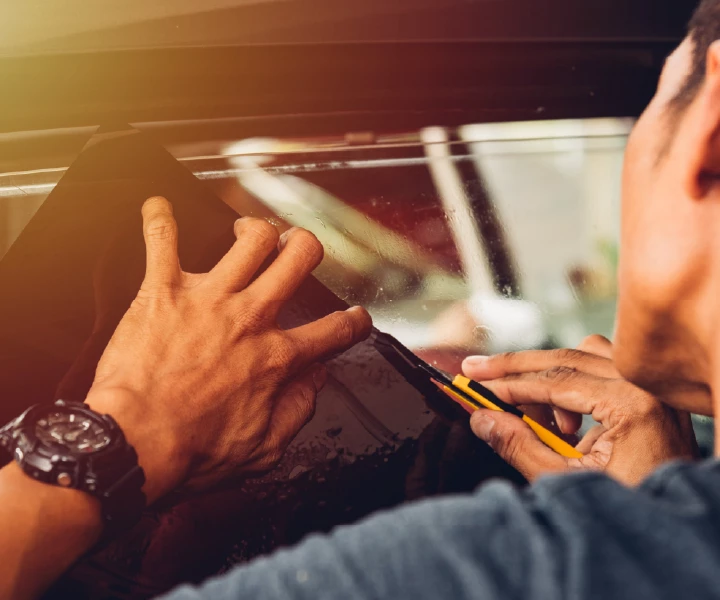
- 4. Does the facility operate a certified dust-controlled installation cleanroom? Flawless optical film clarity demands positive-pressure bays with dedicated water purification and air filtration systems.
- 5. Is the exterior windshield film crafted from premium TPU? Avoid inferior PET films that scratch easily under windshield wipers. Demand optical-grade aliphatic TPU.
Frequently Asked Questions
How does Polarized window film differ from standard nano-ceramic film?
Standard nano-ceramic films filter ultraviolet and infrared heat radiation, but do not align incoming light waves. MAXXMA Polarized films incorporate an engineered polarizing array that selectively blocks harsh reflected horizontal glare from roads and vehicle dashboards, delivering significantly sharper visual definition and reducing eye strain during high-mileage driving.
Does exterior windshield protection film alter outward driving optical clarity?
MAXXMA Clear Guard Windshield is manufactured from optical-grade aliphatic TPU with ultra-low haze ratings. When applied by trained technicians in a cleanroom environment, the film is virtually invisible to the naked eye, preserving crisp transparency for both human drivers and optical ADAS sensors.
Does installing MAXXMA film compromise the original factory vehicle warranty?
No. Professional window film and paint protection film applications are non-invasive aesthetic and protective installations that do not alter the high-voltage powertrain, battery, or factory wiring harnesses. Because MAXXMA Polarized is completely non-metallized, it generates zero electromagnetic interference with onboard sensors, GPS, or keyless systems.
Elevate Your Premium EV Driving Experience Today
Do not wait for an unexpected highway stone strike or blinding afternoon solar heat to disrupt your journey. Consult with MAXXMA technical specialists to configure a tailored protection strategy for your luxury electric vehicle.
Exclusive Advisory for Premium EV Owners
Submit your vehicle details to our engineering team for a complimentary protection assessment and transparent price estimate with zero obligation.
Discover further technical guides on electric vehicle protection at the MAXXMA Knowledge Hub.
Ready to protect your home or vehicle?
Consult with MAXXMA experts to select the perfect film for your needs, or find an authorized dealer near you.