
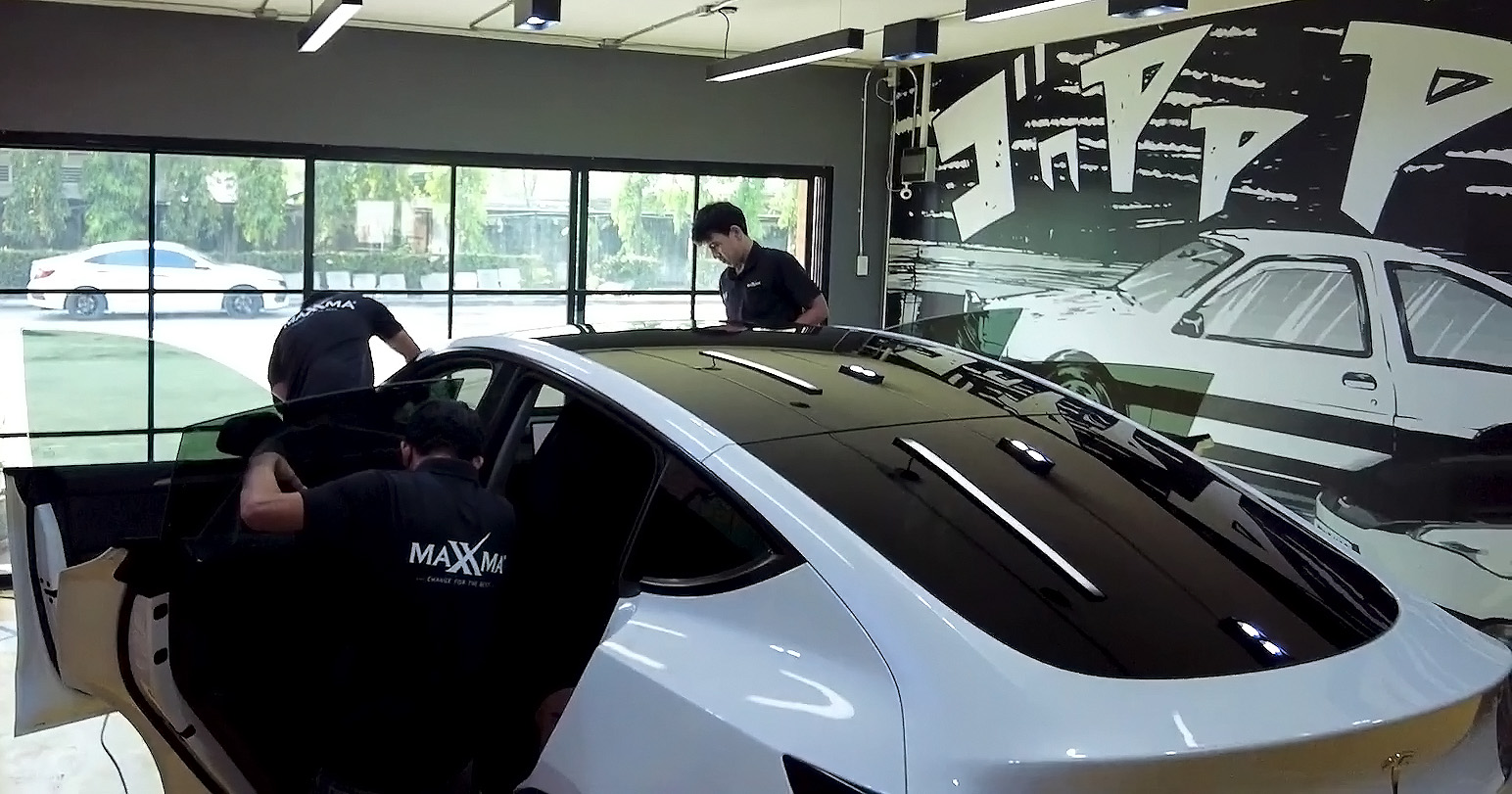
The Best and Hottest Day for a New Tesla Owner
This Saturday… Delivery Day!
Imagine a Saturday morning where you’re too excited to sleep. Today is the day you head to the Tesla Delivery Center in the Rama 9 area to pick up your very first brand new pearl white Tesla Model Y Long Range. The new car smell, the cutting-edge 15-inch center screen that controls every function via touch, the minimalist steering wheel that makes you feel like you’re piloting your own spaceship — this is the ultimate experience money can buy in the EV era.
And the most significant highlight that makes many choose a Tesla over other European cars is the “Panoramic Glass Roof” that stretches seamlessly from the windshield over the front passengers all the way to the rear. The airy, open feeling with no center pillar obstructing the view offers a connection to the sky that no combustion engine car on the market can provide.
“At first, I thought luxury car AC would be enough…”
You drive out of the center with a smile on your face, heading onto the Rama 9 Expressway. It’s around 2:00 PM, the Bangkok sky is clear without a cloud, and the intense April sun is blazing down at full force. The view of the skyscrapers through the panoramic roof is as beautiful as a postcard…
But in less than 15 minutes, the excitement is replaced by a sensation many refer to as the “Sunroof Oven” — you feel as though someone is pointing an infrared oven directly at your head. Even if you set the AC to 20°C with the fan on level 8, the radiant heat beaming down from above doesn’t decrease one bit. Your face and head are burning, even though the air blowing directly from the vents is freezing cold.
And when you glance at the center screen, the second shock arrives — the battery is dropping noticeably faster than normal! The Estimated Range plummets at a rate you’ve never seen before. This isn’t a flaw with the car; it’s the classic pain point for every Tesla owner in Thailand — and it will happen to you every day if you don’t address it right now.
What Exactly is the “Sunroof Oven”?
The phenomenon you’re experiencing is the Greenhouse Effect in car form. Short-wave radiation from the sun (Visible Light + UV + IR) easily penetrates the panoramic roof into the cabin. But when these rays hit the leather seats, console, and floor, they are absorbed and re-emitted as long-wave heat radiation that cannot penetrate back out through the glass. Thus, your cabin turns into a “mobile oven” in just a matter of minutes.
⚠️ Misconception: Many think, “It’s an expensive luxury car; the glass must already block heat well.” — This is one of the most expensive misunderstandings for Tesla owners.
The Day Heat Costs You Money Without You Knowing
AC Compressor and the Missing Range — The Numbers No One Tells You
Most people think of interior car heat as just a matter of “discomfort” — but for Electric Vehicles (EVs) like Tesla, heat is the direct nemesis of the battery.
In an Internal Combustion Engine (ICE) car, the AC compressor is powered by the idling or running engine. But in a Tesla — the AC compressor draws power directly from the High Voltage Battery. When the interior temperature sensors detect that the cabin is scorching due to the glass roof letting heat pour in, the Thermal Management System (including the Octovalve Heat Pump in newer Teslas) is commanded to work at maximum load to bring the temperature down.
The result? A Tesla’s AC compressor can consume up to 3-6 kW during the initial intensive cooling phase. That is equivalent to the energy used to drive the car 15-25 kilometers per hour! The 500+ km range claimed on the screen might plummet to 350-400 km simply because the climate control system has to constantly battle the heat pouring in through the glass roof.
Loss Aversion — What You Lose is More Than Just Range
Psychologically, humans tend to feel the pain of “loss” twice as intensely as the pleasure of “gain” (Loss Aversion Bias). Think about what you are losing without realizing it:
- 💰 Range: The battery that should comfortably get you to Hua Hin without a charging stop might force you to frantically search for an en-route charging station — costing you both time and electricity.
- 🪑 Premature Interior Aging: UV rays penetrating the glass roof damage Tesla’s vegan leather seats, causing them to fade, crack, and dry out prematurely. Repairing Tesla seats can cost tens to hundreds of thousands of baht.
- 📉 Resale Value: A car with a sun-faded interior suffers a steep drop in value compared to well-maintained cars on the used market.
- 😰 Chronic Range Anxiety: The constant worry that your car won’t make it to the destination is a cumulative stress that detracts from the joy of owning a Tesla every time you take a long trip.
The Silent Threat from Freeway Stones — Cracked Panoramic Roof = Broken Dreams
Beyond the heat, there is another silent threat that most Tesla owners overlook until it’s too late — Stone Chips. Tesla’s Panoramic Roof and windshield possess massive surface areas and angles that take wind resistance directly. Driving on Thai roads filled with ten-wheel trucks and gravel from expressway construction sites makes the risk of stones flicking up onto the roof extremely high.
If your Tesla’s Panoramic Roof cracks or shatters from a flying stone — the replacement cost for the entire pane from a Tesla Service Center can be as high as 80,000 - 150,000 THB, not including the labor to recalibrate the entire Autopilot camera system. It’s certainly an expense that will severely impact your wallet.
🔬 The ScienceThe Science of Heat & TSER — How Engineers Explain It
Privacy Glass ≠ Heat Protection — The Most Expensive Misconception
The panoramic roof and the rear-half windows of a Tesla that come factory-darkened are technically known in engineering as “Privacy Glass”. Its primary function is singular: to reduce visible light for privacy and aesthetic appeal. And yes, it helps reduce glare somewhat, but it does practically nothing to reduce heat!
Furthermore, the dark tint of Privacy Glass acts as a “Heat Absorber”. When the glass absorbs infrared (IR) rays from sunlight until it gets scorching hot, the glass itself becomes a radiator that beams radiant heat directly down onto the passengers’ heads, much like sitting under a grill!
Understanding the 3 Rays in Sunlight — Which One is the Villain?
The sunlight that shines down on our cars every day consists of 3 main types of rays:
☀️ UV Rays (3%)
Invisible, Not Hot — But it is the primary culprit causing skin dullness, freckles, blemishes, and premature cracking of the leather seats in your Tesla. Quality window film must filter out 99%+ of UV rays.💡 Visible Light (44%)
The Light We See — Causes brightness and glare that strains the eyes while driving. Window film reduces this light for visual comfort but shouldn’t reduce it so much that visibility is compromised.🔥 Infrared — IR (53%)
Invisible, But the Hottest! — This is the culprit that causes the sensation of “heat” when exposed to the sun. IR rays account for more than half of all solar energy that hits a Tesla’s glass roof.TSER is the Only Number You Need to Remember — And Why EVs Need Higher Specs?
TSER (Total Solar Energy Rejected) is the most accurate and universal index for measuring a window film’s heat rejection performance. It represents the combined rejection of all 3 types of rays (UV + Visible Light + IR) into a single value.
For an EV like a Tesla, you need a film with a significantly higher TSER than conventional ICE cars because:
- Full Glass Roof = Massive Heat Area — The solar heat gain of a Tesla is 2-3 times higher than a standard steel-roof sedan.
- AC Energy = Battery Energy = Lost Range — The lower the TSER, the harder the AC works, and the faster the battery drains.
- Quiet EV Cabin — Heat Feels More Pronounced: With no engine noise to drown it out, the sensation of radiant heat is much more noticeable than in an ICE car.
📊 Summary of Principles for Choosing Tesla Film:
Choose film with TSER ≥ 60%, IR Rejection ≥ 90%, UV Rejection ≥ 99%, and it must strictly be Non-metallized (Nano Ceramic) film to ensure your Tesla’s 5G, GPS, and Autopilot signals function 100% normally.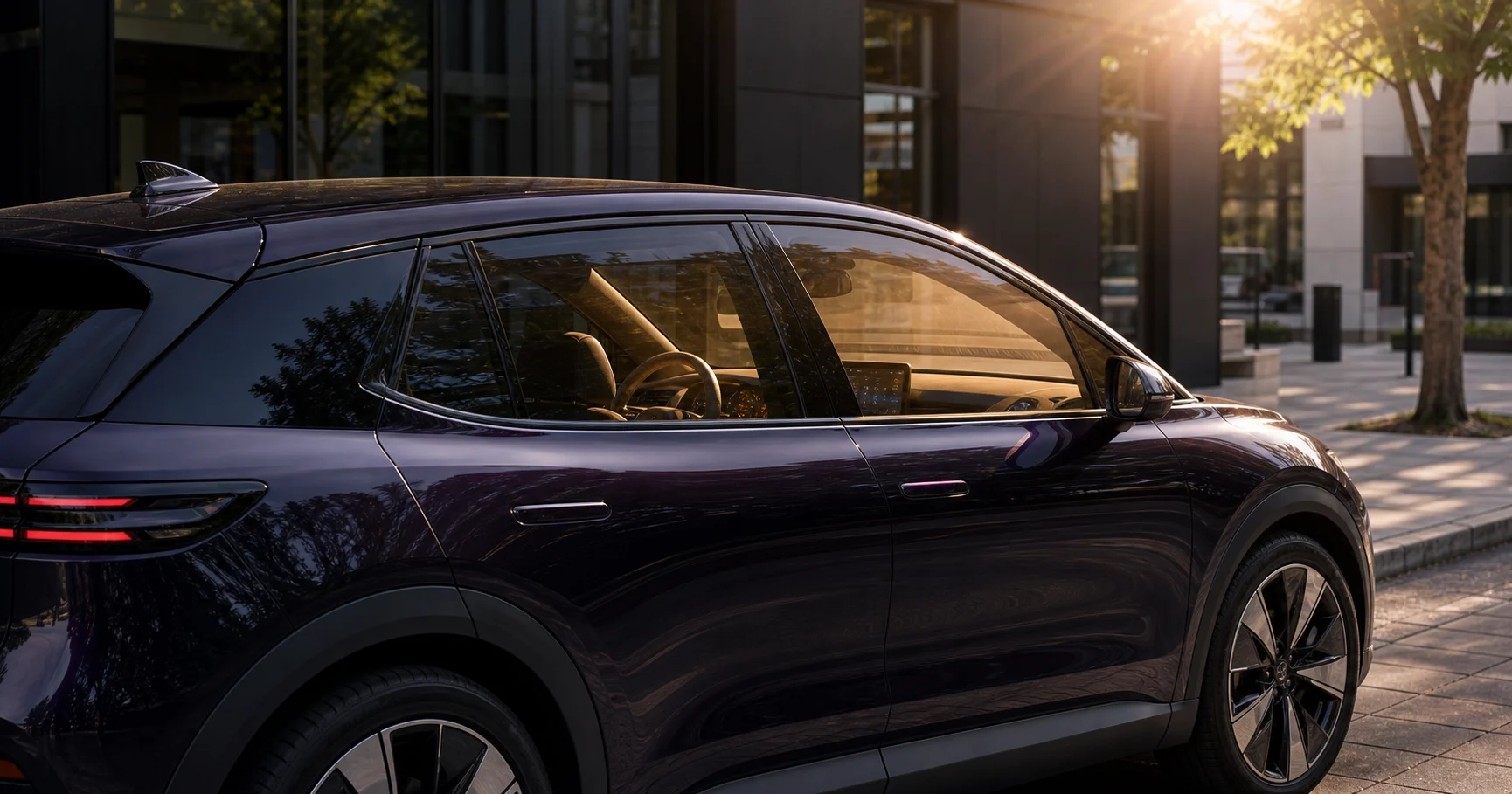
Nano Ceramic vs. Metalized Film — The Trap EV Owners Must Avoid
There are two main technologies for window tint in the market: Metalized Film and Nano Ceramic Film. Metalized film rejects heat well and is cheaper, but it is a disaster for EVs! This is because the metal layer in the film acts like a miniature “Faraday Cage” — it will block and interfere with all radio frequencies, from GPS, 5G, and Bluetooth, to the signals your Tesla’s Autopilot system uses to communicate with satellites and external sensors.
Maxxma Polarized and all films in the Nano Ceramic Series use Nano Ceramic technology which is 100% metal-free. It provides IR Rejection up to 99% without interfering with any signals whatsoever. OTA Updates flow smoothly, and Autopilot operates at full capacity.
🛡️ The SolutionDouble Shield Protection — The 2-Layer Defense Tesla Service Centers Never Tell You About
Once you understand the problem and the science behind the heat, it’s time for the perfect solution. A single layer of tint is simply not enough for Thailand’s 40°C+ weather. The car protection experts at Maxxma designed the “Double Shield Protection” solution, a synergistic combination of exterior and interior films engineered specifically for Teslas and EVs with glass roofs.
🛡️ Layer 1: Clear Guard Sunroof (Exterior) — The First Line of Defense
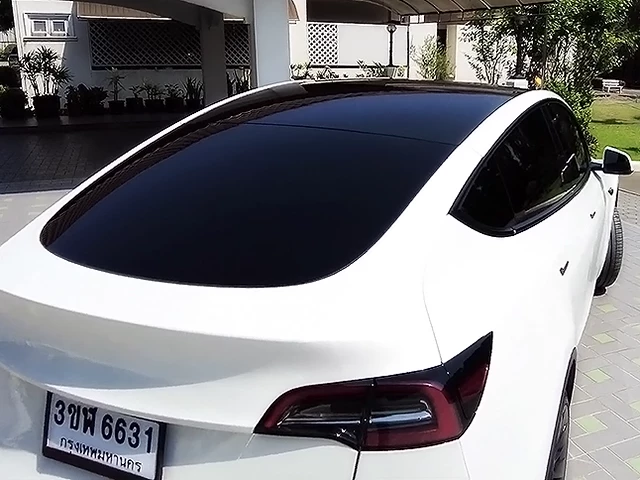
Instead of treating the symptoms, we block the problem at the first exterior barrier using Clear Guard Sunroof — an innovative Paint Protection Film (PPF) designed specifically to be installed on the exterior of the glass roof.
- 🪨 Impact Resistance: The extra-thick and highly flexible film absorbs impacts from gravel and hard objects, significantly reducing the risk of a cracked Panoramic roof — protecting you from repair bills running into the hundreds of thousands.
- ☀️ First-Stage Heat Reflection: The film possesses properties to reflect UV and IR rays before they even hit the glass surface, excellently reducing heat absorption by the Privacy Glass.
- 🧹 Self-Healing Technology: Minor scratches on the film will self-heal with the heat from the sun — keeping the film looking new even after years of use.
🛡️ Layer 2: Maxxma Polarized (Interior) — The Final Fortress
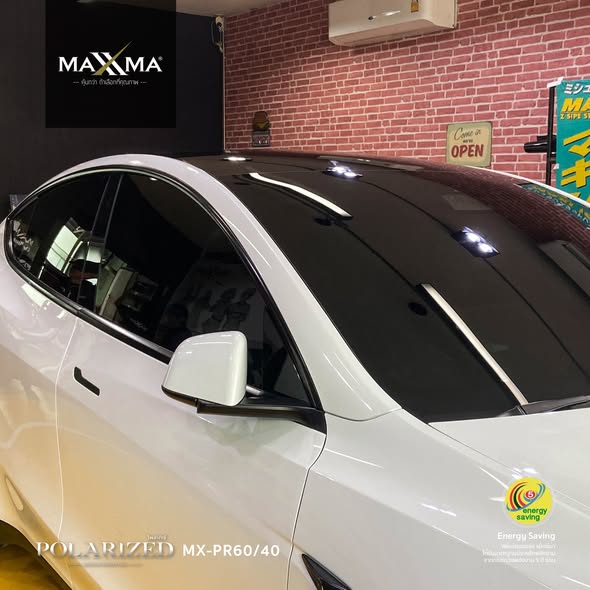
After filtering the first stage of heat from the outside, we deal with the remaining rays that penetrate inside using Maxxma Polarized — the ultimate flagship window film perfectly designed for Tesla:
- 🕶️ Glare Reduction: Tesla’s front console often reflects onto the steeply angled windshield. Polarized technology filters out these reflections — just like premium polarized sunglasses — rendering clear visibility so you can see the road clearly even in harsh sunlight.
- 🧊 Extreme Heat Rejection: Blocks 99% of UV and delivers an extraordinarily high TSER — rapidly pulling down the cabin temperature. Even parked in the sun, you can use the Tesla app to pre-condition the AC, making it icy cold in just minutes.
- 📡 Zero Signal Interference: 100% Non-metallized film — guaranteed not to interfere with 5G, GPS, Bluetooth, Wi-Fi, and the Autopilot system. OTA Updates run smoothly without interruption.
🔗 Why 2 Layers? — The Science of Synergy
Clear Guard Sunroof (Exterior) + Maxxma Polarized (Interior) isn’t just “1+1”; it’s a synergistic operation. The exterior PPF reflects the first stage of heat and absorbs impact forces, while the interior film filters the remaining IR, reduces glare, and maintains crisp visibility. The result is significantly lower cabin temperatures, less AC strain, more battery savings, and your Panoramic glass is protected from rock chips on both the outside and the inside.💡 Tip: For maximum protection, we recommend applying Clear Guard to the car body simultaneously — because an EV front end without a grille has a very high chance of getting paint chipped by rocks.
Testimonials from Real Users — It’s Not Just Us Talking, The Results Speak for Themselves
Don’t just believe it until you see it with your own eyes. Check out actual results and Maxxma’s Tesla installation portfolio.
📋 Checklist7 Questions to Ask Before Taking Your Tesla for Tinting
Before you take your beloved Tesla to a tint shop, go through these 7 checklist items to be sure — because tinting a Tesla is not like tinting a regular car; there are specific details technicians must know:
If you want 100% confidence, you can opt for the Auto Installation Service from Standard Maxxma Dealers ready to take care of your Tesla with premium standards.
Frequently Asked Questions — Tinting Your Tesla with Maxxma
The Tesla glass roof is already factory-dark. Is it necessary to add more film?
Will installing Maxxma film affect the Tesla Autopilot or GPS systems?
Between Clear Guard Sunroof and heat rejection film, which one should be installed first?
Is Maxxma Polarized film too dark for night driving?
Will the exterior Clear Guard Sunroof peel when I wash the car or use a high-pressure washer?
Don’t Wait Until It’s Hot to Think About Fixing It — Protect Your Tesla Today
Tesla is a symbol of technological advancement and taste — don’t let an excellent driving experience be ruined simply by “heat” and “rock chips” that can be prevented early on.
End the sunroof oven problem, protect your battery, and maintain your car’s beauty from the very first day you take delivery with Double Shield Protection by Maxxma — the only solution designed specifically for Tesla and EVs.
📞 Inquire about special EV owner promotions: Call 080-559-5935 | Line: @maxxma | Facebook: MAXXMACarFilm
📚 Learn more about car care and window films at the Maxxma Knowledge Hub
Ready to protect your home or vehicle?
Consult with MAXXMA experts to select the perfect film for your needs, or find an authorized dealer near you.