

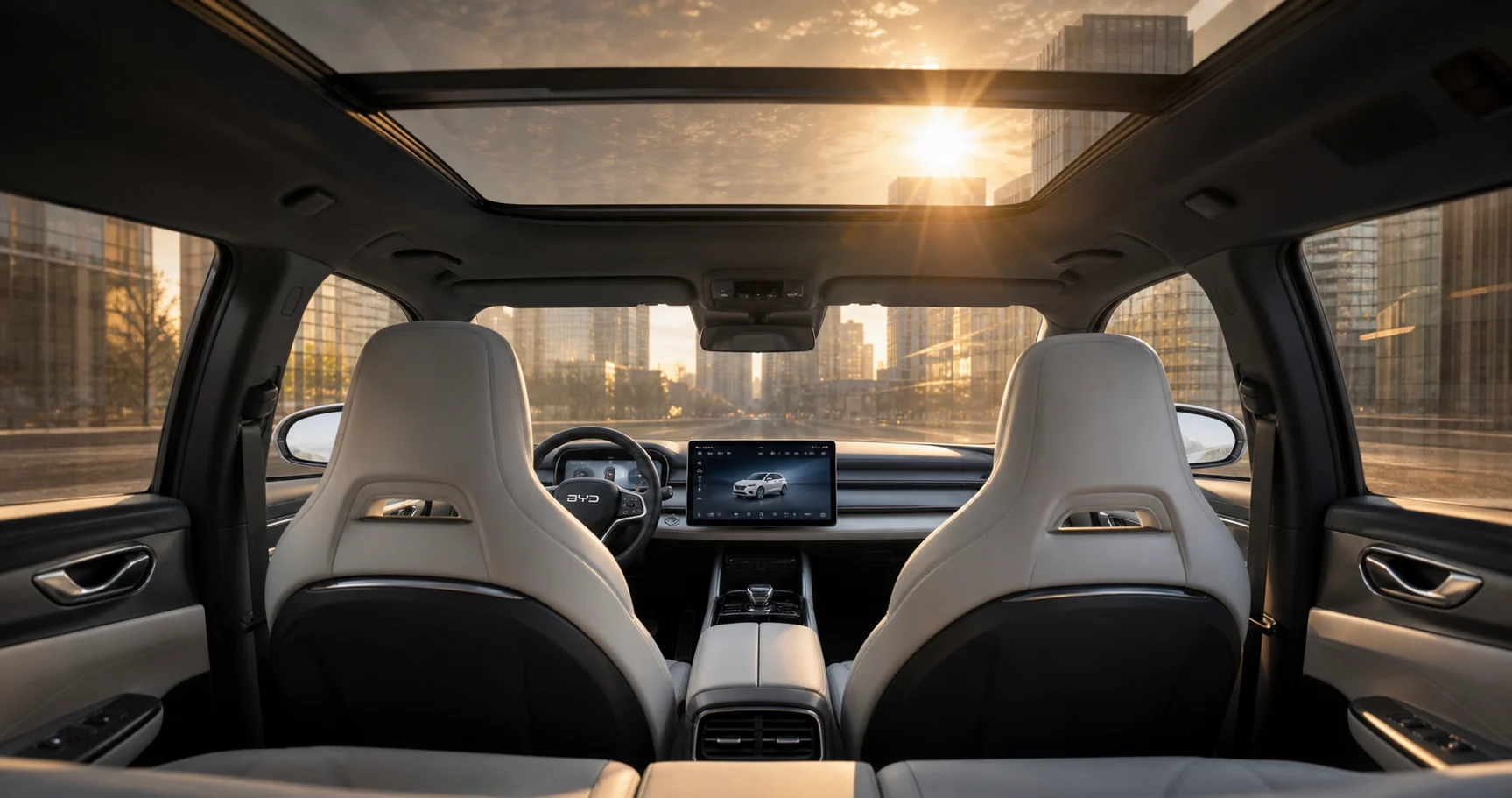
Protecting passenger cabins and living spaces with high-performance window film preserves visual comfort, reduces HVAC strain, and prevents interior degradation.
Why Install Window Film?
Many view window film merely as a cosmetic accessory or an easy way to darken automotive glass. In material science and building energy engineering, however, high-grade window film functions as a vital thermal shield and life-safety barrier for both vehicles and architectural structures.
In tropical climates such as Thailand, solar irradiance striking exterior glazing regularly exceeds 800 to 1,000 W/m². Clear, untreated glass allows substantial infrared heat radiation and ultraviolet (UV) rays to penetrate directly into enclosed spaces. This triggers a heat-trap effect, forcing air conditioning systems to operate continuously under severe load, driving up power consumption, and accelerating occupant fatigue.
With more than 15 years of precision engineering experience, MAXXMA highlights six primary dimensions demonstrating why quality window film remains one of the highest-return investments for your vehicle, residence, or commercial property:
☀️
Comprehensive UV Protection (99%)
Every MAXXMA professional film filters 99% of both UVA and UVB radiation. This drastically mitigates skin cancer hazards, inhibits premature skin aging, and shields eyesight against cataracts in full alignment with international dermatological guidelines.
🌡️
Deep Infrared Heat Rejection
Featuring molecular nano-ceramic particles that selectively isolate heat-bearing wavelengths, MAXXMA films reject 80% to 99% of near-infrared rays. This lowers interior surface temperatures by 5 to 10°C, producing noticeable, sustained cabin comfort.
👁️
Daytime Privacy with Outward Clarity
Restricts inward visibility from onlookers during daylight hours to protect valuables and occupants, while ensuring occupants enjoy an uninterrupted, crystal-clear view outdoors without hazy optical distortion.
🛡️
Impact Safety and Glass Shard Retention
High-tensile optical polyester combined with aggressive synthetic adhesives binds cracked or broken glass fragments together during accidents, windstorms, or road debris strikes, preventing dangerous sharp projectile injuries.
🕶️
Glare Control and Visual Fatigue Relief
Dampens blinding direct solar flare, wet-pavement bounce, and architectural reflective glare. This relieves eye fatigue during highway driving and boosts screen visibility for computer workstations situated near large windows.
🪵
Preservation of Fine Interior Surfaces
Solar UV rays and accumulated thermal energy account for over 65% of interior photodegradation. Installing protective film preserves leather seats, vinyl dashboards, teak flooring, and valuable artwork from fading and brittleness.
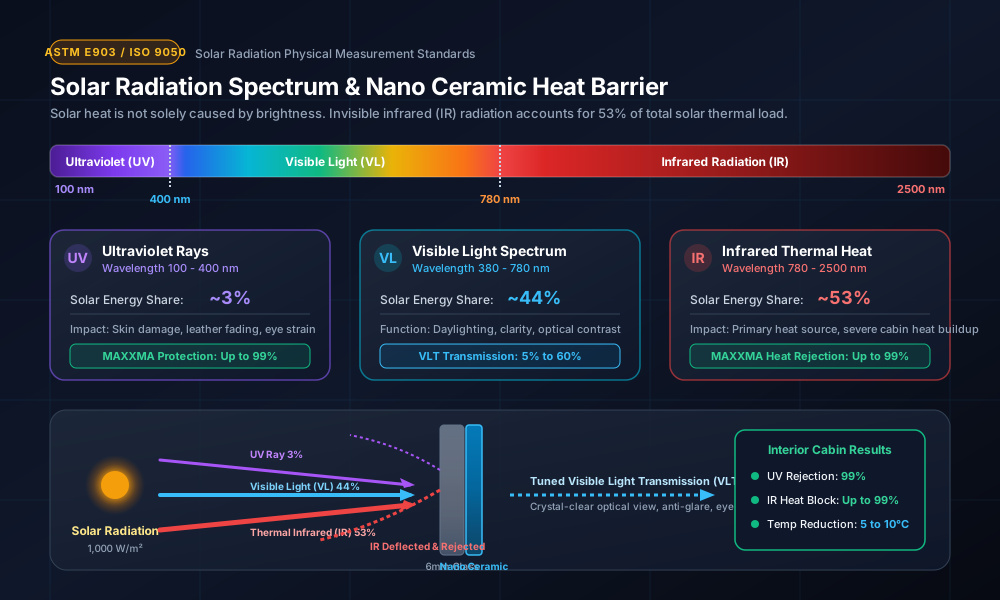
Solar radiation physics diagram: Distribution of UV (3%), Visible Light (44%), and Infrared thermal radiation (53%), illustrating MAXXMA nano-ceramic wavelength-selective filtering under ASTM E903 / ISO 9050 standards.
Solar Spectrum & Thermal Barrier Interactive Spectrum
Explore how solar radiation distributes across UV, Visible Light, and Infrared wavelengths, and see how MAXXMA Nano Ceramic creates an impenetrable thermal barrier compared to standard clear glass.
Infrared Radiation (IR)
Effect: Major driver of greenhouse heat traps, heavy air conditioner strain, and skin burning sensations
Window Film vs. Bare Glass
Is leaving glass untreated genuinely more cost-effective? To understand the tangible physical and energetic consequences, the table below compares untreated 6mm clear architectural glass against glass protected by MAXXMA Nano Ceramic window film:
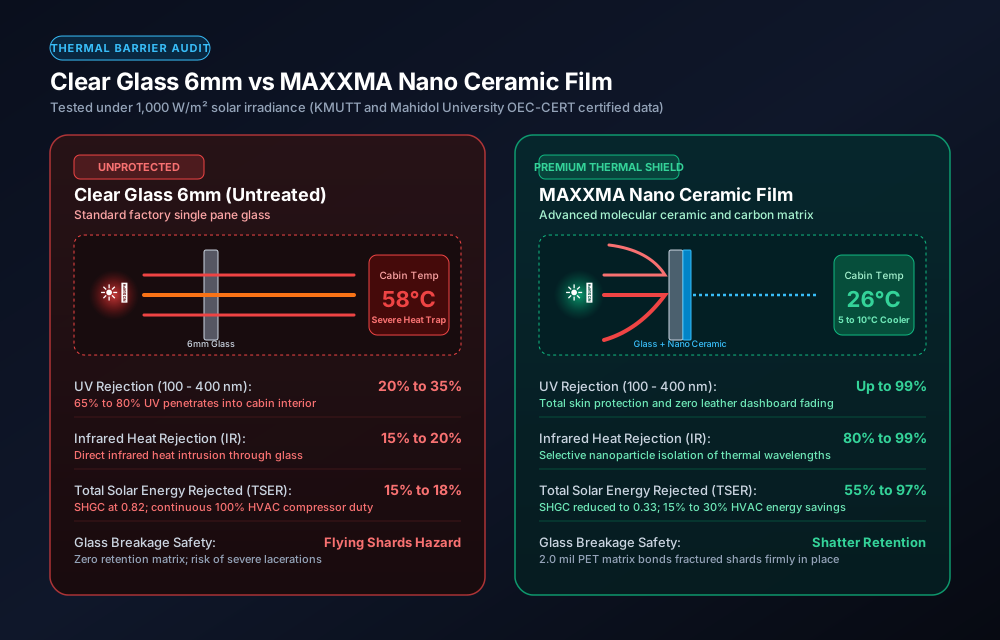
Thermal barrier audit comparing untreated 6mm clear glass with MAXXMA Nano Ceramic film: cabin temperature reduction of 5 to 10°C, 99% UV rejection, and substantial HVAC power conservation.
Untreated Clear Glass (6mm)
Unprotected- UV Rejection:
- 20% to 35%
- IR Heat Cut:
- 15% to 20%
- TSER:
- 15% to 18%
- HVAC Savings:
- None
- Breakage Safety:
- Unbound shards
MAXXMA Nano Ceramic
Premium Shield- UV Rejection:
- Up to 99%
- IR Heat Cut:
- 80% to 99%
- TSER:
- 55% to 97%
- HVAC Savings:
- 15% to 30%
- Breakage Safety:
- Shard retention
Economic Takeaway: Premium window film represents a self-funding building asset rather than an unrecoverable expense. Explore full return-on-investment modeling in our Window Film Worthiness Analysis.
Types of Window Film
Various window film technologies exist across different price tiers. Understanding their underlying material engineering helps you select the correct product without paying for premature replacements:
1. Dyed Film
Budget TierManufactured by dipping standard polyester into black dye solutions. Dyed films merely reduce visible light without blocking invisible infrared radiation. Under prolonged tropical heat, dye molecules photo-oxidize rapidly, causing the infamous Purple Film Syndrome and bubble detachment within 6 to 18 months.
Limitations: Poor heat rejection, fast discoloration, low durability
2. Metallized Film
Mid-Grade TierConstructed with microscopic metallic deposits that reflect incident thermal energy. While metallized films deliver respectable solar control and high exterior daytime privacy, the metal barrier can attenuate digital frequencies such as Easy Pass, GPS, and smartphone connections, alongside creating interior mirror reflections at night.
Limitations: Potential signal interference, reflective glare
3. Pure Ceramic Film
Premium TierEmbedded with molecular nano-ceramic particles that selectively isolate infrared radiation, blocking 80% to 99% of thermal energy while maintaining high visible light transmission. Free from metal layers, ceramic films allow 100% digital signal passage and guarantee zero purple discoloration over seven or more years.
Highlights: Optical clarity, zero RF interference, no purple discoloration
4. Nano Carbon Ceramic
MAXXMA FlagshipThe pinnacle of solar control technology, uniting deep non-fading carbon color with high-density ceramic infrared barriers. Delivering up to 97% total solar energy rejection (TSER) and certified with the Energy Label No. 5 from the Ministry of Energy, it provides unmatched day-and-night visual sharpness.
Highlights: Maximum TSER, deep sport tone, No. 5 Energy Label, 7 to 10-year warranty
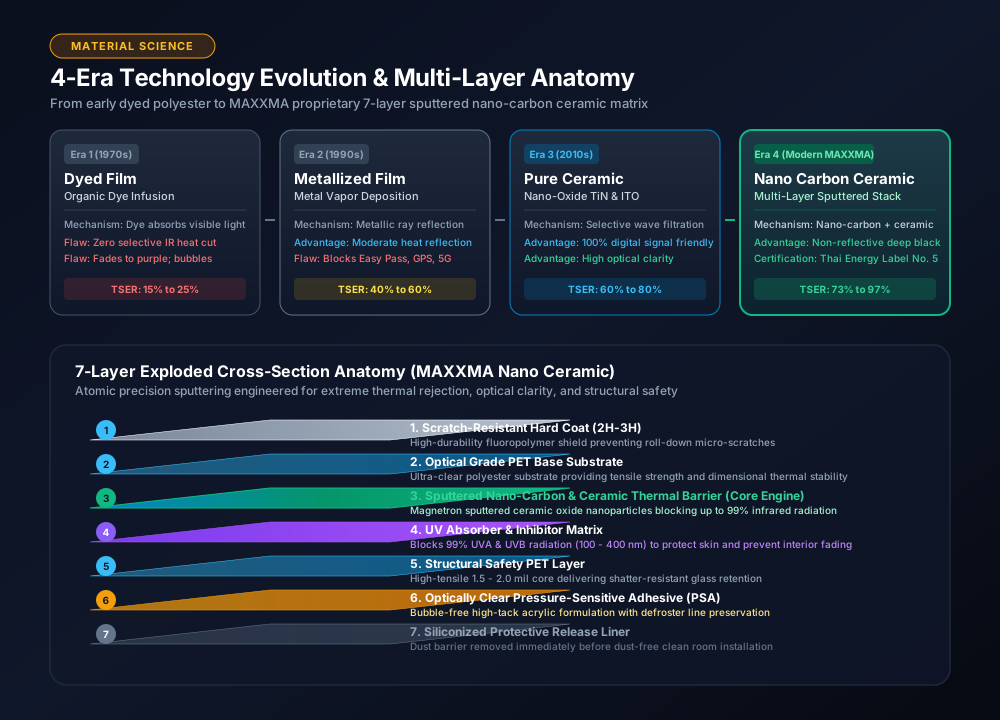
Four-generation technological evolution of window film (Dyed to Metallized to Pure Ceramic to Nano Carbon Ceramic) and exploded multi-layer sputtered cross-section anatomy.
Video showcase demonstrating professional Nano Ceramic window film and paint protection film application in MAXXMA dust-controlled installation facilities.
MAXXMA Series Technical Specification Matrix
To assist your purchasing evaluation, below are verified technical specifications measured in accordance with international testing standards:
Interactive VLT & Privacy Simulator
Experience real-world privacy from the outside versus crystal optical clarity from the inside across daytime sunlight and night driving conditions.
Suitable for: Front side windows, all-round popular choice, residential villas
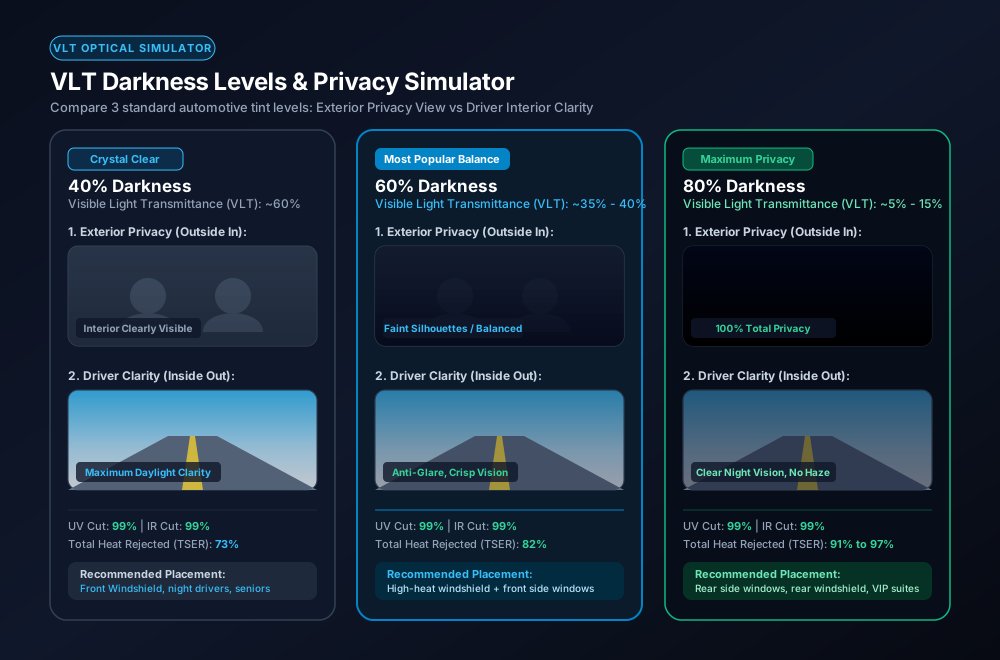
MAXXMA window film darkness guide (40%, 60%, 80%): Balancing exterior privacy against interior driving optical clarity across daylight and night driving conditions.
MAXXMA Polarized (MX-PR)
Flagship Clarity- Technology:
- Pure Nano Ceramic
- VLT Range:
- 5% / 20% / 40% / 60%
- UV Rejection:
- 99%
- IR Rejection:
- 99%
- TSER:
- 73% to 97%
- Warranty:
- 7 to 10 Years
MAXXMA Black Panther (MX-BP)
Sport Dark- Technology:
- Nano Carbon Ceramic
- VLT Range:
- 5% / 20% / 35%
- UV Rejection:
- 99%
- IR Rejection:
- 83% to 87%
- TSER:
- 77% to 91%
- Warranty:
- 7 Years
MAXXMA Refined (MX-R)
Classic Sheen- Technology:
- Nano Ceramic Metallized
- VLT Range:
- 5% / 20%
- UV Rejection:
- 99%
- IR Rejection:
- 77% to 88%
- TSER:
- 78% to 90%
- Warranty:
- 7 Years
Factors Affecting Window Film Pricing
Price variations in the window film market directly reflect raw material quality, vacuum deposition technology, and installation rigor:
Film Material and Substrate Grade
Dyed films involve minimal production costs, whereas magnetron-sputtered multi-layer nano-ceramics require high-precision vacuum chambers, yielding an asset that resists heat and photodegradation for over a decade.
Glass Area and Vehicle Class
Compact sedans require less film material than larger SUVs, MPVs, or VIP commercial vans. For residential and commercial buildings, quotes are calculated strictly by square footage or square meterage.
Curvature and Geometric Complexity
Deeply curved windshields, panoramic EV sunroofs, or tall commercial facade panels demand advanced heat-shrinking techniques and meticulous edge trimming by certified installers.
Clean Room Installation Standards
Authorized MAXXMA centers execute installations inside climate-controlled clean rooms equipped with misting air-filtration systems to prevent airborne particulate entrapment beneath the film.
Typical Market Price Ranges for Professional Installation:
- • Compact and Mid-Size Sedans: 4,500 to 18,000 THB (depending on film series)
- • SUVs, MPVs, and Large EVs: 6,500 to 24,000 THB
- • Architectural and Residential Windows: 65 to 250 THB per square foot (inclusive of installation and warranty)
How to Choose the Right Film for Your Needs
Selecting the ideal window film delivers an optimal balance of solar rejection, driving safety, and aesthetic elegance:
Passenger Cars and Electric Vehicles
Prioritize non-metallic nano-ceramics to safeguard GPS and electronic toll transponders. Ensure windshield VLT remains above 40% for safe nocturnal navigation, while selecting 60% or 80% density for side and rear glass.
Recommended: MAXXMA Polarized or Black Panther
Homes and Condominiums
Focus on high infrared rejection films that preserve natural daylighting and unhindered outdoor views without darkening interior ambiance, combined with 99% UV rejection to preserve wood flooring and furnishings.
Recommended: MAXXMA Architectural Film or Nano Carbon Ceramic
Offices and Retail Glass
Select high-clarity spectrally selective films to showcase storefront merchandise clearly while slashing daytime air-conditioning bills, or deploy frosted privacy films for conference room zoning.
Recommended: UV400 Clear Film or MAXXMA GROWTH Decorative Film
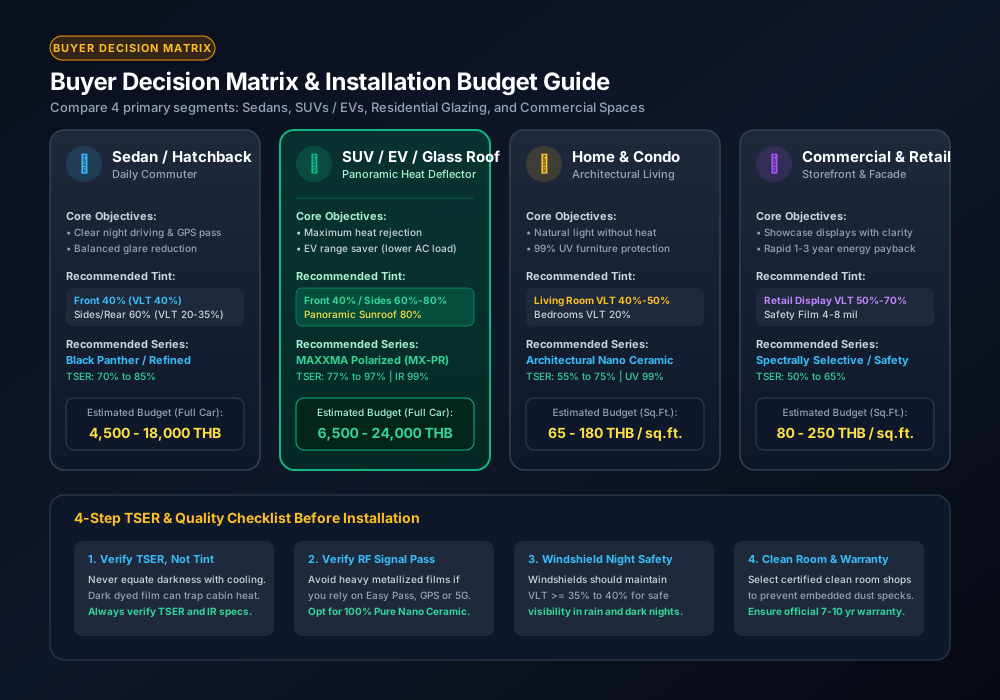
Buyer decision matrix and installation budget guide: Recommended darkness formulas, series selections, and price estimations for Sedans, SUVs/EVs, Residential Homes, and Commercial Buildings with a 4-point TSER checklist.
5-Step Pre-Installation Checklist
- Define Core Priorities: Determine whether your primary requirement is extreme infrared rejection, nighttime driving clarity, or visual privacy.
- Evaluate TSER Over Darkness: Avoid equating dark film with superior heat reduction. Always verify certified Total Solar Energy Rejection (TSER) and Infrared Rejection (IR) figures.
- Audit Visibility and Light Transmission: Inspect physical film swatches under both bright sunlight and simulated nighttime conditions before confirming shade selection.
- Choose Certified Installation Facilities: Insist on climate-controlled dust-free installation bays to protect window defroster grids and electronic sensors.
- Verify Comprehensive Warranty Coverage: Confirm electronic warranty registration and authentic warranty cards backed by the official manufacturer portal.
Frequently Asked Questions
1
Does dark window film impair nocturnal or rainy-weather driving visibility?
When selecting genuine nano-ceramic film such as MAXXMA Polarized or Black Panther, visible light passes with exceptional optical acuity free from cloudy haze. For front windscreens, we recommend a visible light transmission (VLT) of 35% to 40% or higher to preserve secure reaction times during night driving and heavy rainstorms.
2
What is the typical lifespan of quality window film, and when should it be replaced?
Premium nano-ceramic films operate reliably for 7 to 10 years or more. Primary indicators that film requires replacement include purple or brownish discoloration, bubbling or adhesive rippling, a sour chemical odor, or noticeably increased interior temperatures despite maximum air conditioning output.
3
What are the essential post-installation maintenance rules?
Avoid rolling down automotive windows or wiping the glass surfaces for the first 7 days to allow moisture in the adhesive layer to cure thoroughly. Tiny residual water pockets evaporate naturally within 1 to 2 weeks. Ongoing cleaning should use soft microfiber cloths with clean water or mild soapy solution. Never use ammonia-based window cleaning agents.
4
Are there legal tint limits in Thailand for automotive and architectural glass?
Automotive windshields and forward door windows must maintain sufficient visible light transmission to ensure unimpeded driving vision in compliance with Department of Land Transport regulations. Residential and commercial building installations have no legal darkness restrictions, allowing owners to customize privacy and solar control freely.
5
Does window film measurably lower electricity bills and air-conditioning strain?
Yes, significantly. By rejecting up to 73% to 97% of total solar energy (TSER), MAXXMA nano-ceramic films relieve continuous compressor load. This cuts air conditioning power usage by 15% to 30%, enabling full capital payback within 1 to 3 years of regular use.
Next Steps for Custom Film Specification
For tailored film recommendations matching your vehicle model or architectural glazing plans, MAXXMA certified specialists offer complimentary consultation and on-site technical inspection:
Ready to protect your home or vehicle?
Consult with MAXXMA experts to select the perfect film for your needs, or find an authorized dealer near you.