
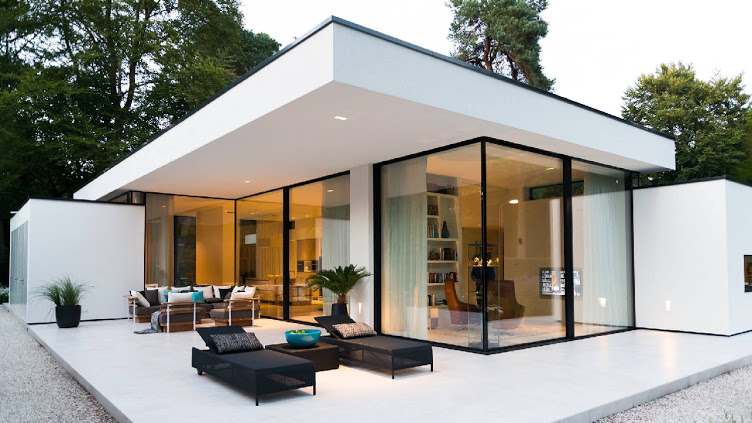
Clear glass architecture and floor-to-ceiling windows represent the dream of modern homeowners and condominium residents. The vision of a sun-drenched living room filled with natural daylight, seamless lush garden views, and an expansive sense of open space delivers an aesthetic elegance that solid concrete walls simply cannot match.
However, in tropical climates like Thailand, the dream of glass house decor often comes with challenging realities: indoor temperatures soar like a greenhouse oven, harsh afternoon glare causes eye strain, air conditioning compressors run continuously driving up electricity bills, and luxury furniture, timber floors, and artwork fade prematurely from relentless ultraviolet (UV) radiation.
Is it possible to enjoy the airy beauty of glass house living without suffering from overwhelming heat? The answer is an emphatic yes, provided you understand the physics of solar control and select the right certified architectural window film for your glass surfaces.
Quick Navigation: Table of Contents
- 1. The Greenhouse Dilemma: Why Glass Homes Overheat
- 2. 5 Inspiring Glass House Decor Ideas (With Heat Control Tips)
- 3. Science vs. Myth: Debunking Common Beliefs About Glass Film
- 4. Solar Control Engineering: How High-Performance Film Works
- 5. Certified MAXXMA Film Specification Matrix
- 6. Buyer Guide: Selecting the Perfect Film by Room Orientation
- 7. Interactive 3D Technology Experience: Solar Spectrum Filtration
- 8. Frequently Asked Questions (FAQ)
- 9. Standards and Technical References
- 10. Summary and Next Steps
The Greenhouse Dilemma: Why Glass Homes Overheat
Standard clear glass (typically 5 mm to 6 mm float glass) transmits over 82% of total solar heat (Solar Heat Gain Coefficient / SHGC ≈ 0.82). When solar radiation strikes clear glass, three distinct phenomena occur:
- Infrared Heat Infiltration (IR): Infrared rays, which account for roughly 53% of solar energy, penetrate standard glass directly and heat up floors, walls, and indoor furnishings.
- The Greenhouse Trap: Once solar heat is absorbed by interior objects, it re-radiates as long-wave thermal radiation that cannot pass back out through the glass, trapping severe heat inside the room.
- UV Degradation: Ultraviolet radiation (UV-A and UV-B) destroys chemical bonds in fabrics, leather sofas, engineered wood flooring, and wallpaper, causing irreversible fading, cracking, and chalking.
Many homeowners attempt to solve this problem by closing thick blackout curtains. While curtains block visible glare, solar heat has already penetrated through the glass pane into the room, creating trapped radiant heat between the glass and the fabric. Moreover, closing curtains completely eliminates natural daylight and outdoor views, defeating the primary purpose of building with glass.
5 Inspiring Glass House Decor Ideas (With Heat Control Tips)
Idea 1: Floor-to-Ceiling Sliding Glass Doors
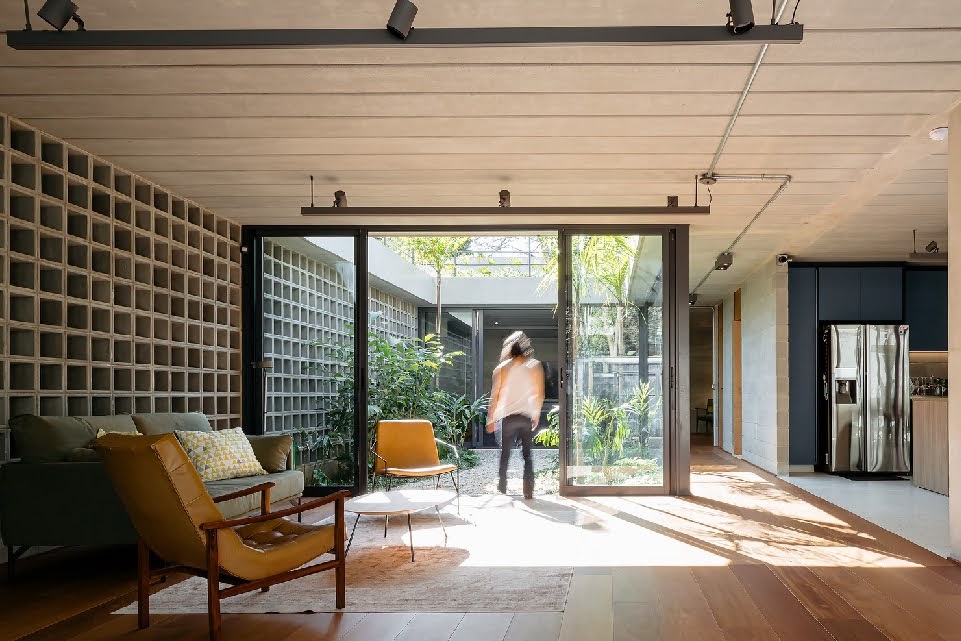
Large sliding glass doors create a seamless transition between interior living areas and exterior garden terraces or swimming pools. This configuration allows natural breeze when open and broad garden vistas when closed.
- Heat Challenge: Sliding doors present large surface areas exposed to morning or afternoon sun, leading to heavy thermal gain on floor tiles and rugs.
- Recommended Film: MAXXMA Polarized MX-PR60 or MX-PR40 (Nano Ceramic). Delivers 60% or 40% visible light transmission for crystal-clear outward visibility, 99% infrared rejection, and 99% UV blockage without creating internal mirror reflections at night.
Idea 2: Double-Volume High Glass Walls

Double-volume architecture with 5 to 7-meter high ceilings creates an unmistakable sense of grandeur, airflow, and modern luxury.
- Heat Challenge: High-altitude glass sections receive unfiltered direct sunlight throughout the entire day. Hot air naturally rises and accumulates near the upper ceiling, placing extreme strain on central HVAC systems.
- Recommended Film: MAXXMA Black Panther MX-BP20 or MX-BP05 on upper glass tiers (Total Solar Energy Rejection / TSER up to 91%) combined with MX-PR40 on lower eye-level tiers to maintain open visibility.
Idea 3: Garden-View Living Room with Frameless Glass
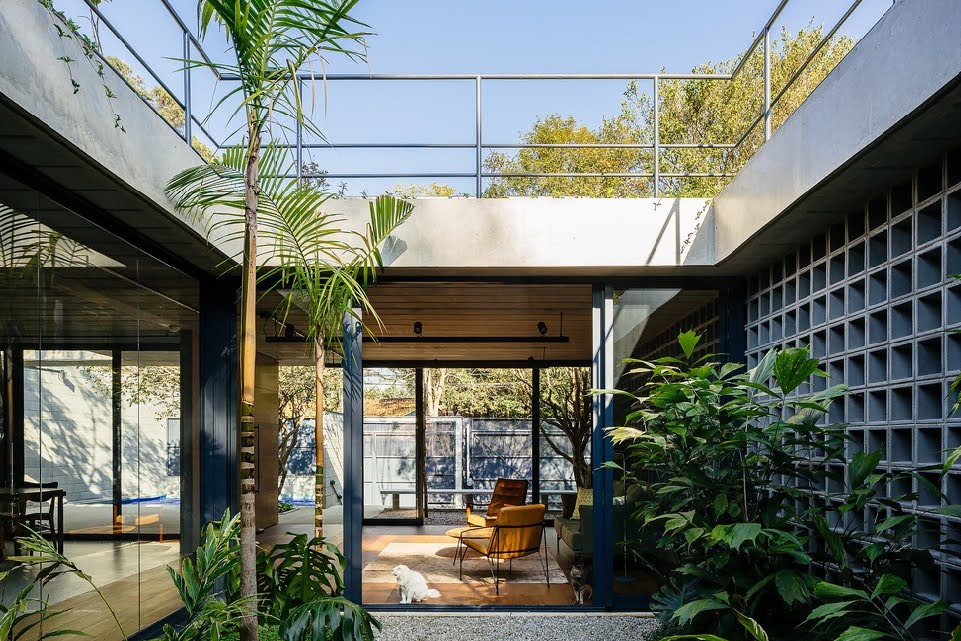
Frameless corner glass and fixed picture windows eliminate visual obstructions, framing outdoor gardens like living landscape paintings inside your home.
- Heat Challenge: Inward glare bouncing off shiny tile or hardwood surfaces can make reading or using laptop screens difficult.
- Recommended Film: MAXXMA Polarized MX-PR40 or MX-PR20. Polarized nano-ceramic technology filters scattered ambient glare while preserving accurate outdoor color balance.
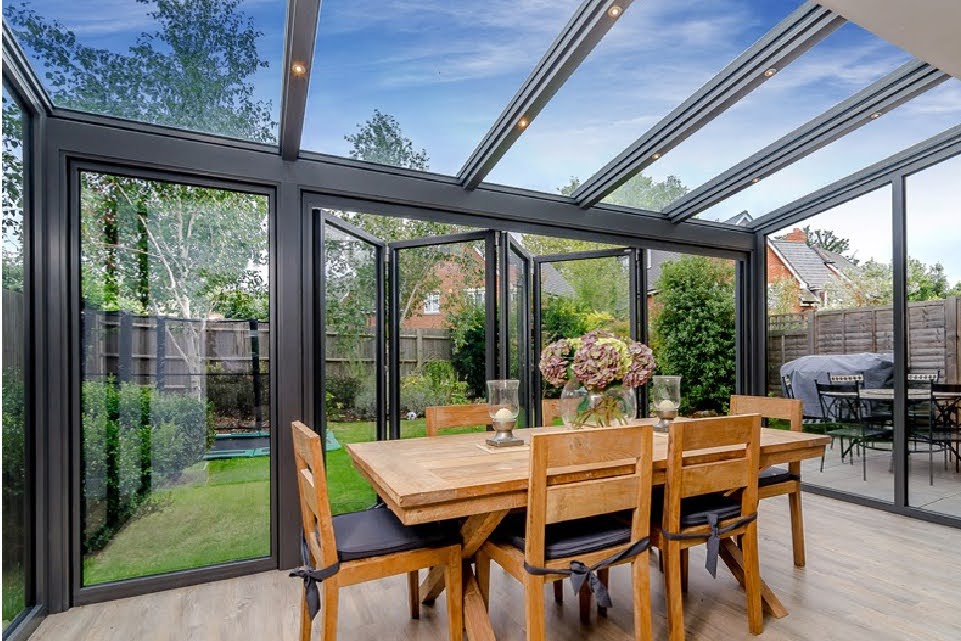
Idea 4: Glass Skylights and Sunrooms
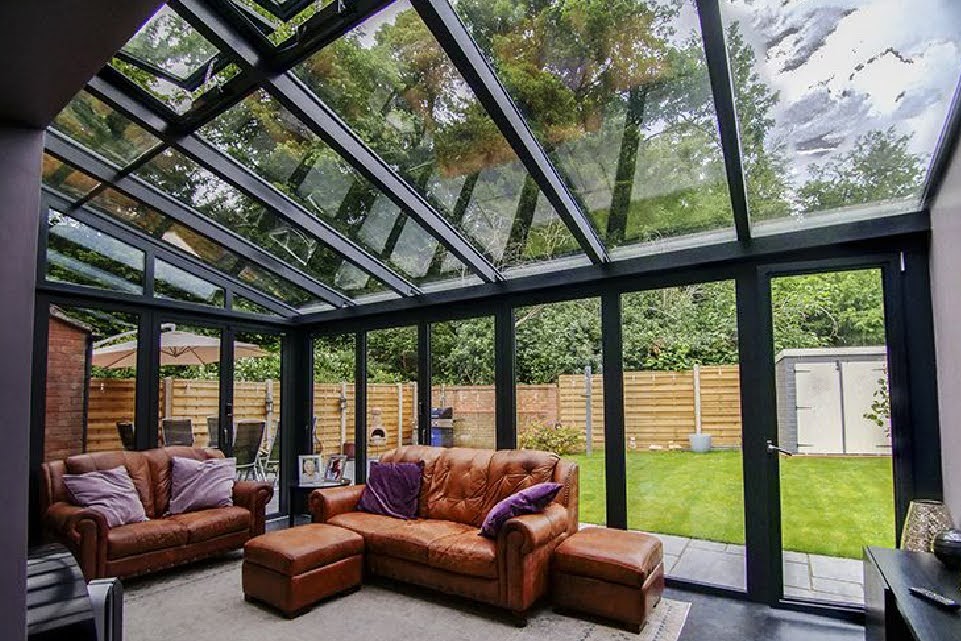
Glass skylights and sunrooms allow natural sunlight to illuminate hallways, staircases, and indoor botanical atriums from above.
- Heat Challenge: Overhead glass receives perpendicular solar radiation at peak noon hours, generating the most intense thermal load of any building surface.
- Recommended Film: MAXXMA Refined MX-CG05 or MX-CG20 (Ceramic Metallized) or MAXXMA Clear Guard Sunroof Film. High solar reflectance combined with 99% UV rejection prevents heat buildup and protects interior plant foliage from heat scorching.
Idea 5: 360-Degree Panoramic Glass Bedroom
Waking up to panoramic city skylines or tranquil morning landscapes delivers an unparalleled boutique hotel experience in everyday living.
- Heat Challenge: Bedrooms require a balance between daytime heat protection and nighttime privacy without making the room feel dark or enclosed.
- Recommended Film: MAXXMA Black Panther MX-BP20 or MX-BP35. Delivers an elegant dark sport exterior tone with 7% low internal reflection, providing comfortable daytime privacy while keeping daytime heat gain to a minimum.
Science vs. Myth: Debunking Common Beliefs About Glass Film
| Common Myth | Scientific Fact (NFRC / IWFA Standard) | MAXXMA Engineering Solution |
|---|---|---|
| “Darker film always blocks heat better than clear film” | Visible light accounts for only 44% of solar heat, whereas invisible infrared rays (IR) account for roughly 53%. A cheap dyed dark film blocks visible light but allows high IR heat to pass through. | MAXXMA Polarized Nano Ceramic: Blocks 99% of IR heat while maintaining high visible clarity (VLT up to 60%). |
| “Thick fabric curtains are enough to stop heat” | Curtains only block visible glare after solar heat has already penetrated through the glass into the room envelope, turning curtains into hot radiant heat traps. | MAXXMA Solar Control Film: Installed directly on the interior glass surface, reflecting and absorbing solar energy before it enters the room. |
| “Building film blocks mobile phone and Wi-Fi signals” | Only older generation thick metal sputtered films interfere with electromagnetic frequencies (EMF). Modern ceramic films contain zero conductive metal layers. | 100% Signal Friendly: All MAXXMA Ceramic and Carbon Ceramic series pass 5G, Wi-Fi 6, RFID, and digital broadcast signals with zero interference. |
| “Installing film will cause high-rise glass to crack” | Thermal stress fractures only occur when high solar absorption film is incorrectly paired with thick annealed or laminated glass under uneven thermal loads. | Engineered Safety Specs: MAXXMA films comply with IWFA thermal stress safety standards for residential and commercial glass types. |
Solar Control Engineering: How High-Performance Film Works
To make an informed decision for your home, it is essential to understand the standardized scientific metrics certified by the National Fenestration Rating Council (NFRC) and the International Window Film Association (IWFA):
- Total Solar Energy Rejected (TSER): The single most accurate measure of true heat rejection, accounting for visible light, infrared, and UV energy. High-performance building films deliver TSER values between 50% and 91%.
- Infrared Rejection (IR Rejection): Measured across the 780 nm to 2500 nm infrared spectrum. MAXXMA Nano Ceramic films achieve 99% IR rejection.
- Visible Light Transmission (VLT): The percentage of natural daylight passing through the glass. Ranges from 5% (dark privacy) to 60% (bright and clear).
- Solar Heat Gain Coefficient (SHGC): The fraction of incident solar radiation admitted through a window. Lower values (0.30 to 0.50) indicate superior solar heat resistance compared to bare glass (0.82).
- Ultraviolet Rejection (UV Rejection): All MAXXMA architectural films reject 99% of harmful UV-A and UV-B rays (up to 380 nm - 400 nm).
Certified MAXXMA Film Specification Matrix
The following specifications are verified by testing at the Optical Energy Center (OEC-CERT) at Mahidol University and KMUTT:
1. MAXXMA Polarized Series (Nano Ceramic)
Top-Tier Clarity | IR Rejection 99%High visible clarity, 99% infrared rejection, zero signal interference, 5-year warranty
| Model Code | Film Tone | VLT (Light) | IR Rejection | TSER (Heat) | Recommended Space |
|---|---|---|---|---|---|
| MX-PR60 | Crystal Clear | 60% | 99% | 50% | Living rooms, glass sliding doors, garden views |
| MX-PR40 | Light Smoke | 40% | 99% | 57% | Home offices, reading rooms, glare-reduction zones |
| MX-PR20 | Medium Smoke | 20% | 99% | 64% | Bedrooms, private zones, West-facing windows |
| MX-PR05 | Deep Dark | 5% | 99% | 67% | Home theaters, AV rooms, maximum daytime privacy |
Recommended: Living rooms, glass sliding doors, garden views
Recommended: Home offices, reading rooms, glare-reduction zones
Recommended: Bedrooms, private zones, West-facing windows
Recommended: Home theaters, AV rooms, maximum daytime privacy
2. MAXXMA Black Panther Series (Nano Carbon Ceramic)
Sport Dark Tone | Low Reflection 7%Deep sport exterior tone, 7% low internal reflection, high privacy, 5-year warranty
| Model Code | Film Tone | VLT (Light) | IR Rejection | TSER (Heat) | Recommended Space |
|---|---|---|---|---|---|
| MX-BP35 | Sport Smoke | 35% | 83% | 77% | Double-volume upper walls, West-facing windows |
| MX-BP20 | Sport Charcoal | 20% | 85% | 84% | Bedrooms, dressing rooms, high-rise condos |
| MX-BP05 | Super Black | 5% | 87% | 91% | Sky-facing windows, home theaters, AV suites |
Recommended: Double-volume upper walls, West-facing windows
Recommended: Bedrooms, dressing rooms, high-rise condos
Recommended: Sky-facing windows, home theaters, AV suites
3. MAXXMA Refined Series (Ceramic Metallized)
Solar Reflection | High Heat RejectionHigh solar reflection, ideal for skylights and extreme afternoon sun, 5-year warranty
| Model Code | Film Tone | VLT (Light) | IR Rejection | TSER (Heat) | Recommended Space |
|---|---|---|---|---|---|
| MX-CG35 | Reflective Grey | 35% | 70% | 70% | South/West balconies, home offices |
| MX-CG20 | Reflective Smoke | 20% | 75% | 79% | Skylights, extreme heat zones, warehouses |
| MX-CG05 | Deep Reflective | 5% | 80% | 88% | Industrial glass, commercial storage roofs |
Recommended: South/West balconies, home offices
Recommended: Skylights, extreme heat zones, warehouses
Recommended: Industrial glass, commercial storage roofs
Buyer Guide: Selecting the Perfect Film by Room Orientation
EAST
(Morning Sun)
- Light: Gentle morning rays
- Priority: Natural Light
- Choice:Polarized MX-PR60
SOUTH & WEST
(Harsh Afternoon Sun)
- Light: Intense heat accumulation (1 PM - 5 PM)
- Priority: Maximum IR Rejection & TSER
Choice: Polarized MX-PR40 / MX-BP20
NORTH
(Indirect Light)
- Light: Soft ambient daylight
- Priority: 99% UV Block
- Choice:Polarized MX-PR60
SKYLIGHTS
(Glass Roofs)
- Light: Perpendicular noon sunlight
- Priority: Maximum Heat Reflection
Choice: Refined MX-CG20 / Sunroof
1. Urban Condominium Resident Persona
- Primary Concern: Managing high afternoon heat without violating strict condominium juristic regulations that ban highly reflective exterior mirror finishes.
- Recommended Solution: MAXXMA Polarized MX-PR40 or Black Panther MX-BP20. Exterior reflection remains under 7%, strictly complying with high-rise condo bylaws while slashing cooling loads.
2. Luxury Detached Glass House Owner Persona
- Primary Concern: Protecting expensive Italian leather sofas, teakwood parquet flooring, and custom wall paintings from sun bleaching while maintaining seamless garden integration.
- Recommended Solution: MAXXMA Polarized MX-PR60. Full 99% UV-A and UV-B blockage combined with 99% IR heat cut keeps the home bright, open, and cool.
Interactive 3D Technology Experience: Solar Spectrum Filtration
Solar Spectrum Filtration Mechanism
Experience how multi-layer Nano Ceramic technology selectively allows visible light to pass while reflecting 99% of infrared thermal rays and blocking 99% of ultraviolet radiation.
Frequently Asked Questions (FAQ)
Will installing clear solar control film make my home dark or ruin garden views?▾
No. High-performance nano-ceramic films like MAXXMA Polarized MX-PR60 offer a high Visible Light Transmission (VLT) of 60%. This allows ample natural sunlight to illuminate your interior while maintaining vivid, high-definition garden and skyline views. At the same time, it stops 99% of invisible infrared heat rays.
Does architectural window film really lower monthly electricity bills?▾
Yes. MAXXMA architectural films reduce Total Solar Energy (TSER) entering your home by up to 70% to 91% depending on the chosen series. This directly lowers indoor temperature buildup, reducing the continuous workload on your air conditioning compressors and saving an average of 15% to 30% on cooling electricity costs each month.
Are there regulations against installing window film in condominiums?▾
Most condominium juristic offices prohibit high-reflective mirror films (exterior reflectance greater than 15% to 20%) to avoid reflecting harsh glare into neighboring towers. MAXXMA Nano Ceramic and Nano Carbon Ceramic films feature ultra-low exterior reflections of only 6% to 7%, strictly complying with condominium architectural bylaws.
Can installing solar film cause large glass panels to crack from heat?▾
When properly specified for the glass type and thickness, quality film will not crack glass. MAXXMA certified installation technicians assess solar orientation, glass thickness, and thermal absorption rates in accordance with International Window Film Association (IWFA) thermal stress standards to guarantee long-term safety.
What is the expected lifespan and warranty coverage for MAXXMA building films?▾
MAXXMA architectural films utilize inorganic nano-ceramic particles that do not oxidize, peel, turn purple, or form bubbles over time. Every installation is backed by an official 5-year warranty, fully verifiable online through the MAXXMA Warranty portal.
Standards and Technical References
- National Fenestration Rating Council (NFRC): NFRC 200: Procedure for Determining Fenestration Product Solar Heat Gain Coefficient and Visible Transmittance at Normal Incidence.
- International Window Film Association (IWFA): Flat Glass Solar Control Film Engineering and Thermal Stress Manual.
- ASHRAE Handbook of Fundamentals: Chapter 15: Fenestration and Solar Heat Gain in Buildings.
- KMUTT & Mahidol University (OEC-CERT): Optical Energy Center Spectrophotometric Test Data for MAXXMA Solar Control Films.
Summary and Next Steps
Building and decorating with clear glass does not mean you have to endure unbearable indoor heat or sky-high electric bills. By selecting certified MAXXMA Nano Ceramic Architectural Films, you can preserve the airy elegance of floor-to-ceiling glass, enjoy uninterrupted garden views, and keep your indoor living space cool, comfortable, and energy-efficient.
Take Action Today:
- Estimate Your Energy Savings: Use the MAXXMA Building Energy Calculator to calculate monthly electrical savings for your home.
- Explore Residential Solutions: View our full range of residential window films at MAXXMA Residential Film Solutions.
- Compare Technical Specs: Explore our interactive spec comparison tool at MAXXMA Film Comparison.
- Request Free Consultation: Contact our certified architectural film specialists via LINE OA: @maxxma for on-site glass evaluation and custom estimates.
Ready to protect your home or vehicle?
Consult with MAXXMA experts to select the perfect film for your needs, or find an authorized dealer near you.