
Executive Summary: PPF Protects Your Paint, but Still Needs Thoughtful Care
Paint protection film (PPF) equips vehicle paint with a sacrificial elastomeric armor capable of absorbing real-world friction and stone impacts. However, PPF is not an indestructible shell that eliminates maintenance altogether. The film requires proper washing routines, careful handling of exposed seams, and swift treatment of bonded environmental fallout. With disciplined aftercare, your vehicle maintains showroom gloss, clarity, and ease of inspection for years.
The guiding philosophy of this guide is straightforward: wash gently, dry promptly, inspect edges regularly, and consult your installation specialist when unusual symptoms appear. Specific curing durations, warranty guidelines, and detailing product approvals should always be confirmed through the documentation provided by your authorized installation center.

Initial Curing Window
Adhere strictly to your installer’s curing instructions. Adhesive bond development varies based on TPU formulation, ambient humidity, and panel geometry.
Every Routine Wash
Employ gentle two-bucket wash methods, keep pressure washer nozzles away from film borders, and dry completely to prevent mineral water spots.
Monthly Health Check
Examine wrapped edges, inspect high-impact panels for bonded contamination, and request professional guidance before attempting home remedies.
The Post-Wash Care Cycle: Water, Towel, and Edge Discipline
Visualize PPF care as a continuous system across the panel: low-pressure water flushes abrasive grit, plush microfiber minimizes contact friction, prompt drying prevents water spots, and regular perimeter checks catch lifted edges before contamination penetrates. Consistency in simple habits delivers far better longevity than aggressive chemical treatments.
Interactive Workflow: Washing, Drying, and Edge Inspection Sequence
On desktop displays, this interactive model illustrates water beading and towel glide over the film. Mobile devices and visitors with reduced-motion settings view a structured CSS diagram.
First Few Days After Installation: Do Not Rush to Wash, Pick, or Polish
When taking delivery of your newly wrapped vehicle, always follow the installer’s curing instructions. Each installation involves distinct panel curvature, slip solutions, and adhesive setting dynamics. Ask three essential questions during delivery: exactly when can the vehicle be washed, where are the critical edges located, and when should the follow-up inspection take place?
Recommended Practices
- Photograph wrapped seams and panel edges upon taking delivery.
- Retain all official warranty cards and written service instructions.
- Contact your installation studio if you observe unusual bubbles or lifting.
- Begin gentle washing only after the full installer-recommended cure window expires.
Actions to Avoid
- Do not pick, press, or pry at film edges with fingernails or tools.
- Avoid rotary polishers, cutting compounds, or abrasive waxes on film.
- Never direct concentrated high-pressure water jets directly at film seams.
- Do not allow bird droppings, bug splatter, or tree sap to bake in direct sun.
Gentle Washing Technique for Film-Protected Vehicles
The primary objective when washing a filmed car is safely lifting airborne dirt without grinding grit into the topcoat. Always pre-rinse with generous water volume, utilize soft wash tools, and separate towels used on oily rocker panels from those touching upper surfaces.
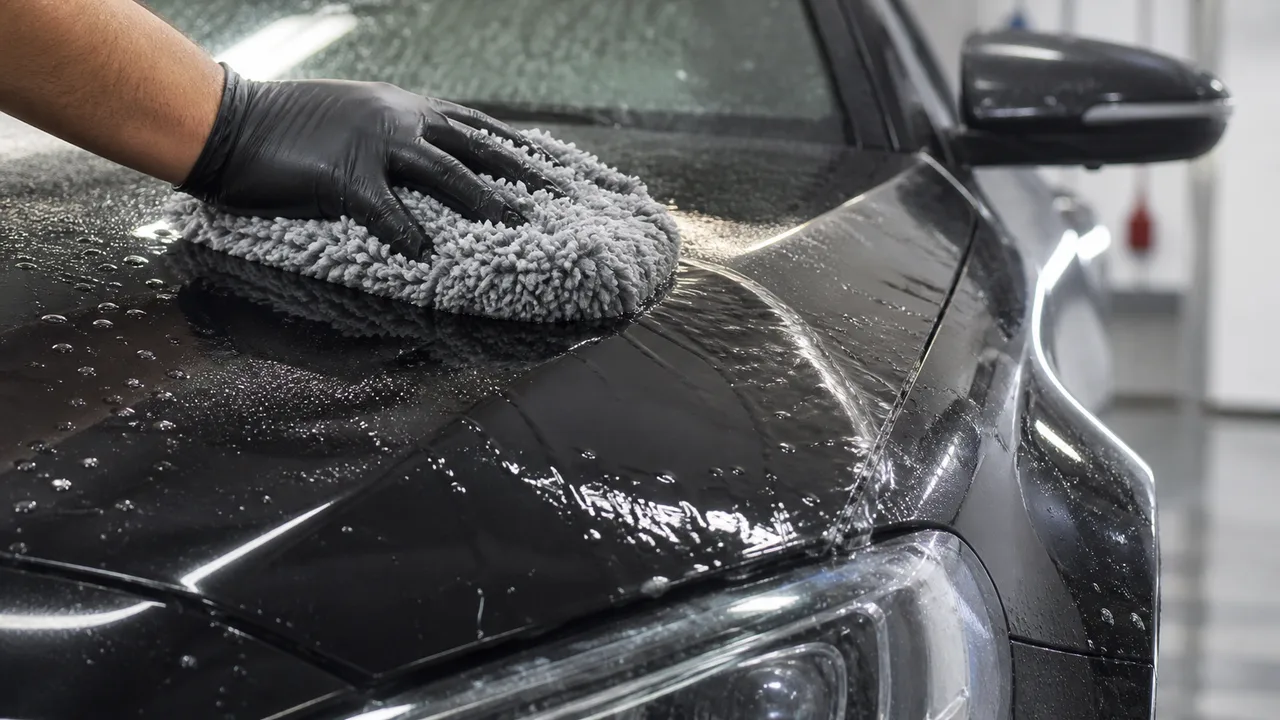
- Thorough Pre-Rinse: Flush loose road dust and sand with free-flowing water. Never dry-wipe a dusty vehicle.
- pH-Neutral Car Shampoo: Select high-lubricity, pH-neutral soaps designed for automotive finishes and clean microfiber wash mitts.
- Linear Washing Strokes: Move the mitt in straight, gentle lines following panel contours. Rinse wash tools frequently in a dedicated rinse bucket.
- Safe Distance from Edges: Keep pressure washer wands at least 40 to 50 cm away from film edges, spraying across seams rather than directly under them.
- Prompt Drying: Use large, plush drying towels to absorb standing moisture, reducing the risk of mineral scale deposits.
Spot Treatment: Handling Bird Droppings, Bug Splatter, and Tree Sap
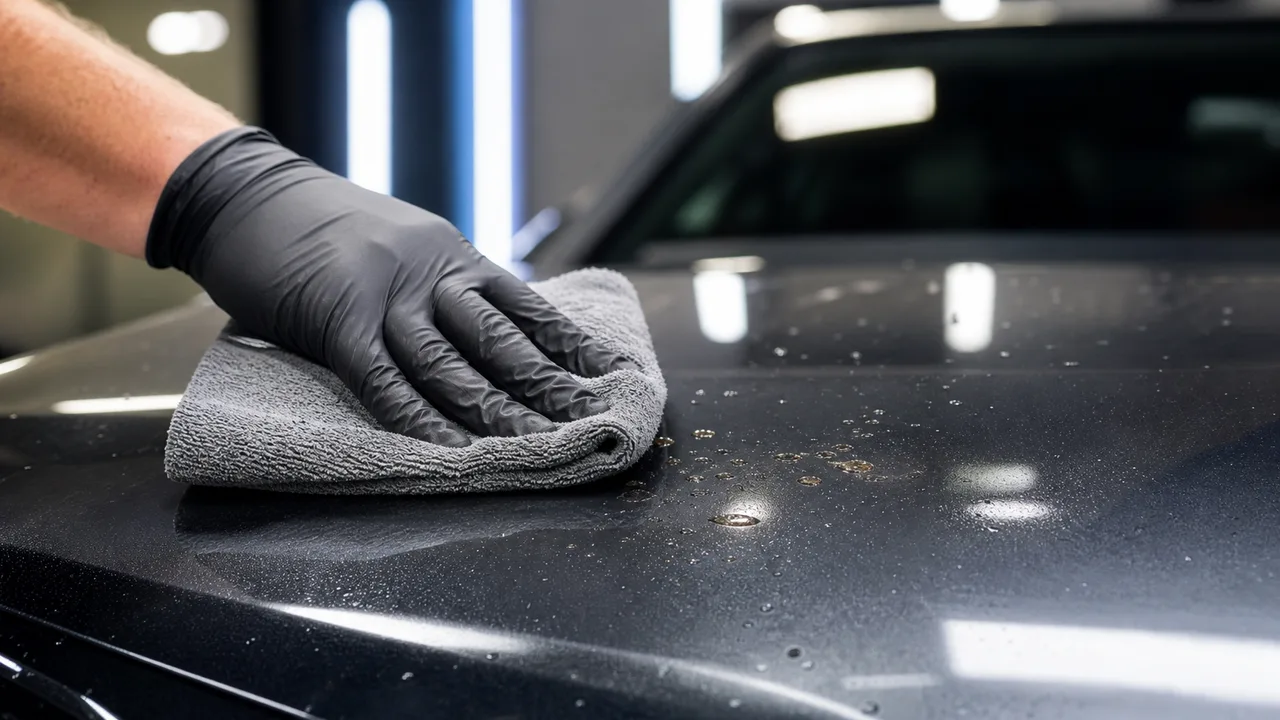
Tree sap, bird droppings, bug residues, and acidic rain deposits can etch into film topcoats if exposed to hot tropical sun. The safest approach is rehydrating and softening the contaminant with warm water or a damp microfiber towel before wiping gently, rather than scraping with fingernails or aggressive solvents.
| Condition | Safe Starting Approach | When to Seek Professional Inspection |
|---|---|---|
| General road dust and light film | Rinse thoroughly with low-pressure water, followed by pH-neutral shampoo wash | If surface appears dull or exhibits heavy wash swirls despite cleaning |
| Sticky tree sap or tar flecks | Place a warm, damp microfiber towel over the spot to soften, then wipe gently | If residue remains stubbornly bonded or leaves a visible discoloration |
| Bug splatter or bird droppings | Act promptly: soften immediately with water and wash with gentle lubricated shampoo | If chemical etching or clear distortion remains visible after drying |
| Edge lifting or localized bubbling | Do not press, pick, or apply heat with a hair dryer | Visit your installation center promptly for proper edge re-adhesion |
Drying Technique: Preventing Hard Water Spotting on Film
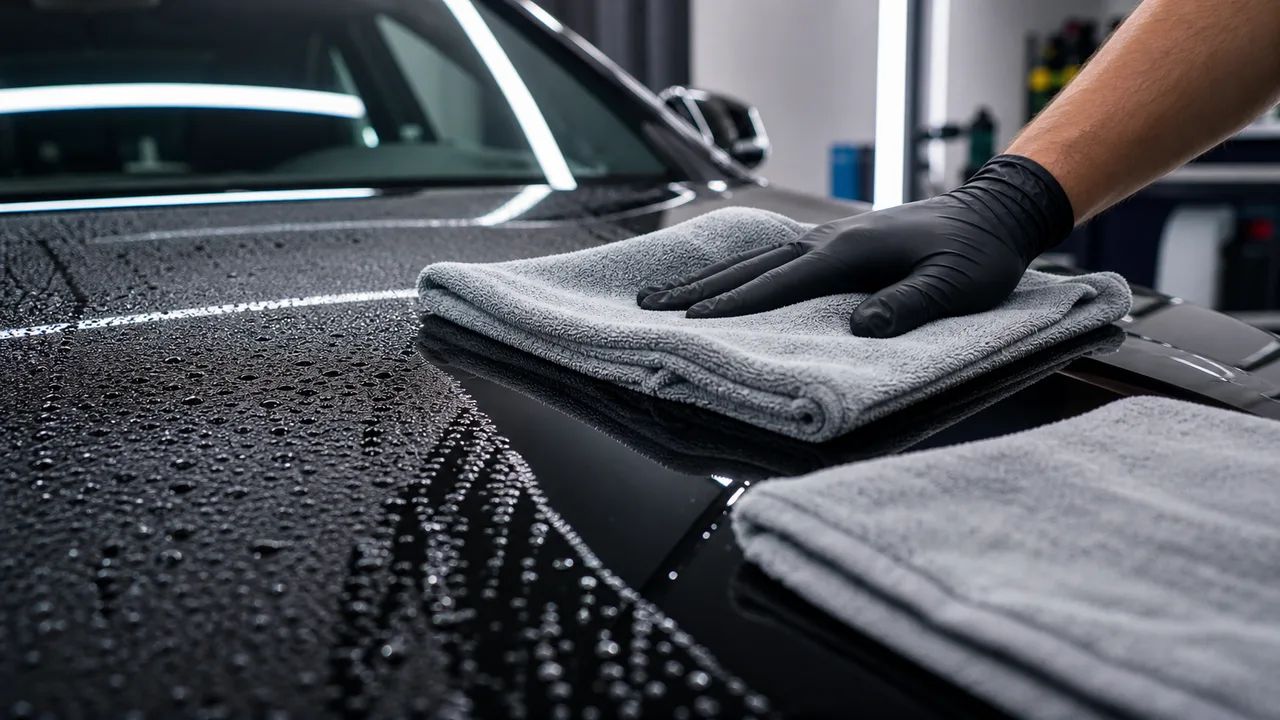
Allowing rinse water to evaporate in direct sunlight often creates stubborn mineral rings, particularly in regions with hard municipal tap water. Use a dedicated high-absorbency microfiber drying towel, patting or gliding gently along panel contours. Avoid forceful downward pressure around wrapped borders.
Quick Detailers, Waxes, and Sealants: Consult Before Using Aggressive Products
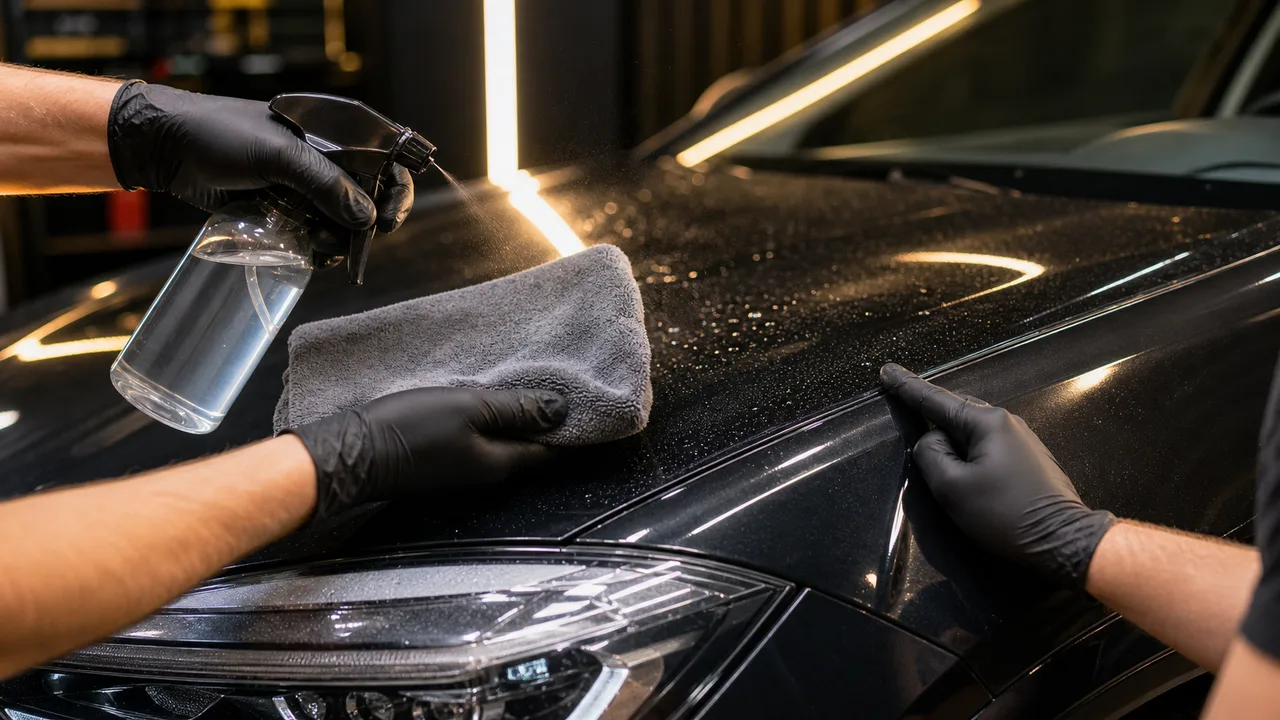
Car enthusiasts often enjoy applying quick detailers or waxes to maximize shine. However, certain aftermarket formulations contain petroleum distillates, abrasive polishing grains, or strong solvents that can haze TPU topcoats. Always verify product compatibility with your installer before applying any sealant or detailer across your film.
Simple Golden Rule
If an aftercare procedure involves scraping, picking, heavy rotary buffing, or intense heat application, pause immediately and consult your installer. Repairing a prematurely damaged edge or scorched topcoat is far costlier than seeking guidance early.
Monthly 5-Point Inspection Checklist for PPF Owners
- 1Inspect wrapped borders along the hood, bumpers, mirrors, and door cups for edge lifting or grit accumulation.
- 2Check high-sun exposure surfaces (hood, roof, bumper tops) for environmental fallout or mineral water etching.
- 3Verify wash tools remain soft and clean, discarding contaminated wash mitts that could introduce swirls.
- 4Photograph any persistent blemish or edge question before attempting home cleaning procedures.
- 5Schedule a periodic checkup with your authorized installer if edges lift or unusual stains resist gentle washing.
Summary: Treat PPF Like Premium Armor, Not an Indestructible Shield
PPF offers exceptional physical shielding for automotive paint, yet its multi-year visual clarity and hydrophobic performance depend directly on daily care. By washing with gentle technique, drying promptly, managing organic deposits swiftly, and relying on installer expertise for tricky issues, you safeguard both your vehicle finish and your financial investment.
To expand your paint care knowledge, read our PPF vs Ceramic Coating Guide, explore the Clear Guard PPF Overview, or consult an Authorized MAXXMA Dealer for panel assessments tailored to your driving habits.
Information Scope
Curing intervals, recommended cleaning formulations, and warranty policies vary by film series, vehicle model, and authorized center standards. This guide provides foundational educational advice and does not supersede manufacturer warranty terms.
Frequently Asked Questions About PPF Maintenance
How soon can I wash my vehicle after PPF installation?
Follow your installation center’s specific timeline, which typically ranges from 48 hours to 7 days depending on ambient temperature, humidity, and the adhesive package used. Always ask for written guidance upon pickup.
Can I use a commercial high-pressure wash wand on my PPF?
Yes, provided you exercise caution. Keep the spray nozzle at least 40 to 50 cm away from the surface and never aim pressurized water directly into film seams, wrapped corners, or cut lines.
What should I do if bird droppings or tree sap dry on the film?
Do not scrape with your fingernail or dry cloths. Place a warm, damp microfiber towel over the deposit for several minutes to soften it, then gently wipe away with lubricated car shampoo.
What should I do if I see a bubble or lifted edge?
Do not press or reheat the area yourself. Take clear photos and contact your installation center. Moisture bubbles often evaporate naturally during the initial curing phase, while edge lifting requires professional technician attention.
Can I apply traditional carnauba wax or synthetic sealants over PPF?
Only use products specifically approved for paint protection film. Avoid waxes with abrasive cleaners, naphtha solvents, or dyes that could cause yellowing or degrade the elastomeric topcoat.
Ready to protect your home or vehicle?
Consult with MAXXMA experts to select the perfect film for your needs, or find an authorized dealer near you.