

When an Intelligent EV Goes Blind
Boy recently took delivery of a flagship BYD Seal. The car was packed with futuristic technology: an expansive rotating touchscreen, an intelligent driver assistance system (ADAS), and continuous cloud connectivity. Concerned about intense tropical heat, he decided to have a dark window tint installed at a local aftermarket shop promoting a heavily discounted package.
The dark tint gave the car an aggressive presence and initially kept the interior cool under direct afternoon sun. The trouble started on a rainy Friday evening during peak rush hour. Driving toward an expressway Easy Pass toll booth at normal speed, the automatic barrier failed to lift. He had to slam on his brakes, frantically searching for his physical toll card while a line of frustrated drivers honked behind him.
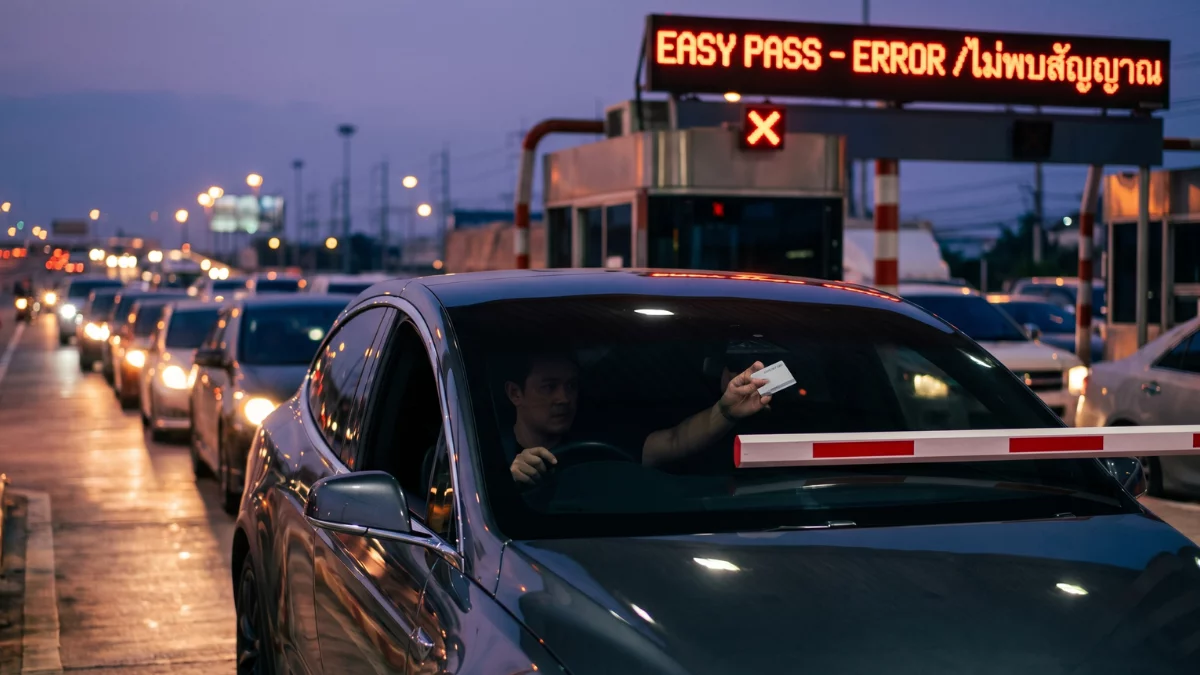
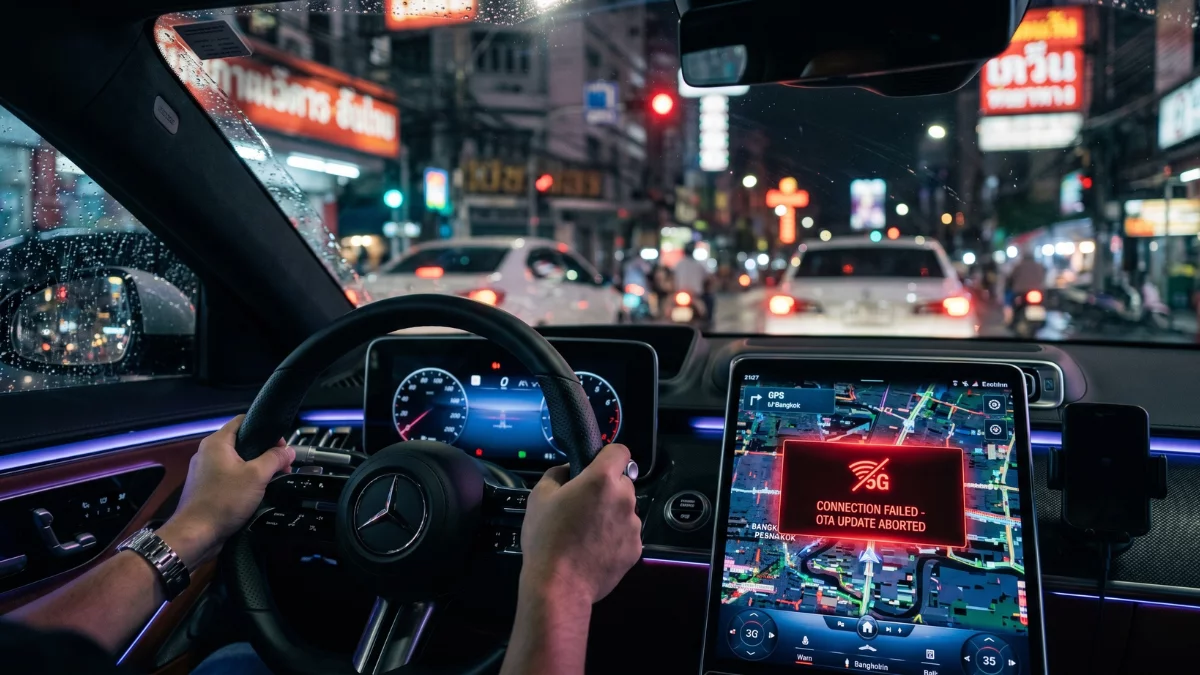
That was only the start of his troubles. Once off the highway, the center navigation map began spinning aimlessly, unable to acquire a stable GPS satellite lock, and routed him down a dead-end street. Later that evening, when the vehicle prompted him to perform a scheduled Over-The-Air (OTA) firmware upgrade, the main display flashed a red notification: “CONNECTION FAILED: OTA UPDATE ABORTED”.
The vehicle was not malfunctioning. The culprit was the window film, which was functioning like a metallic wall blocking electromagnetic signals. This silent failure is an increasingly common issue for modern EV owners who install the wrong window film.
CONSEQUENCESFour Costly Pitfalls of Signal Disruption
A modern electric vehicle functions like a high-performance computer on wheels. Its processing core requires uninterrupted communication with orbiting satellites, cellular towers, and roadside sensors. Wrapping the cabin in a metallized barrier compromises these vital systems:
1. GPS Blindness: Route Failures and Inaccurate Range Calculations
Satellite navigation is far more critical in an electric car than in an internal combustion vehicle. The onboard navigation engine continuously calculates remaining battery capacity to recommend optimal charging waypoints along your route. When window film attenuates satellite signals, the vehicle loses accurate positional data, corrupting routing algorithms and creating a genuine risk of stranding the vehicle with a depleted battery.
2. 4G/5G Cellular and OTA Update Failures
Modern platforms from brands like Tesla, BYD, and Zeekr rely on continuous cellular connectivity for smartphone companion apps. Drivers use these connections to pre-condition the cabin, lock or unlock doors remotely, and monitor state-of-charge. When cellular frequencies cannot penetrate vehicle glass, these connected features fail. Even worse, firmware updates may stall mid-installation, leaving critical infotainment or powertrain controllers in an unstable state.
3. Autopilot and ADAS Disruption: Camera Reflections and Radar Inaccuracies
Budget metallized films often exhibit high internal reflectance (mirror effect). Light bouncing off the dashboard strikes the inner surface of the windshield and enters forward-facing ADAS camera modules mounted behind the rearview mirror. This stray reflection blinds vision systems, causing false lane-departure warnings or disabling lane-centering features precisely when driver assistance is needed most.
4. RFID Toll Gate Blockades
Radio frequency identification (RFID) signals, from expressway transponders (433 MHz) to residential access cards (13.56 MHz), are reflected away by metallic layers. Drivers are forced to roll down their windows in pouring rain or cold weather to present physical cards, defeating the convenience of hands-free automated access.
PHYSICS & MATERIALSThe Science of Signal Interference: The Faraday Cage Effect
Why does a microscopic coating on polyester cause such widespread electronic disruption? The explanation lies in how reflective window films are manufactured.
Traditional and low-cost window films rely on metallized sputtering or vapor deposition, coating polyester substrates with conductive metals such as aluminum, nickel, silver, or bronze. These metallic coatings reflect solar infrared radiation effectively and at low manufacturing cost.
The Faraday Cage Effect
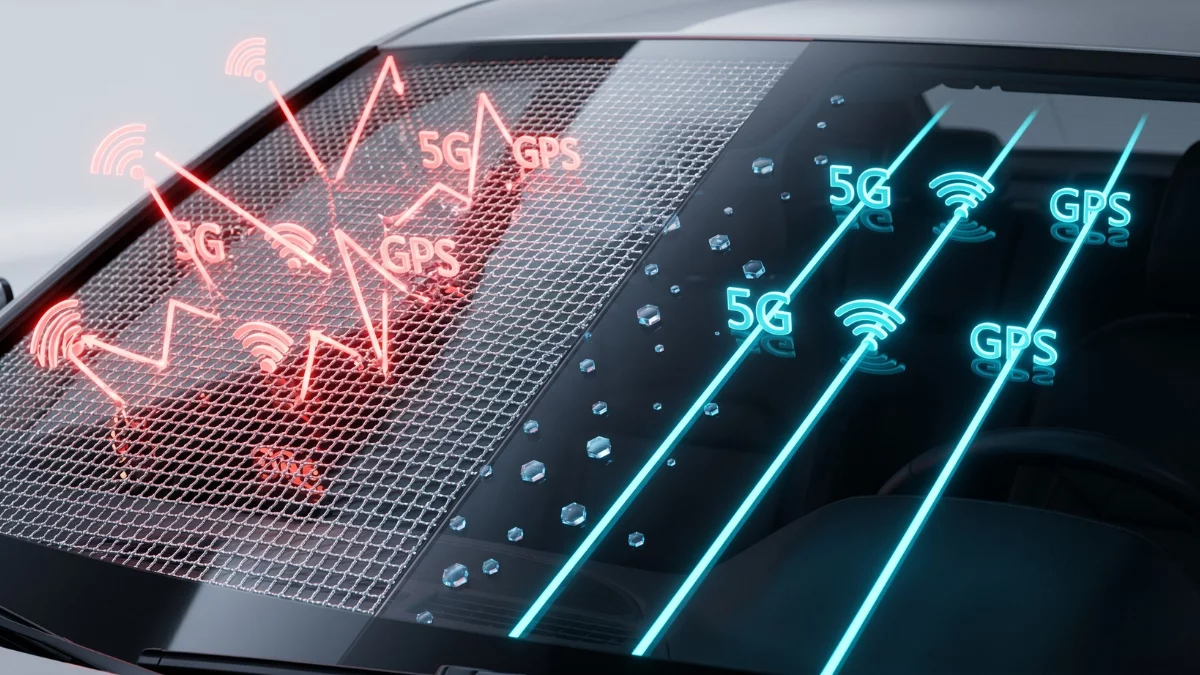
In physics, an enclosure composed of conductive metal acts as a Faraday cage, blocking external electromagnetic fields. Radio frequency (RF) waves, including GPS, 5G cellular, and Wi-Fi, are deflected and scattered across the conductive surface. Because a car chassis is already primarily metal, applying metallized film to the glass openings effectively seals the cabin inside an electromagnetic barrier.

The Material Science Solution: 100% Non-Metallized Nano-Ceramics
Materials scientists engineered advanced ceramic films using non-conductive, inorganic nanoscale particles such as Titanium Nitride (TiN) or Tungsten Oxide. These dielectric nanocrystals absorb solar infrared heat efficiently without utilizing any metallic elements.
The result is a film that delivers high thermal rejection, deep exterior shading, exceptional internal clarity, and complete, unrestricted transmission of digital radio frequencies.
DIGITAL FRIENDLY SOLUTIONSThe True Solution: 100% Non-Metallized Digital-Friendly Films
In an era where every vehicle function relies on data transmission, MAXXMA provides high-performance automotive window films engineered specifically for electric vehicles and connected smart cockpits. Drivers never have to compromise between cabin heat rejection and uninterrupted digital connectivity.
1. Maxxma Independent Plus: Exceptional Value with Crystal-Clear Signals
Our premier entry-level nano carbon ceramic formulation blends pure carbon for deep super-black aesthetic contrast with ceramic nanoparticles for high heat deflection. Completely free of metallic elements, Independent Plus guarantees smooth toll gate clearance and pinpoint GPS navigation accuracy.
2. Maxxma Signature: Optical Clarity and Minimized Dashboard Glare
An advanced nano-ceramic film engineered for maximum optical clarity. Ultra-low internal reflectance ensures that forward-facing ADAS cameras and heads-up displays (HUD) operate at peak performance day and night without distortion.
3. Maxxma Polarized: Glare Cancellation with Full Connectivity
Our flagship polarized automotive film incorporates advanced optical light-filtering technology that eliminates harsh reflections from wet asphalt and glossy dashboard trims. By keeping the formulation 100% non-metallic, it ensures high solar heat rejection alongside flawless 5G connectivity and seamless OTA firmware updates.
CRITICAL CHECKLISTFive Crucial Questions Before Choosing Your Film
Some aftermarket shops suggest cutting a small rectangular hole in the windshield film near the rearview mirror to allow Easy Pass RFID tags to function. This crude workaround compromises the clean look of your glass, creates unsightly edges that catch dust, and allows concentrated solar heat to radiate directly onto your dashboard. Never accept cutting holes in your window film.
Protect your investment by asking your installation shop these five essential questions before committing:
1. Is this window film certified 100% non-metallized?
If the shop hesitates or mentions that the film uses a small amount of metal sputtering for heat rejection, decline the option. Connected electric vehicles require 100% dielectric, non-metallic ceramic films across all glass surfaces.
2. Can you demonstrate signal transmission using an RF testing meter?
Reputable installation centers possess dedicated radio frequency (RF) transmission meters. Request an on-site demonstration comparing your proposed film against a standard metallized sample to verify zero signal loss.
3. What is the internal visible light reflectance percentage?
To avoid interfering with forward-facing Autopilot cameras and night vision, internal reflectance should remain below 8%. Metallized films often exceed 12% to 20%, generating dangerous optical glare.
4. Does your warranty explicitly cover signal transmission issues?
A reputable manufacturer and certified installation provider will provide an explicit signal guarantee, assuring replacement if RFID or GPS reception is impeded by the installed film.
5. Does your team have specialized experience with electric vehicle electronics?
Installing windshield film requires slip solutions during application. Inexperienced installers risk allowing moisture to seep behind the dashboard, potentially damaging sensitive electronic control units (ECUs). Choose certified service centers such as MAXXMA Certified Automotive Centers.
Summary and Action Plan for EV Drivers
Your electric vehicle is a sophisticated computing platform designed for safety, comfort, and autonomous convenience. Do not allow improper window film selection to impair its electronic capabilities. Choosing authentic 100% nano-ceramic window films from MAXXMA keeps your cabin cool, maintains accurate navigation, protects automated driving systems, and keeps your vehicle connected to future software updates.
Follow installation showcases and product demonstrations on our official channels: Facebook: MAXXMACarFilm and YouTube: @MaxxmaFilm.
Eliminate Toll Gate and Signal Interference Today
Consult MAXXMA specialists to select the ideal digital-friendly ceramic film engineered specifically for your electric vehicle model.
Further reading: Nano-Ceramic vs. Metallized Film: Choosing the Right Protection Without Signal Disruption
Ready to protect your home or vehicle?
Consult with MAXXMA experts to select the perfect film for your needs, or find an authorized dealer near you.