
Before applying furniture protection film, ask the shop what the tabletop core is, what finish the film will touch, and what restrictions apply to adhesives, preparation products, and removal. Record its current condition and ask for a matching finish sample to assess. “Wood table” or “stone table” is not enough information to make the installation decision.
Think back to choosing this table. You may have spent time comparing wood tones, sitting down to see how the edge felt against your arm, and returning for another look under the showroom lights. None of those details seemed too small then.
When it comes to protection film, the conversation often becomes much shorter: “Can it be fitted?” We move straight to glossy or matte, while the thin surface we touch every day deserves a few more questions.
A carefully chosen table deserves a considered answer. You do not need to identify every material yourself. Gathering the right information lets the furniture shop and installer discuss the same surface, and gives you room to decide once the limitations are clear.

Separate the tabletop core from its finish: which layer will the film touch?
Think of the tabletop as at least two parts. The core forms the tabletop beneath the surface. The finish is the outer layer you see and touch. Film applied on top meets that finish, so both parts need to be identified.
One wood-patterned table might be finished solid wood; another might have a composite panel covered with real wood veneer. A similar grain does not establish the same construction or coating. The European Panel Federation describes MDF as a substrate for paint, decorative foils, and wood veneer. Knowing the core alone therefore leaves part of the surface story unanswered. EPF’s MDF overview
The answer to ask the shop for
“What is the core, what covers it, and what is the outermost finish?”
If the answer is “walnut look,” ask whether that appearance comes from solid wood, veneer, a decorative sheet, or another material. For a stone table, ask about the stone type and any surface coating or sealer.
It is fine to write “not yet confirmed.” That is more useful than filling the gap with a guess. If the shop cannot answer, ask it to check the manufacturer’s specification for that model. For more background, read MDF and TPU: different layers with different jobs.
Ask the shopSeven questions for the furniture shop before booking film installation
Send these questions with the model name or order reference. Answers should describe your table, rather than furniture in general.
- What are the core and surface materials? Ask separately about the core, surface covering, and outer coating. For a bespoke piece, request the details from whoever finished it.
- What coating system was used, and when was it finished? Ask the finish provider to specify the waiting period before adhesive materials can be applied. Do not choose a waiting time simply because the surface feels dry.
- Has wax, oil, polish, or a repair coating been applied since? Request product names or care instructions so the installer can assess preparation appropriately.
- How are the edges and joints constructed? Ask about edge coverings, grooves, seams, openings, and areas that may not suit film or a particular installation method.
- Does the manufacturer restrict adhesives, cleaners, water, or heat? Give those instructions to the installer. “Durable” does not mean every installation method is acceptable.
- How would film affect the table’s warranty conditions? Request a written answer from the seller or manufacturer, including future repairs and film removal. The furniture warranty and film warranty are separate matters.
- Can you supply an offcut or matching finish sample? It should have the same material and coating system, not merely a similar colour. Ask when the sample was finished, too.
With these answers, you can discuss how to approach this table rather than only which film to choose. If an answer is missing, record the gap and request an assessment before arranging a full installation.
Record its conditionInspect the top, edges, and joints while documenting the existing condition
Use lighting that makes the surface readable. Take a full-table photograph and closer pictures with light falling across the surface at a shallow angle. The purpose is to show locations and details, not to make the table look newer than it is.
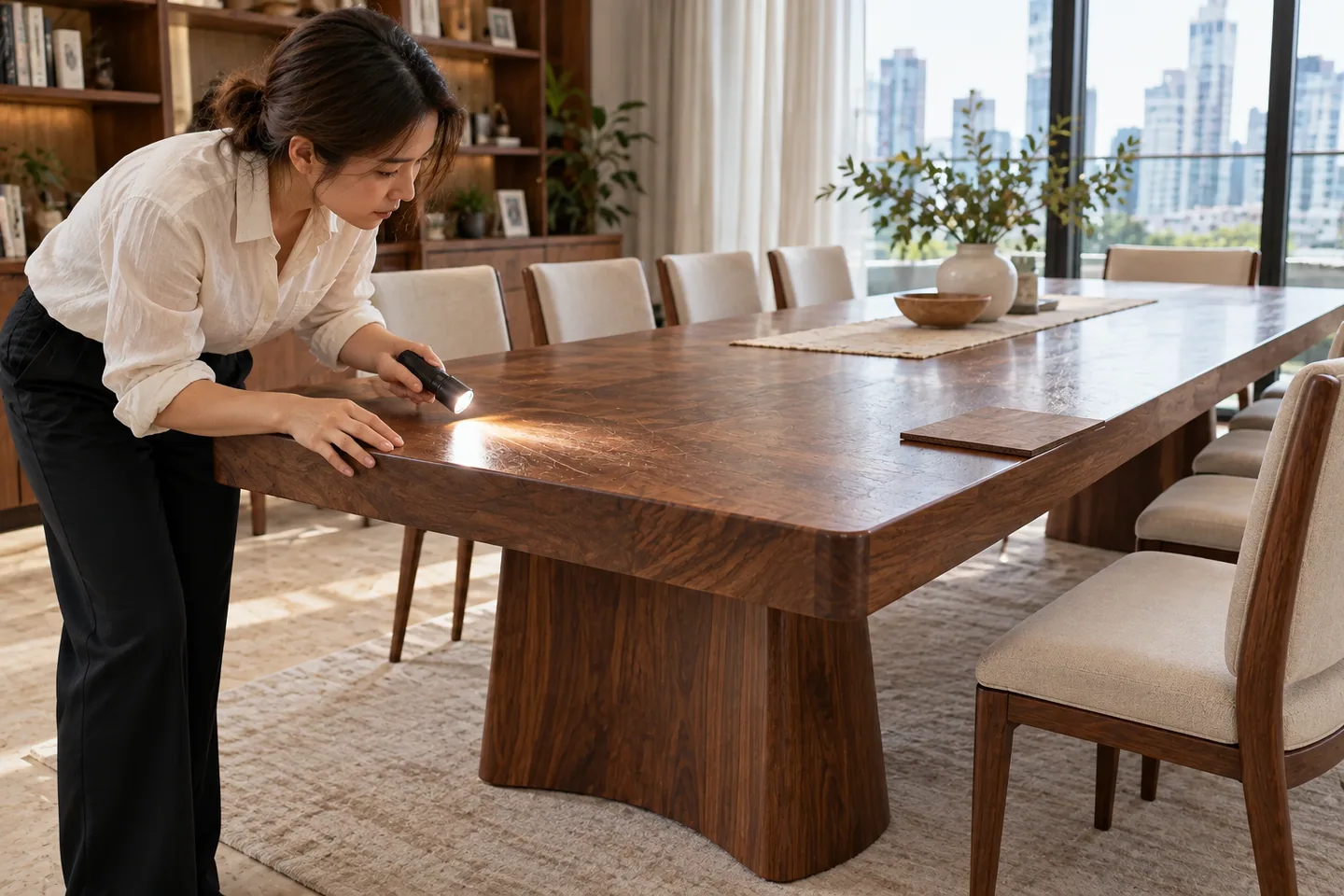
- Top: Photograph the whole surface, then scratches, stains, uneven areas, or previously repaired spots separately.
- Edges and corners: Capture each different edge detail, including rounded edges, bevels, grooves, and joints in the edging.
- Joints and openings: Note tabletop seams, cable openings, fittings, and moving sections so the installer can plan the coverage.
- Accessible underside: Photograph the model label and underside edge from a comfortable position. Do not dismantle or overturn heavy furniture yourself.
- History: Record refinishing, repairs, relocation, and care products used. Say when you are unsure.
Do not identify a finish by pouring water onto it, scratching it, using solvents, or sticking and pulling tape yourself. An owner’s survey is about observing, photographing, and requesting information. Agree on testing with the manufacturer and installer first.
If you find peeling finish, lifting edges, or unresolved joint problems, request a repair assessment separately from the film quotation. Covering a problem does not establish that the original surface is ready.
Use a matching sampleRequest a compatibility sample before committing to the whole table
A useful sample should address compatibility as well as the experience of using the finished surface. Start with a separate piece finished to match the table. If none is available, let the manufacturer and installer agree on a suitable assessment method. An underside trial may not represent the top if the two areas use different finishes.
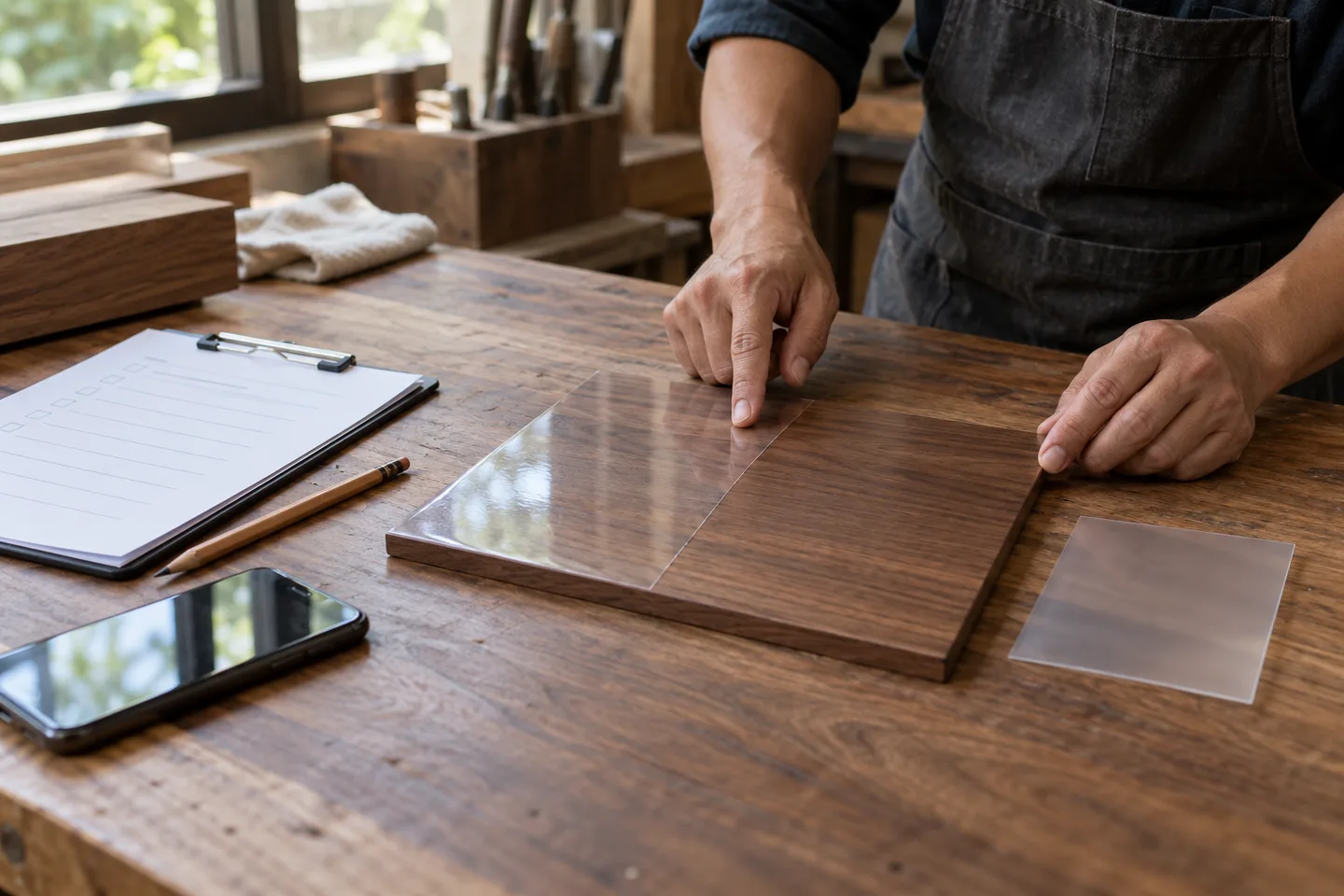
Agree on what will be checked
- Does the sample match the table’s material, coating, and finish age?
- Which film will be used, and how will the surface be prepared?
- When should it be checked, according to the finish and film requirements?
- How will changes in colour, sheen, touch, and edges be assessed?
- Who will assess removal, and what criteria determine acceptance?
One sample can inform the assessment. It does not guarantee that every part of the table, or removal years later, will behave identically. Record that limitation, especially when several areas have been repaired.
Asking about removal before installation helps you understand the full care cycle, from the first day to eventual film replacement. It is a useful part of planning, even when you expect to keep the film for a long time.
Choose for daily useConsider glossy or matte Clear Guard after assessing the table’s finish
MAXXMA Product Studio lists glossy and matte Clear Guard Furniture options. Choosing for your table should involve samples and a surface assessment, rather than the product name alone.
If you enjoy the grain under reflected light, examine a glossy sample in the room where the table will stand. If you prefer a quieter appearance and a matte feel, compare the matte option on a matching sample. Look while seated and standing, and with the overhead light on. A finish can feel different at home from how it looked in the shop.
Touch the prepared samples and try the position in which you normally use the table, such as resting an arm while writing. An appearance you can live with every day matters more than one impressive first look.
Explore Clear Guard Furniture and finish options, then send your table information to discuss the film, installation method, scope, and care conditions. If the original finish is unknown, start with the assessment.
Keep the questions separateTable price, film clarity, and warranty conditions do not answer the same question
An expensive table is not automatically ready for film. Its price reflects many things; surface readiness requires material information and a condition assessment. Equally, age alone does not establish that an older table cannot use film.
Transparent film does not mean colour, sheen, and touch will be identical in every case. Judge a sample under the lighting you will use. Transparency and an invisible change are different questions.
Film does not replace repairing the original finish. Ask the installer and finish provider to assess peeling or unexplained defects first. Do not select film merely to hide a problem.
Check the table and film conditions separately. Request current documents from both the furniture manufacturer and installation provider. A conversation or video title is not a substitute for warranty details.
Installation exampleWatch a furniture film installation example, then ask about your own edges
This video from the MAXXMA channel shows a furniture protection film installation example. Use it to discuss how your installer will approach your table’s edges, corners, and coverage.
After watching, ask: “With my table’s edges and coating system, which steps would differ?” An answer that explains your own piece is more useful than a blanket promise to follow the video exactly.
One shared recordA tabletop surface record for the furniture shop and installer
Copy this list into your notes or a message. It does not need personal information. If something is unknown, write “awaiting shop confirmation” and attach the relevant photographs.
My table record
- Model / manufacturer: Model name or product specification.
- Core: The shop’s answer and the document or confirmation date.
- Surface covering / outer coating: Record separately from the core.
- Finish / repair date: Known date, or request manufacturer confirmation.
- Care products: Names or label photographs of cleaners, wax, oil, and additional coatings.
- Dimensions and edge details: Size, shape, edges, grooves, joints, and openings.
- Existing condition: Full view, angled-light pictures, edges, and individual marks.
- Use: Dining, desk work, or other activities, and glossy or matte preferences.
- Manufacturer requirements: Preparation, adhesives, cleaners, removal, and furniture warranty conditions.
- Assessment plan: Sample, checks, assessor, findings, and unresolved limitations.
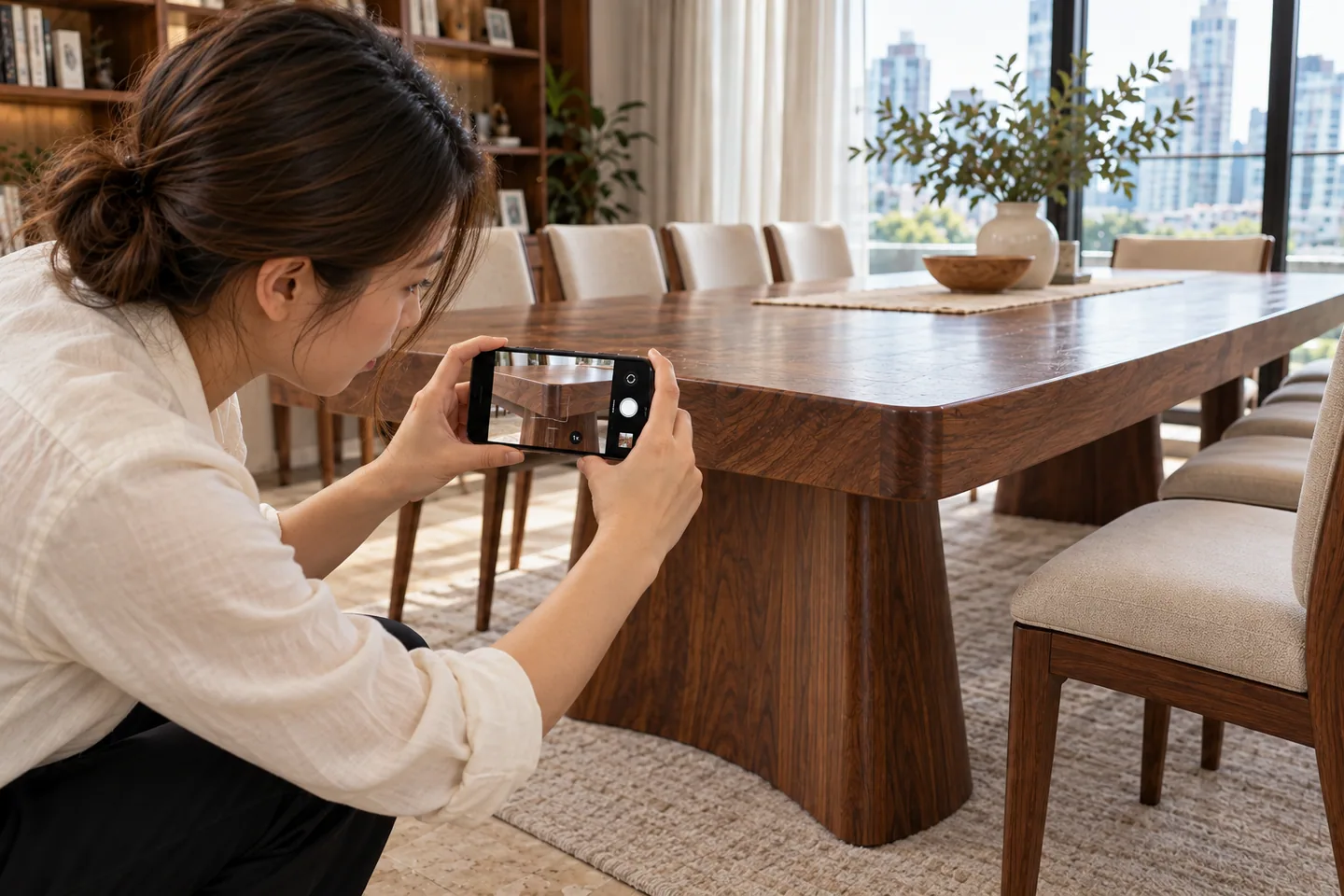
Ready to discuss installation: The finish is identified, the current condition is recorded, and an assessment method is agreed. Ask the installer to inspect the site and confirm the scope.
More information needed: The coating or repair history is unknown. Request confirmation first. You do not need to choose a film or book the whole table yet.
Repair assessment first: There is peeling, lifting, or an unresolved defect. Treat repair and film installation as separate steps.
Frequently asked questionsQuestions furniture owners ask before applying tabletop protection film
01 · The shop says solid wood. What else should I ask?
Ask about the outer coating system, when it was finished, care products used, and restrictions on adhesives or removal. Film touches the finished surface; identifying the core alone is not enough.
02 · Can I start without a specification sheet?
Start with the model name, photographs of the top, edges and accessible underside, and its care history. Ask the shop to confirm details with the manufacturer. Pictures help with an initial discussion but do not replace finish identification or a compatibility assessment.
03 · When can film be applied after refinishing?
The finish provider should specify the waiting period and conditions before adhesive materials can be used, and the installer should check them. Do not choose a number of days from a dry touch or advice for another model.
04 · Can an underside trial represent the tabletop?
Not automatically. The underside may use a different material or coating. Prefer a separate sample finished like the top. If none is available, agree on an assessment method with the manufacturer and installer before testing the table.
05 · Is glossy or matte better for my table?
Check surface compatibility first, then compare both samples in the room’s lighting. Consider grain, colour, sheen, and touch in your normal working or dining position. Accept what you see on the sample before choosing; the name of the original finish need not dictate the choice.
06 · Can film repair existing tabletop damage?
Do not use film instead of assessing or repairing the original surface. Record existing marks and ask what needs attention first, especially peeling or lifting edges. Changing how a mark appears is not the same as addressing its cause.
Share the surface details, then decide how to protect the table
A good table should be somewhere to put a plate, do some work, and spend time with people at home. Appropriate care can begin with information, before a purchase. It helps you understand what you are choosing and why.
When you have photographs of the top and edges, plus the shop’s information, share them with MAXXMA for an initial discussion. Explain which part of the table’s appearance and feel you want to keep. The team can use that information to discuss suitability and the next checks. A photograph-based discussion still needs an appropriate site and sample assessment before installation.
Send MAXXMA your tabletop, edge, and finish details
Read next: A guide to protecting furniture with clear film, or explore the MAXXMA Knowledge Hub.
Sources and scopeReferences and the limits of this guidance
- European Panel Federation: MDF product overview supports the distinction between a core and decorative surface. It does not confirm compatibility between a particular table and film.
- MAXXMA LIFE SARA EP.15: furniture protection film installation is owned MAXXMA installation media. It is not a test of every finish or a current warranty document.
- Clear Guard Furniture connects this guide with MAXXMA options and assessment. The record and questions are preparation guidance; the table and installation requirements must be confirmed individually.
The AI-generated illustrative photographs explain scenes and preparation steps. They are not customer installation photographs, test results, or furniture manufacturer endorsements.
Ready to protect your home or vehicle?
Consult with MAXXMA experts to select the perfect film for your needs, or find an authorized dealer near you.