
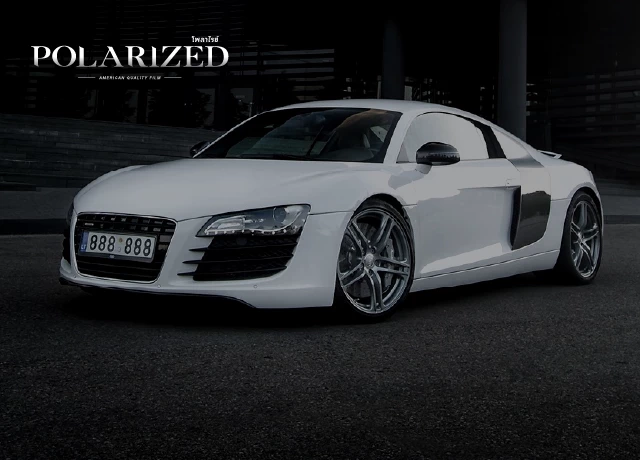
01: The Dashboard Reflection Hazard: A Hidden Danger in High-Performance Driving
When piloting an automobile under intense direct sunlight, solar rays strike the expansive surface of the dashboard and bounce upward onto the interior surface of the windshield, right along the driver’s direct line of sight. This optical phenomenon, known as Dashboard Reflection or veiling glare, creates a distracting ghostly mirror image of the cockpit vents, seams, and dashboard materials across the road ahead.
The human eye is forced into continuous micro-adjustments, shifting focus back and forth between the reflective dashboard ghost on the glass and oncoming obstacles on the asphalt. This rapid focal hunting triggers ocular strain, headaches, and driver fatigue within less than an hour of driving.
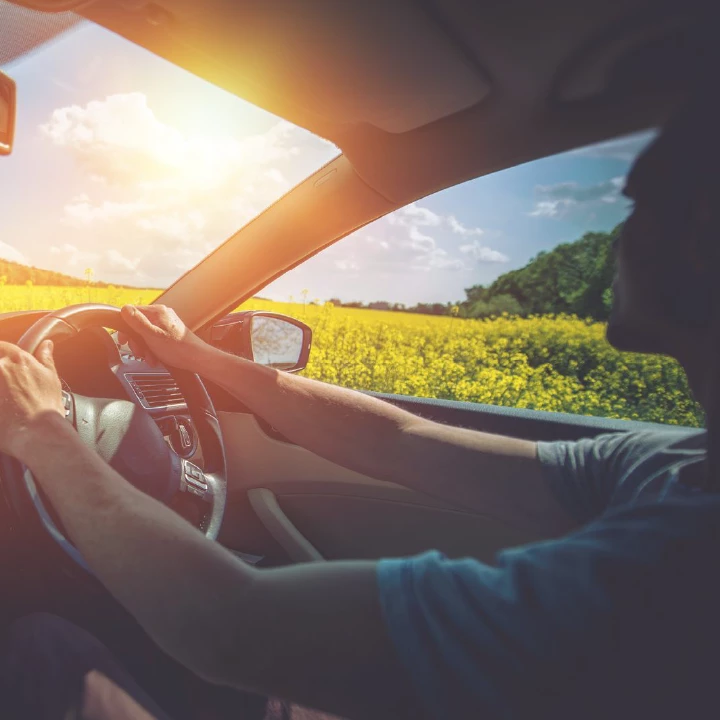
For owners of luxury sports sedans, exotic supercars, and premium electric vehicles, this reflection dilemma is significantly intensified due to distinct design factors:
High-Reflectance Luxury Cockpit Materials
Premium vehicles feature cockpits trimmed in light-toned nappa leather, lacquered carbon fiber, polished billet aluminum, and accent stitching. These opulent finishes possess high specular reflectance, creating vivid ghost patterns on the glass.
Raked Aerodynamic Windshield Angles
Sleek sports car profiles demand acute, steeply raked windshields to optimize aerodynamic drag coefficients. This shallow glass angle perfectly aligns the angle of incidence with the reflection plane directly toward the driver’s pupils.
Extreme Velocity Demands Immediate Reaction
High-performance vehicles cover significant distances every millisecond. At highway speeds, veiling glare that obscures road debris, uneven pavement, or emergency braking ahead can dangerously extend reaction times.
OPTICAL PHYSICS
02: The Optical Physics Behind Polarized Window Film
Standard automotive window tinting uses dye, metal sputtering, or conventional ceramic particles to absorb or reflect bulk solar photons. While this reduces total luminous transmittance (VLT) and solar heat, it dims all light uniformly without eliminating the directional glare that forms dashboard reflections.
Polarized automotive window film, exemplified by the MAXXMA Polarized Series, incorporates an advanced micro-optical polarizing filter that selectively manages electromagnetic wave orientation:
Micro-Louver Polarization Physics
Natural sunlight is unpolarized, vibrating across every transverse plane. When light strikes a flat, horizontal surface, such as an automotive dashboard, a wet asphalt road, or the bonnet of a preceding vehicle, the reflected rays become concentrated into horizontally polarized light waves. These horizontal waves generate blinding specular glare. The micro-structured polarizing matrix in MAXXMA Polarized Film functions as an optical gate, blocking over 90% of these harsh horizontal waves while permitting useful vertical light waves to pass cleanly into the cockpit.
DRIVING ADVANTAGES
03: Three Critical Safety Benefits of Polarized Film for Performance Vehicles
Upgrading to an advanced polarized window film system delivers transformative optical clarity and safety advantages over conventional window films:
- 1Virtually Eliminates Dashboard Mirror Reflections: By intercepting horizontally reflected rays before they reach the driver’s eyes, polarized film neutralizes more than 90% of windshield ghosting from air vents, instrument humps, and dash stitching, delivering an unobstructed view of the road.
- 2Enhances Dynamic Visual Contrast and Hazard Perception: By filtering out ambient glare scatter, polarized technology sharpens edge definition on road markings, potholes, debris, and pedestrians, particularly in challenging conditions such as blinding afternoon glare or sudden rainstorms.
- 3Reduces Neurological Ocular Fatigue on Extended Journeys: Drivers no longer need to squint or strain through cockpit reflections. The smooth, balanced light transmission keeps the pupils naturally relaxed, significantly improving endurance and alertness during long cross-country drives.
INSTALLATION EXCELLENCE
04: Guidelines for Choosing and Installing Polarized Window Film
Achieving the full optical potential of polarized window film requires rigorous selection and precision craftsmanship:
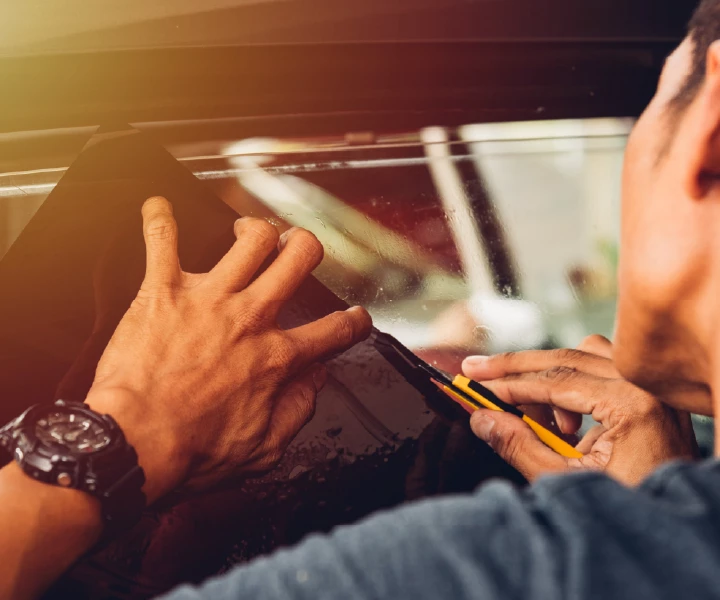
- Select Genuine Optical-Grade Polarized Films: Ensure the film utilizes certified polarizing technology that actively cancels glare rather than merely darkening the glass.
- Demand Dust-Free Clean-Room Installation: Because polarized films manipulate optical wave vectors, even minute dust specs or adhesive imperfections can create localized birefringence or haloing. Installation must take place in an enclosed, mist-controlled studio.
- Maintain Legal Visible Light Transmission (VLT): Select film shades that comply with automotive safety regulations, maintaining optimal night vision and regulatory compliance across windshields and front side windows.
Discover the engineering behind our flagship polarized film on the MAXXMA Polarized MX-PR Series page, or compare performance metrics across all product lines in our comprehensive Automotive Comparison Guide.
FREQUENTLY ASKED QUESTIONS
05: Frequently Asked Questions (FAQ)
How does polarized window film differ from conventional ceramic window film?
Conventional ceramic window film uses nano-particles to absorb and reject infrared heat and overall visible light. Polarized window film incorporates an additional micro-polarization layer engineered to selectively eliminate horizontally polarized glare. While ceramic film makes the interior cooler, polarized film makes the view sharper and completely eliminates dashboard reflections on the windshield.
If I already wear polarized sunglasses, do I still need polarized window film?
Yes. Polarized sunglasses only filter light after it has already passed through the windshield and reached your eyes. In contrast, polarized window film eliminates the reflection at the physical glass boundary itself, protecting all vehicle occupants simultaneously and ensuring clear vision even when driving without sunglasses at dusk or through cloudy weather.
Will polarized window film interfere with Head-Up Displays (HUD) or digital instrument screens?
Premium polarized window films like MAXXMA Polarized are engineered with ultra-low internal reflectivity and specialized optical axis balancing. This minimizes interference with digital instrumentation and Head-Up Displays. Consulting with a certified MAXXMA installer ensures the film orientation is perfectly calibrated to your specific vehicle model.
Experience Ultimate Optical Clarity on Every Drive
Allow the MAXXMA technical team to match the ideal polarized film specification to your sports car or luxury vehicle. Locate an authorized installer near you through our Dealer Finder, speak with our automotive specialists directly on LINE @maxxma, or explore our foundational guide on Budget vs Premium Window Film.
Ready to protect your home or vehicle?
Consult with MAXXMA experts to select the perfect film for your needs, or find an authorized dealer near you.