
A modern tropical home is an architectural poem celebrating the uninterrupted bond between humankind and nature. Floor-to-ceiling sliding glass doors, breathable double-volume spaces that welcome refreshing breezes, and lush emerald garden vistas mirrored across infinity pools: these are the signature hallmarks that transform this style of residence into an enduring private sanctuary.
Yet the genuine architectural challenge of expansive glass in tropical climates lies in the unrelenting intensity of radiant heat and solar glare. Without an engineered daylight control layer, majestic glass facades easily become heat-trapping conductors. Living rooms turn uncomfortably stuffy, bespoke teak timber and curated art collections fade quietly under ultraviolet degradation, and homeowners find themselves forced to draw heavy blackout curtains, tragically sacrificing the outdoor panoramas they built their homes to enjoy.
Mastering the modern tropical home is therefore never about walling off the natural environment. It is “The Art of Selective Light Filtration”: preserving visual transparency, effortless thermal cooling, and spatial serenity from dawn until dusk.
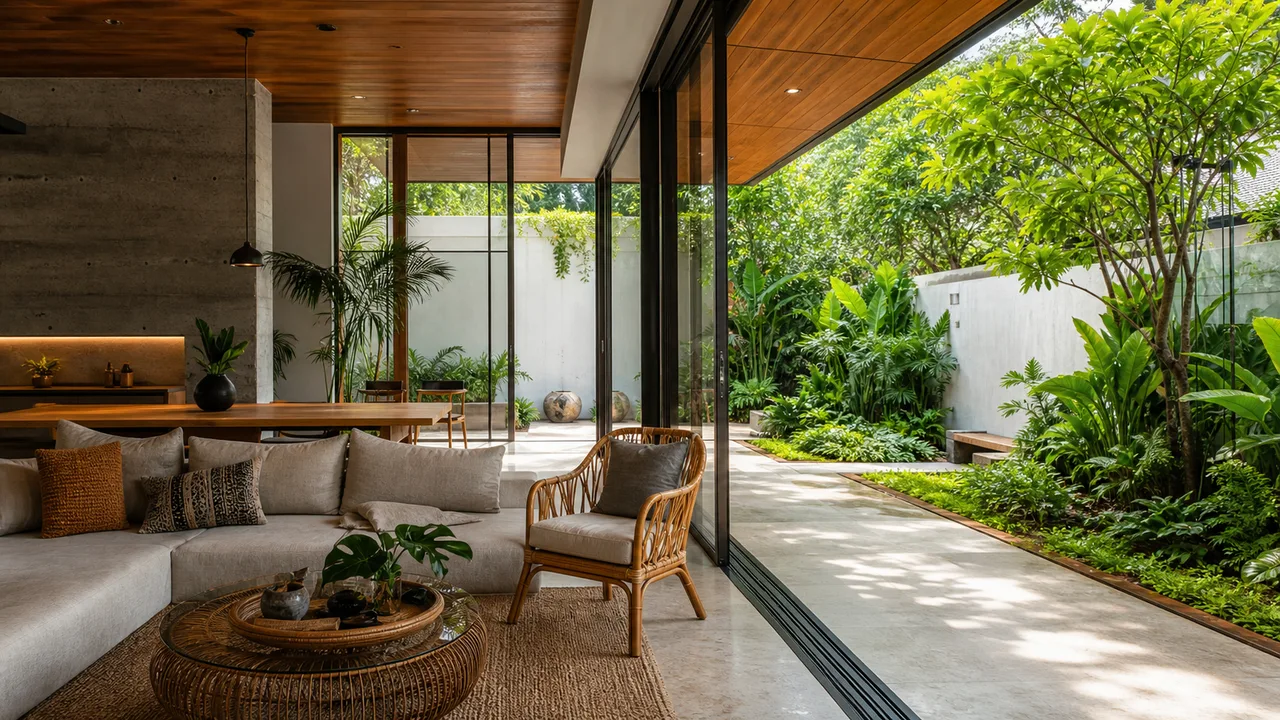
Modern Tropical Philosophy: Harmonizing Light, Air, and Nature
At the core of modern tropical architecture is the blurring of boundaries between interior intimacy and open landscape. The design language celebrates tactile organic materials: golden teakwood, natural slate stone, board-formed concrete, and dark architectural steel framing, harmoniously balanced against grand glass expanses that frame tropical gardens and private water features.
Morning daylight vitalizes our daily rhythm and cultivates an uplifting ambiance. Concurrently, intense tropical sunlight carries invisible ultraviolet (UV) radiation and concentrated infrared (IR) wavelengths. Understanding the physical behavior of light is the essential first step toward sustainable architectural equilibrium.
Three Foundational Pillars of Modern Tropical Architecture
Visual Expansiveness & Vistas
Unobstructed sightlines extending into tropical foliage visually expand interior room proportions and induce psychological calm.
Shading & Cross-Ventilation
Strategic integration of deep cantilevered eaves, wooden louvers, and natural prevailing breeze channels.
Organic Landscape Integration
Layering native tropical canopy trees and ground cover to create microclimates that reduce ambient temperatures around the perimeter.
Thermal Traps and Glare: When Glass Facades Face the Afternoon Sun
In equatorial and tropical microclimates, untreated clear float glass acts as a direct thermal conductor. When intense sunlight strikes the facade, infrared heat energy penetrates deeply into the home, where it is absorbed and re-radiated by natural stone flooring, masonry walls, and interior furniture: creating a persistent greenhouse effect.
The inevitable consequences include:
- Sharp Indoor Temperature Spikes: Between 1:00 PM and 4:30 PM, glass atrium temperatures can surge 4 to 8 degrees Celsius above outdoor ambient levels.
- Continuous HVAC Strain: Air conditioning compressors run at full load without cycling down, leading to inflated power utility bills and accelerated equipment wear.
- Harsh Visual Glare: Sun glare bouncing off glossy tiles and glass surfaces disrupts screen work, reading, and peaceful visual relaxation.
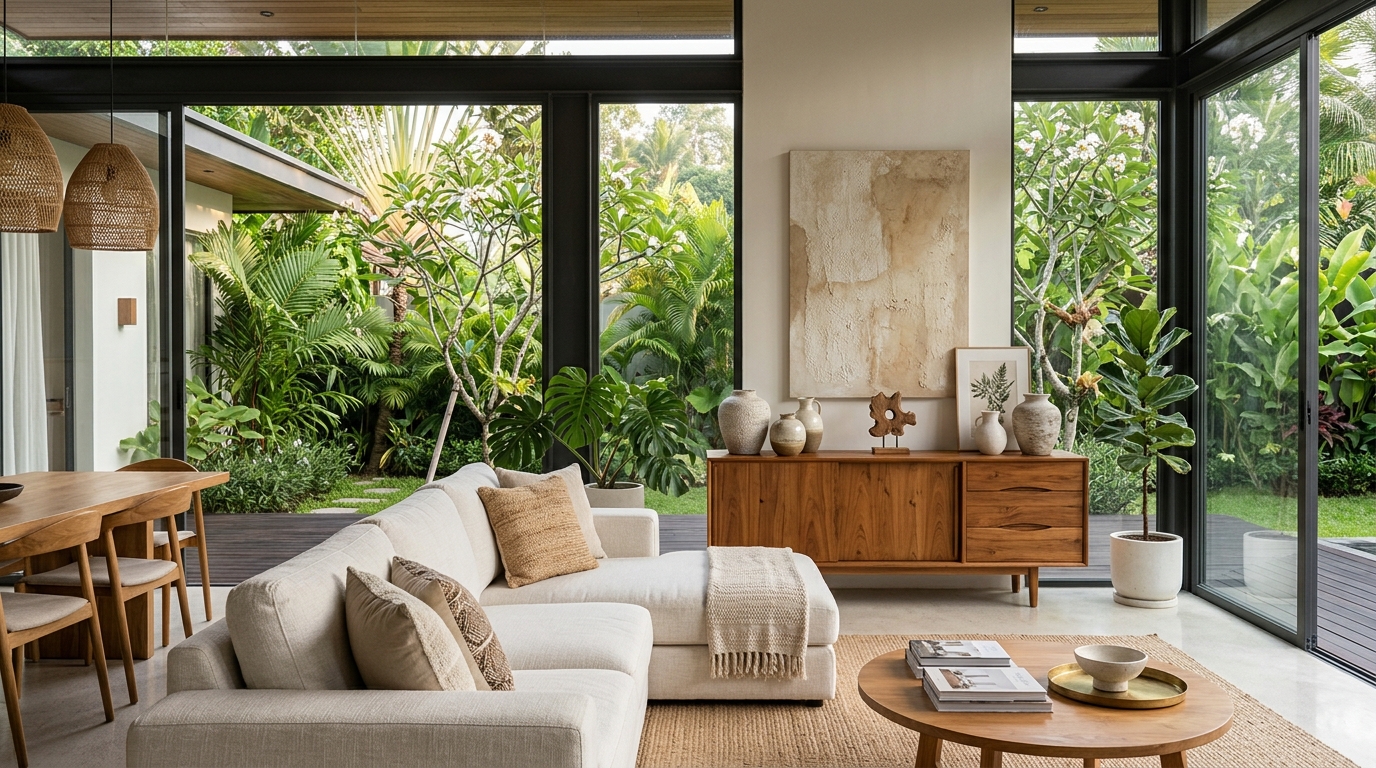
The Psychology of Living: Visual Serenity and Spatial Emotions
A home is far more than a physical envelope of concrete and glass: it is “The Vessel of Personal Taste and Lasting Memories”. Custom solid timber tables, curated oil paintings, bespoke Italian leather sectionals, and hand-woven artisanal rugs represent deep emotional and financial investments that reflect who you are.
1. The Invisible Loss (Loss Aversion and Silent Material Decay)
Ultraviolet radiation (responsible for 40% to 45% of photodegradation) combined with infrared solar heat (contributing another 25%) trigger continuous photochemical breakdown in interior dyes, wood resins, and organic fibers. Teak floorboards slowly desiccate and crack, fine leather upholstery loses its natural suppleness, and treasured artworks irreversibly lose their vivid luster.
2. Breaking the Blackout Curtain Dilemma (The False Dilemma)
Many homeowners face an unfortunate compromise: endure oppressive heat to preserve garden views, or draw thick blackout curtains to maintain cool air. This is a “False Dilemma”, because living behind closed drapes darkens the interior, drains emotional energy, and completely negates the purpose of designing expansive glass architecture in the first place.
The discerning solution is the application of an “Invisible Luxury Shield”: high-performance nano-ceramic architectural window film that welcomes pure natural daylight and vibrant garden greenery while blocking over 90% to 99% of infrared heat and destructive UV rays.
3D Interactive Model3D Interactive Model: 4-Tier Thermal Defense System
4-Tier Thermal Defense Model
for Modern Tropical Residences
Tap each architectural tier to view performance details, or drag to rotate the model.
Deep Overhang Eaves & Timber Louvers
Cantilevered overhangs (1.5 to 2.5 meters) shade high-angle midday sun before thermal radiation strikes facade glass, substantially lowering initial solar loads.
Tropical Landscape & Shading Flora
Dense foliage and broadleaf canopy trees absorb radiant heat while channeling cool evaporative breezes across water features to lower ambient perimeter temperatures.
Architectural Glass Envelope
High-clarity Low-E or tempered safety glass paired seamlessly with nano-ceramic technology, maintaining clear panoramic garden vistas while rejecting solar energy.
MAXXMA Nano-Ceramic Film
Spectrally selective nano-ceramic coatings reject up to 95% of infrared heat and 99% of UV rays without mirror reflections or color distortion, ensuring crystal-clear day and night views.
Indoor Living Sanctuary
The ultimate living result: interior cooling drops by 5 to 8°C, monthly air conditioning bills decrease by 20% to 30%, timber floors stay pristine, and everyday living feels deeply restful.
4-Dimensional Upgrade Blueprint: Eaves, Gardens, Glazing, and Interiors
Achieving the pinnacle of modern tropical living requires the harmonious coordination of four interrelated architectural dimensions:
Dimension 1: Deep Eaves & Shading Louvers
Cantilevered roof eaves extending 1.5 to 2.5 meters combined with precision timber louvers intercept high-angle solar irradiance at midday before heat energy reaches the glass surface.
Dimension 2: Biophilic Landscaping & Tropical Flora
Planting broadleaf greenery such as Frangipani, Traveler Palm, and Monstera along south and west elevations creates natural microclimates that absorb radiant heat and guide cool breezes over reflecting pools.
Dimension 3: Nano-Ceramic Architectural Window Film
Installing MAXXMA spectrally selective architectural window films blocks up to 95% of infrared heat and 99% of UV rays while retaining ultra-high optical clarity, preserving natural garden colors without dark tints.
Dimension 4: Sheer Drapes & Furniture Surface Shields
Pairing lightweight linen sheers or Eco Blinds for gentle afternoon light diffusion, alongside MAXXMA Clear Guard protective film over teak dining tables and marble islands, guards against scratches, heat stains, and ring marks.
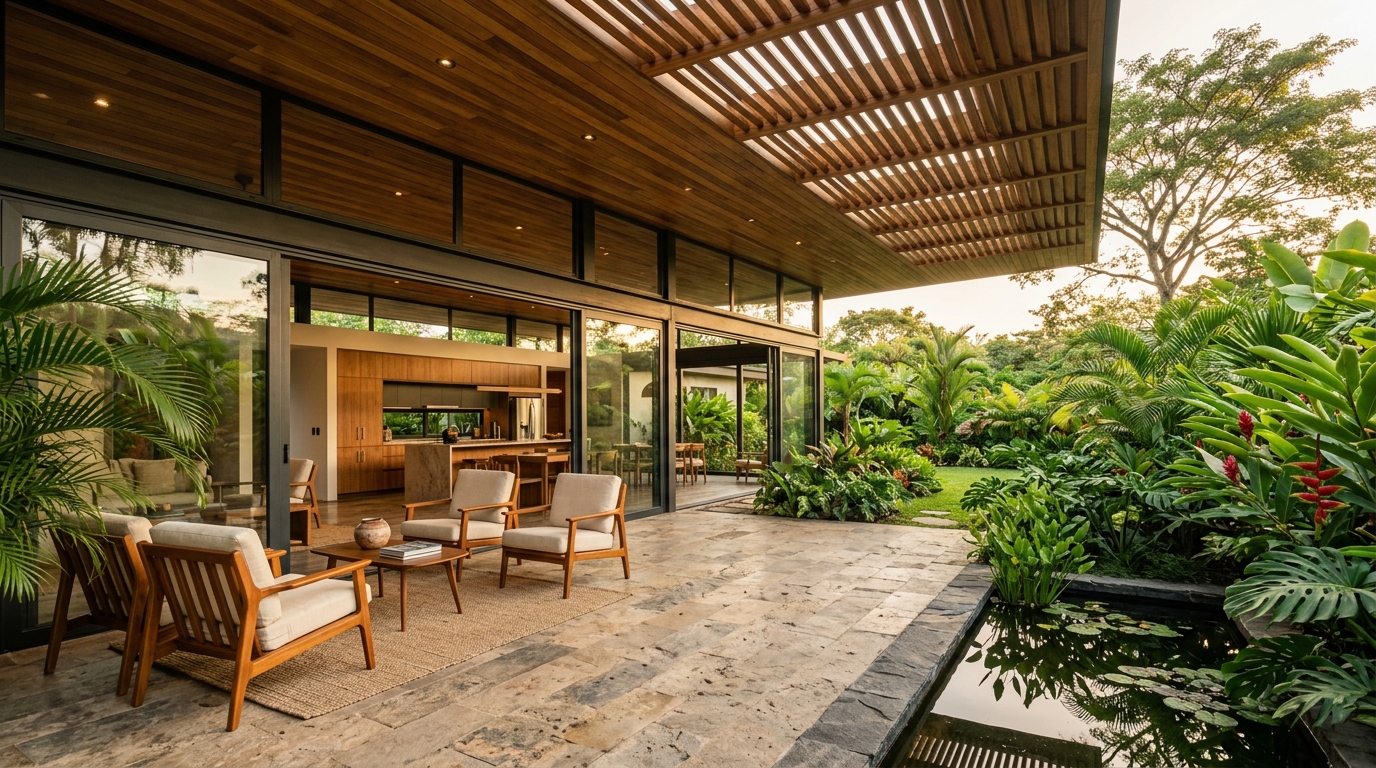
Zonal Optimization: Living Spaces, High Atriums, Suites, and Workspaces
Every living area features unique solar exposure and functional requirements. Calibrating window film specifications by room zone delivers optimum comfort:
Living Room & Poolside Lounge
The priority is uninterrupted panoramic garden views. Ultra-clear nano-ceramic film (50% to 70% VLT) with minimal internal reflectance guarantees crystal-clear vistas during the day and night without reflective mirror effects.
Recommended: MAXXMA Architectural Polarized / Refined Series
Stairwell & High-Ceiling Atrium
Subjected to high-angle sun throughout the day, where rising thermal plumes migrate into second-floor bedrooms. High-efficiency solar rejection films (TSER over 65%) intercept heat at the highest architectural boundary.
Recommended: MAXXMA Architectural Independent Plus / Black Panther
Master Bedroom Suite & Dressing Area
Prioritizes daytime privacy from outside sightlines and soft glare control for serene morning sleep. Privacy-focused films paired with sheer drapery create intimate personal seclusion.
Recommended: MAXXMA Architectural Black Panther 20 / Independent Plus 35
Home Office & Afternoon Sunlit Kitchen
Demands glare-free visibility for computer screens and stone countertops, paired with heat protection across sensitive furniture surfaces.
Recommended: MAXXMA Architectural Refined + Clear Guard Furniture PPF
Technical Specifications: MAXXMA Architectural Film Comparison Matrix
To assist architects, interior designers, and discerning homeowners in selecting precision optical properties, the performance matrix below summarizes test results certified under international NFRC and ASTM standards:
| Architectural Series | Visible Light (VLT) | UV Rejection | Infrared Rejection (IRR) | Total Solar Energy (TSER) | Optimal Room Placement |
|---|---|---|---|---|---|
| Architectural Polarized | 60% | 99% | 95% | 62% | Living room facing garden, poolside panoramic sliders |
| Architectural Independent Plus | 35% | 99% | 92% | 68% | High-ceiling atriums, west-facing afternoon solar exposures |
| Architectural Black Panther | 20% | 99% | 90% | 72% | Master suites, private screening rooms, high-privacy areas |
| Architectural Refined Series | 45% | 99% | 88% | 60% | Home workspaces, open kitchens, versatile living zones |
Architectural Polarized
Crystal Clarity- VLT
- 60%
- IR Rejection
- 95%
- TSER
- 62%
Best for: Living rooms with garden views, poolside sliders
Independent Plus
Heavy Heat Block- VLT
- 35%
- IR Rejection
- 92%
- TSER
- 68%
Best for: High-ceiling atriums, west-facing afternoon sun
Black Panther Series
High Privacy- VLT
- 20%
- IR Rejection
- 90%
- TSER
- 72%
Best for: Master bedrooms, home theaters, maximum privacy
Refined Series
Natural Balance- VLT
- 45%
- IR Rejection
- 88%
- TSER
- 60%
Best for: Home offices, open kitchens, versatile spaces
Real Installation Footage: Experiencing True Transparency and Garden Panoramas
Watch authentic on-site installation footage of MAXXMA architectural window film applied in a luxury residence. Notice the crystal-clear optical clarity that effortlessly brings vibrant outdoor foliage into the interior living space:
Video demonstration of professional MAXXMA architectural window film installation delivering cool comfort and pristine views.
5-Step Implementation Checklist: Preparing for Architectural Glazing Upgrades
To ensure a seamless upgrade and precision installation standards, follow this professional 5-step checklist:
Audit Solar Exposure and Peak Heat Hours by Room
Document the hours when each room receives direct solar rays and surface glare, allowing technical specialists to specify tailored films for each facade orientation.
Evaluate Payback and Energy Savings with the Energy Calculator
Calculate estimated annual air conditioning cost savings and thermal load reductions using the interactive MAXXMA Energy Calculator.
Test Real Film Swatches Against Ambient Interior Lighting
Hold real film samples directly against existing glass panes during afternoon sun and evening indoor lighting to evaluate optical clarity, neutral color fidelity, and subtle tint tones.
Inspect Window Frames and Glass Perimeter Seals
Clean aluminum frame edges and silicone joints thoroughly, ensuring seamless film edge anchoring with zero micro-bubbles and decades of durable adherence.
Verify Quality Assurance via the Online Warranty Registry
MAXXMA architectural films carry comprehensive 5 to 10 year manufacturer warranties. Register and confirm your authentic coverage online via the MAXXMA Warranty Registry.
Frequently Asked Questions (FAQ)
1
How dark should architectural film be for a modern tropical home?
You do not need dark, heavily tinted films. Modern tropical design prioritizes transparent garden sightlines and expansive daylight. Specifying nano-ceramic films with a Visible Light Transmittance (VLT) between 40% and 60% for main living areas cuts over 90% of infrared heat while keeping interior spaces naturally bright.
2
If my home already has deep overhangs and lush trees, is window film still necessary?
Yes, it remains essential. While eaves and trees shade high-angle midday sun, low-angle afternoon sunlight pierces diagonally beneath overhangs. Furthermore, reflective glare from swimming pools and stone patios bounces radiant heat and UV rays directly into the home. Architectural film acts as an essential 365-day barrier.
3
Will installing window film distort garden colors or create mirror reflections at night?
Authentic MAXXMA nano-ceramic films contain no reflective metal layers. Their interior reflectance is virtually identical to natural clear glass, preventing disorienting night reflections when interior lighting is active, and preserving the natural verdant green of outdoor gardens.
4
Should I install window film across the entire residence or only on sun-facing rooms?
You can prioritize the most vulnerable zones first: such as west-facing living areas, double-height atriums, and master suites. However, treating the entire home in a single phase delivers uniform exterior aesthetics, optimizes total HVAC energy efficiency, and lowers overall project installation costs.
Conclusion: Elevating Tropical Living into Pure Harmonious Bliss
The quintessential modern tropical home is a private sanctuary where you can fully immerse yourself in natural beauty without thermal discomfort. Combining architectural overhangs, lush landscaping, and advanced nano-ceramic window film delivers the complete trifecta: effortless cooling, radiant daylight, and pristine outdoor vistas.
Whether planning a new custom build, renovating your primary living space, or seeking tailored architectural window film specifications, the MAXXMA engineering team provides complimentary on-site surveys and bespoke technical proposals.
Explore our full range of solutions at Residential Window Films, browse completed works in the Architectural Gallery, or read our comprehensive guides on Protecting Glass House Furniture and 5 Solutions for Overheated Glass Houses.
Talk to the MAXXMA team
and choose the right film for your project
Ready to protect your home or vehicle?
Consult with MAXXMA experts to select the perfect film for your needs, or find an authorized dealer near you.