
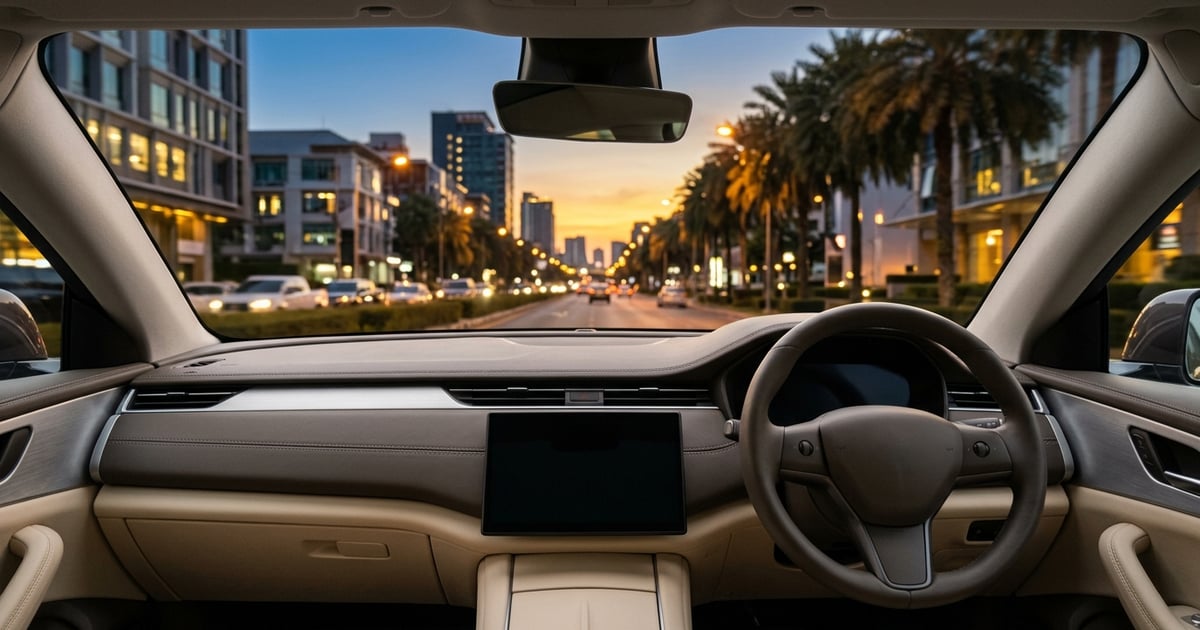
Quick Answer: Daily drivers who leave home at dawn and return after dark should never judge car window film by darkness alone. Dark tint reduces bright sunlight, yet it never guarantees clear vision in rain or dim side streets. A balanced commute setup starts by auditing your actual light routes, pairing a front windshield around 40% to 60% VLT with low internal reflectance, and choosing side/rear glass that rejects TSER and IR heat without blocking GPS or Easy Pass.
When the Cabin Becomes Your Moving Living Room at 7 a.m.
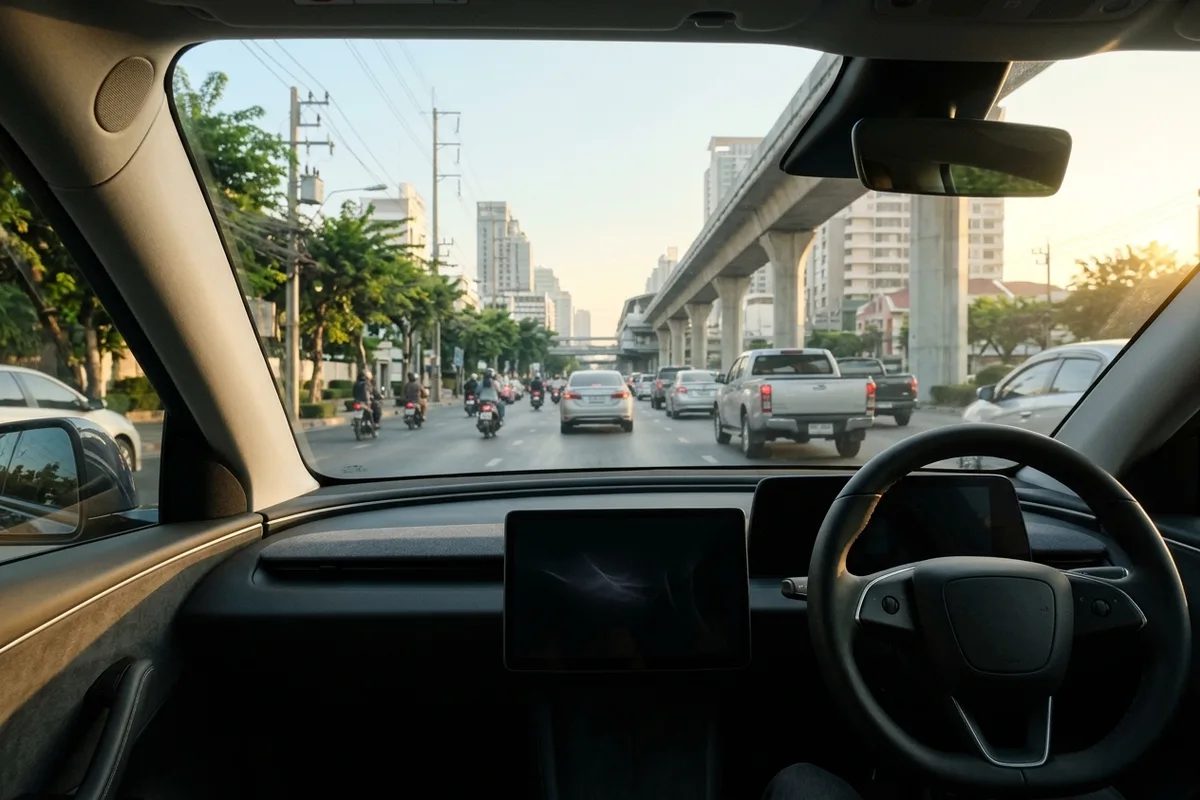
Picture a weekday morning just after sunrise. Low-angle golden light slips beneath elevated expressways and slants directly across your steering wheel, stitched trim, and center screen. For two to three hours every day, your car interior acts less like a bare machine and more like a moving personal sanctuary.
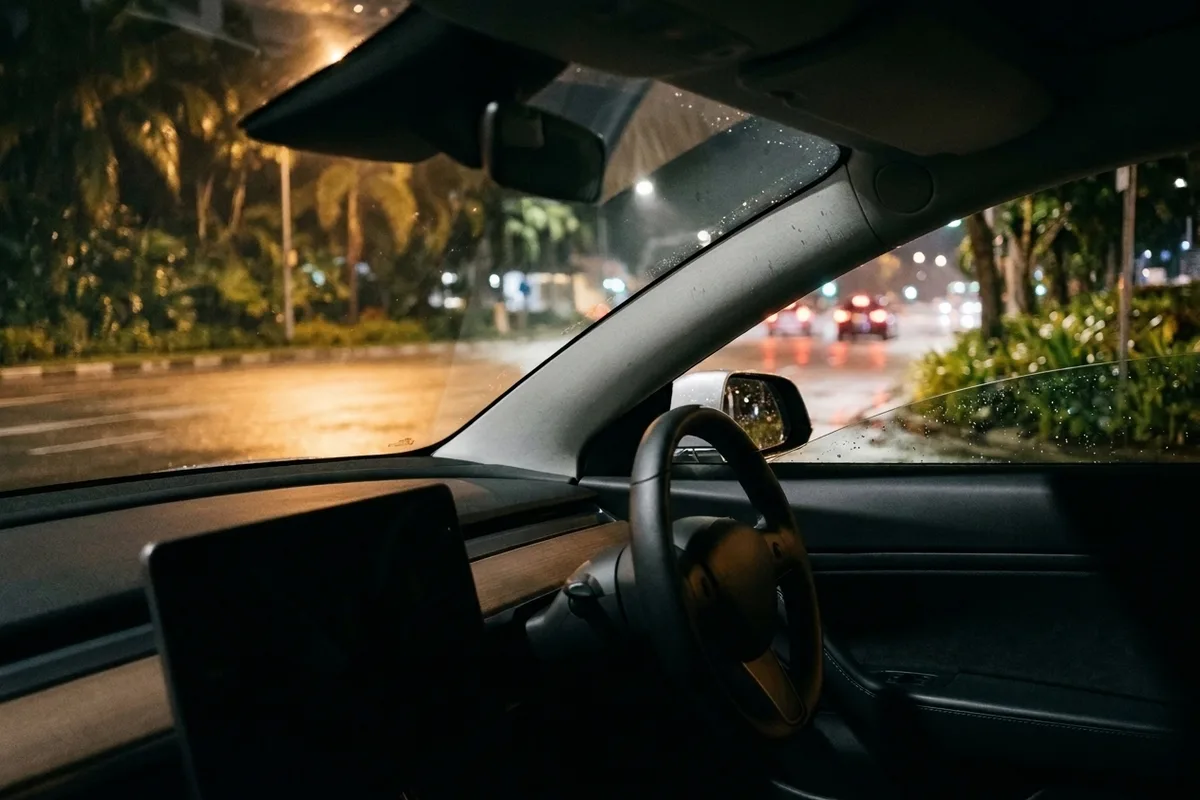
When light inside that space is poorly balanced, the morning begins with squinting against blinding asphalt reflections. Hours later, on the drive home past eight in the evening, the very same tint feels heavy and dim, forcing you to lean forward just to read motorcycles or dark curbs along narrow neighborhood streets. Quiet eye fatigue builds day after day, eroding focus before you ever reach your driveway.
Beyond visual comfort, cabin materials such as natural leather, soft-touch dash surfaces, and display screens age just like fine interior furnishings. When aging film lets 99% UV and solar heat slip past the glass each morning, surface fading and trapped cabin stuffiness quietly compound.
Why Darker Film Does Not Equal Clearer Vision: Light, Glare, and Human Eyes
Many commuters feel trapped in a false dilemma: install ultra-dark film to survive harsh morning glare and gain privacy, at the cost of stressful night driving; or install overly light film and endure eye strain at every red light. That conflict assumes visible brightness and solar heat are the same thing.
In optical physics, solar energy reaching your windshield splits into three bands: ultraviolet radiation (UV) that degrades skin and cabin trim, visible light (VLT) that your eyes need to read road geometry, and infrared radiation (IR) that drives the burning sensation on your arms. Pure nano-ceramic films filter heat selectively, so you do not need pitch-black glass to keep the cabin cool.
Another overlooked metric is internal visible light reflectance (VLR). When interior instrument displays glow brighter than the dark road outside, high-reflectance film acts like a faint mirror, bouncing your dashboard silhouette across your view of the side mirrors. Lasting visual comfort from dawn to midnight depends on pairing sensible VLT with low interior reflectance and clean optical film.
Interactive 3D Model: Multi-Layer Nano-Ceramic Light Filtering
To visualize how a single pane manages harsh morning sun and dim night streets together, this layered optical model separates incoming sunlight, the nano-ceramic filtering plane, and your cabin glass. Scroll past the model to inspect how each layer contributes to visual calm.
Three-Layer Optical Filtering Through Automotive Glass
Scroll to separate incoming solar energy, the nano-ceramic barrier, and the interior cabin glass plane.
Science vs. Myth: Debunking Film Darkness Assumptions
Before booking an installation slot, check these three everyday myths against verified material specs so you do not lock yourself into years of uncomfortable night driving.
“You need 80% dark film to stay cool”
Darkness reflects VLT only, not total heat performance. MAXXMA POLARIZED MX-PR40 delivers 40% VLT while rejecting 99% IR and achieving 82% TSER, outperforming many darker conventional tints.
“One shade all around is always best”
Drivers do not look through every pane equally. Your front windshield demands high low-light clarity, while side and rear glass take the brunt of angled afternoon heat. Pairing a lighter front code such as 40% or 60% VLT with 20% VLT sides balances real-world driving.
“All reflective films behave the same with toll tags”
High-metal codes in the REFINED series (MX-BL05, MX-BL20, and MX-CG05) carry high signal impact on GPS and Easy Pass and are not recommended for front windshields. Commuters relying on expressway tags and navigation should choose metal-free POLARIZED or BLACK PANTHER.
Canonical MAXXMA Spec Comparison for All-Day Commuters
The matrix below compiles verified MAXXMA specification-sheet figures, separating a multi-column desktop comparison table from stacked vertical cards on mobile viewports.
| Series & Code | Technology | VLT | UV / IR Rejection | TSER | VLR Int / Ext | Front Windshield Guidance |
|---|---|---|---|---|---|---|
| POLARIZED MX-PR60 30% Shade | Pure Nano Ceramic (2 Mil) | 60% | 99% / 99% | 73% | 7% / 7% | Ideal for high night clarity, zero signal interference |
| POLARIZED MX-PR40 40% Shade · No.5 Label | Pure Nano Ceramic (2 Mil) | 40% | 99% / 99% | 82% | 7% / 7% | Ideal dawn-to-night balance, zero signal interference |
| POLARIZED MX-PR20 60% Shade · No.5 Label | Pure Nano Ceramic (2 Mil) | 20% | 99% / 99% | 91% | 6% / 6% | Recommended for sides and rear for high heat control |
| BLACK PANTHER MX-BP35 40% Shade | Nano Carbon Ceramic (1.5 Mil) | 35% | 99% / 83% | 77% | 7% / 7% | Sport dark tone, zero signal interference |
| BLACK PANTHER MX-BP20 60% Shade · No.5 Label | Nano Carbon Ceramic (1.5 Mil) | 20% | 99% / 85% | 83% | 7% / 7% | Recommended for sides and rear for sport privacy |
| REFINED MX-BL40 / CG35 40% Shade | Nano Ceramic Metallized (1.5 Mil) | 40% / 35% | 99% / 75% (70%) | 70% | 17%-10% / 25%-12% | Windshield-approved low-signal-impact colour options |
POLARIZED MX-PR60 (30% Shade)
Flagship · ClarityPOLARIZED MX-PR40 (40% Shade)
Top Front Choice · No.5POLARIZED MX-PR20 (60% Shade)
Side/Rear Pick · No.5BLACK PANTHER MX-BP35 / BP20
Dark SportREFINED MX-BL40 / CG35
Color StyleStandard Installation Pricing & Coverage
MAXXMA POLARIZED (7-year warranty): Full-car standard packages 10,900 to 24,500 THB (Sedan S: 15,000 THB, Sedan M: 16,900 THB, SUV/MPV: 20,800 THB).
BLACK PANTHER & REFINED (7-year warranty): Full-car standard packages 7,500 to 16,900 THB (Sedan S: 10,500 THB, Sedan M: 11,800 THB, SUV/MPV: 14,200 THB).
Explore per-pane pricing and sunroof add-ons in the MAXXMA Film Comparison Studio and review full terms at 7-Year Warranty Coverage.Field Video Evidence: VLT Levels and Interior vs. Exterior Clarity
Spec sheets tell half the story; looking through real installed glass tells the rest. These two official MAXXMA vertical Shorts demonstrate visible light transmission across POLARIZED codes and interior-to-exterior contrast across BLACK PANTHER shades.
A Five-Step Commuter Visibility Audit Before You Visit an Installer
Bring these five notes to your installation center so a technician can match film VLT and optical clarity directly to your daily eyes and commute schedule.
- Log your peak glare and dimmest street hours: Note how often you face eastbound morning sun (7:00 to 9:00 a.m.) versus unlit side streets after 8:00 p.m.
- Audit existing film haze and dash reflection: Check whether old film shows subtle wave distortion, fading, or dashboard reflections at night.
- List cabin RF devices: Mention Easy Pass, M-Pass, dashcams, or EV telematics so high-metal codes are ruled out on the windshield immediately.
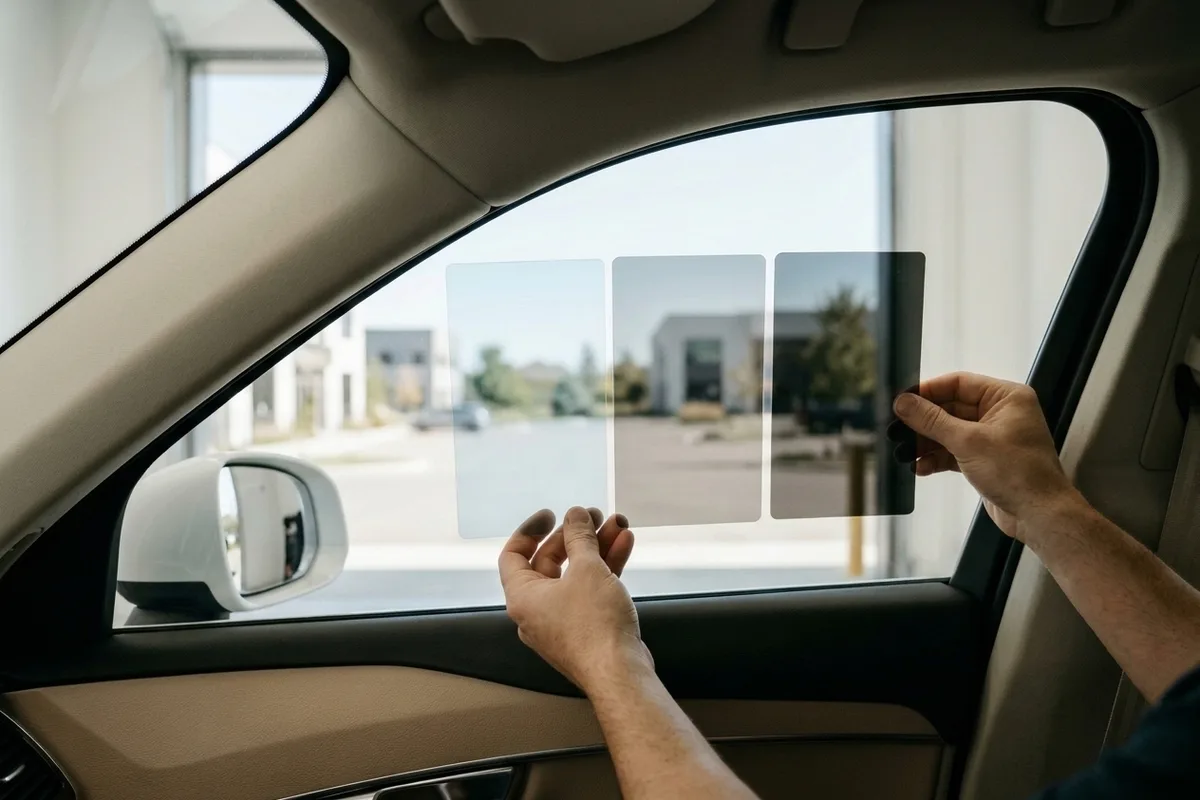
- Inspect swatches from the driver seat: Sit inside your car and compare 60%, 40%, and 20% VLT samples against natural asphalt and greenery.
- Choose a tailored front-and-side pairing: Review detailed specifications across MAXXMA POLARIZED, BLACK PANTHER, and REFINED.
Dawn-to-Midnight & Rainy Commutes
Prioritize front-windshield clarity with MX-PR60 or MX-PR40 paired with MX-PR20 sides for 91% TSER heat rejection and low 6% to 7% reflectance.
Explore POLARIZEDSport Dark Look & Signal Safety
BLACK PANTHER pairs sleek privacy with zero GPS or Easy Pass interference, combining MX-BP35 up front (or MX-PR40 for brighter night sight) with MX-BP20 sides.
Explore BLACK PANTHERColour-Led Cabin Styling
REFINED offers metallic blue, classic charcoal, and green tints; stick to windshield-approved low-signal codes (MX-BL40, MX-BL50, MX-CG35, MX-CG20, MX-GN50).
Explore REFINEDFrequently Asked Questions for Daily Morning-to-Night Drivers
What VLT percentage is best for the front windshield if I leave at 7 a.m. and drive home after 8 p.m.?
Most daily commuters find the sweet spot between 40% and 60% VLT, such as MAXXMA POLARIZED MX-PR40 (40% VLT, 82% TSER) or MX-PR60 (60% VLT, 73% TSER). Both reject 99% IR and 99% UV while preserving sharp low-light road legibility, though you should always confirm comfort by viewing real samples from your driver seat.
Does darker 60% or 80% film make daytime commuting safer?
Darker film dims visible brightness during noon traffic, but it does not guarantee safe night or wet-weather visibility. Overly dark windshields slow eye adaptation in dim alleys and parking garages. Selective nano-ceramic films control IR heat and glare without forcing you into extreme darkness.
Which REFINED codes are approved for front windshields without blocking Easy Pass?
Per verified MAXXMA specifications, REFINED codes approved for front windshields with low signal impact are MX-BL40, MX-BL50, MX-CG35, MX-CG20, and MX-GN50. High-metal codes (MX-BL05, MX-BL20, and MX-CG05) interfere with GPS and Easy Pass and should not be installed on the front windshield.
Will a lighter windshield film (40% to 60% VLT) let the cabin overheat?
Not with pure nano-ceramic construction. MAXXMA POLARIZED MX-PR40 achieves 82% TSER and MX-PR60 reaches 73% TSER, both rejecting 99% of infrared heat while remaining noticeably brighter and clearer at night than dyed dark films.
What should I verify right after installation before driving at night?
Inspect edge finishing, confirm that dashboard reflections feel calm at dusk, test your Easy Pass or M-Pass tag, and keep your 7-year warranty details accessible via the MAXXMA Warranty Portal.
Start with Real Sample Viewing Inside Your Cabin, Not Darkness Labels
Once you have logged your morning glare and evening visibility routes, compare combinations side by side in the MAXXMA Film Comparison Studio or continue reading Safe Rainy-Season Driving & Polarized Film and Nano-Ceramic vs. Metallized Film for Modern Vehicles.
ReferencesTechnical References and Scope of Data
- MAXXMA Automotive Film Specification Matrix Official VLT, UV, IR, VLR, SHGC, TSER, Thai No. 5 Energy Label, and signal-impact specifications across POLARIZED, BLACK PANTHER, and REFINED.
- MAXXMA Standard Installation Pricing Official vehicle-segment package pricing across all three automotive film tiers.
- MAXXMA YouTube Official: POLARIZED VLT Levels Official MAXXMA channel demonstration.
- MAXXMA YouTube Official: BLACK PANTHER Interior vs. Exterior View Official MAXXMA channel demonstration.
- International Window Film Association (IWFA) Educational context on visible light transmission, reflectance, and driver visibility balance.
Note: This guide helps drivers audit cabin lighting conditions before consulting a technician. Darkness numbers alone do not certify visibility across all road conditions; always evaluate real samples inside your vehicle with a certified MAXXMA installer.
Ready to protect your home or vehicle?
Consult with MAXXMA experts to select the perfect film for your needs, or find an authorized dealer near you.