01: The High-Tech Dilemma: Choosing Between Two Flagship Window Film Technologies
When vehicle owners consult professional window tinting studios for the highest grade of solar protection, two premier technologies consistently lead the conversation: Nano-Ceramic Film and Multi-Layer Optical Crystalline Film.
Both represent the pinnacle of modern material engineering, yet they cater to fundamentally different visual tastes and driving environments. Nano-ceramic film is celebrated for its deep, aggressive black exterior tone and exceptional cabin privacy. In contrast, multi-layer crystalline film is known for its remarkable optical transparency, appearing almost like un-tinted factory glass while offering formidable solar rejection.
Understanding how these two technologies function on a physical level will help you select the ideal window film for your vehicle and daily driving conditions.
UNDERLYING PHYSICS
02: Under the Hood: How Ceramic and Crystalline Films Control Solar Heat
The true difference between nano-ceramic and crystalline film does not lie in their visible shade. It lies in how each technology manages infrared radiation (IR), which accounts for 53% of total solar thermal energy.
Nano-Ceramic Technology: Absorption and Attenuation Through Sputtered Nanoparticles
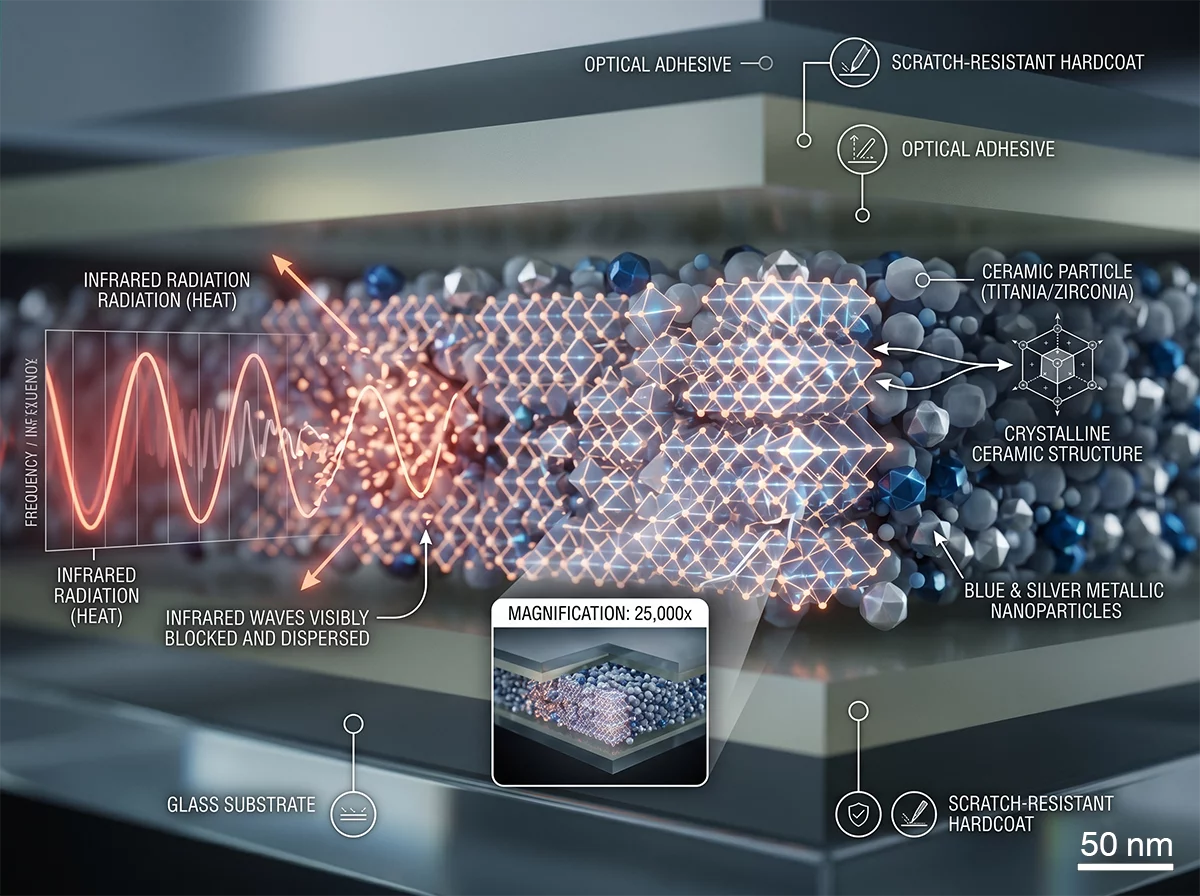
Nano-ceramic films utilize an advanced sputtering process to impregnate microscopic ceramic nanoparticles, such as Titanium Nitride (TiN) or Antimony Tin Oxide (ATO), into the optical polyester substrate.
These sub-nanometer ceramic particles possess unique dielectric properties that absorb and disperse infrared heat waves without using conductive metal layers. Because the formulation contains no metallic elements, nano-ceramic films do not corrode, turn purple, or interfere with digital communication signals like 5G, GPS, Bluetooth, or RFID toll passes.
Crystalline Technology: Rejection Through Multi-Layer Optical Interference
Crystalline films utilize an intricate multi-layer optical film architecture. By co-extruding and stacking hundreds of nanometer-thin polyester layers, crystalline films create constructive optical interference patterns.
Instead of absorbing heat into the glass, the hundreds of micro-layers act as a selective optical mirror, reflecting infrared heat and ultraviolet rays back away from the vehicle while allowing maximum visible light to enter the cabin.
DETAILED COMPARISON
03: Comprehensive Analysis: Strengths and Considerations of Each Technology
Nano-Ceramic Window Film (e.g. MAXXMA Ceramic Series)
Primary Advantages: Exceptional daytime and evening privacy (dark exterior that conceals valuables) with clear interior-to-exterior outward visibility at night. High Infrared Rejection (IRR reaching 80% to 95%) and superior cost-to-performance ratio across all vehicle categories.
Considerations: Lower-tier ceramic brands may exhibit a faint bluish haziness or low-angle scatter when driving directly into low-angle morning or late-afternoon sun. Premium ceramic films like MAXXMA eliminate this issue through superior optical adhesives.
Multi-Layer Optical Crystalline Film
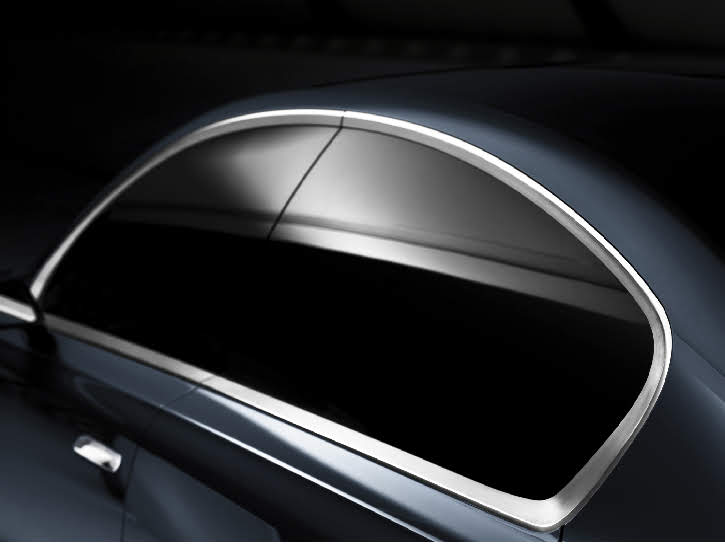
Primary Advantages: Luminous optical clarity approaching 70% to 90% visible light transmission, perfect for drivers who frequently travel on unlit rural highways or drivers who wear corrective lenses. Preserves the authentic factory appearance of classic sports cars and European collector vehicles. Reflects infrared rays away rather than absorbing heat into the glass.
Considerations: Offers minimal daytime privacy and zero nighttime privacy (the vehicle interior remains visible from outside). Premium optical multi-layering commands a significantly higher purchase price.
SPECIFICATION MATRIX
04: Side-by-Side Comparison: Nano-Ceramic vs Crystalline Film
| Operational Characteristic | Nano-Ceramic Film | Multi-Layer Crystalline Film |
|---|---|---|
| Exterior Appearance | Deep black, athletic, modern | Crystal clear, transparent, preserves OEM glass look |
| Interior Privacy | High to Very High | Low: interior cabin and occupants remain visible |
| Night Driving Clarity | Very Good (optically tuned outward view) | Exceptional (maximum natural luminous clarity) |
| Heat Control Mechanism | Infrared absorption and thermal dissipation | Multi-layer optical reflection |
| Electronic Signal Interference | Zero (non-metallized ceramic formulation) | Zero (metal-free optical polymers) |
| Value and Pricing Profile | High value, accessible across broad budgets | High premium, specialized optical investment |
MYTHS VS REALITY
05: Debunking Common Window Tint Misconceptions
Misconception 1: “Darker Window Tint Always Cools Better than Clear Film”
The Scientific Reality: Solar heat rejection is governed by Total Solar Energy Rejected (TSER) and the Infrared Rejection Rate (IRR), not visible darkness. A high-grade clear crystalline film can reflect significantly more thermal energy than a dark, low-quality dyed polyester film. Discover more in our guide to The Science of TSER.
Misconception 2: “All Black Films Perform the Same as Ceramic Film”
The Scientific Reality: Cheap dyed films merely dim visible light. Over time, UV exposure degrades dyed polyester layers while providing almost zero infrared protection. Authentic nano-ceramic films integrate inorganic ceramic compounds that deliver durable infrared heat rejection and consistent optical clarity over years of demanding sun exposure. Learn more in our breakdown of Nano-Ceramic vs Metallized Film.
BUYER’S VERDICT
06: The Final Verdict: Which Film Fits Your Driving Lifestyle?
- 1Choose Nano-Ceramic Film if: You value cabin privacy, prefer an athletic dark aesthetic, frequently park in unshaded open lots, and want premium infrared rejection at a sensible investment level.
- 2Choose Crystalline Film if: You prioritize maximum night driving clarity, frequently travel across unlit rural roads, own a classic or exotic car where factory glass clarity must be preserved, and want direct infrared reflection without heat absorption.
For drivers seeking the ultimate balance of ceramic privacy and optical glare reduction, explore our flagship MAXXMA Polarized Series, or compare all automotive lines in our Automotive Comparison Table.
FREQUENTLY ASKED QUESTIONS
07: Frequently Asked Questions (FAQ)
Can a clear crystalline film truly keep a car cool without being dark?
Yes. Because 53% of solar heat arrives as invisible infrared radiation, a film does not need to be dark to reject heat. Crystalline films employ hundreds of microscopic optical layers to selectively reflect infrared wavelengths while permitting harmless visible light to pass through.
Does nano-ceramic film cause interference with GPS, 5G, or electric vehicle sensors?
No. Authentic nano-ceramic films are completely non-metallic and non-conductive. They do not attenuate radio frequency signals, ensuring flawless operation for GPS navigation, 5G mobile data, Bluetooth, and automated driver assistance radar systems. Read our comprehensive Smart Cockpit Signal Interference Guide for full details.
If I drive extensively at night or through heavy rain, which film should I select?
For drivers who frequently navigate unlit highways or drive in rainy conditions, higher Visible Light Transmission (VLT) is critical for safety. Crystalline films provide exceptional night visibility. However, high-grade ceramic films with 50% to 70% VLT also deliver outstanding optical clarity at night while maintaining excellent heat rejection during the day.
Consult with MAXXMA Window Film Experts
Our certified technicians will help you evaluate your driving patterns and select the ideal ceramic or crystalline film specification for your vehicle. Locate an authorized installer on our Dealer Locator, chat with our specialists on LINE @maxxma, or review foundational tint principles in our Window Film 101 Guide.
Ready to protect your home or vehicle?
Consult with MAXXMA experts to select the perfect film for your needs, or find an authorized dealer near you.